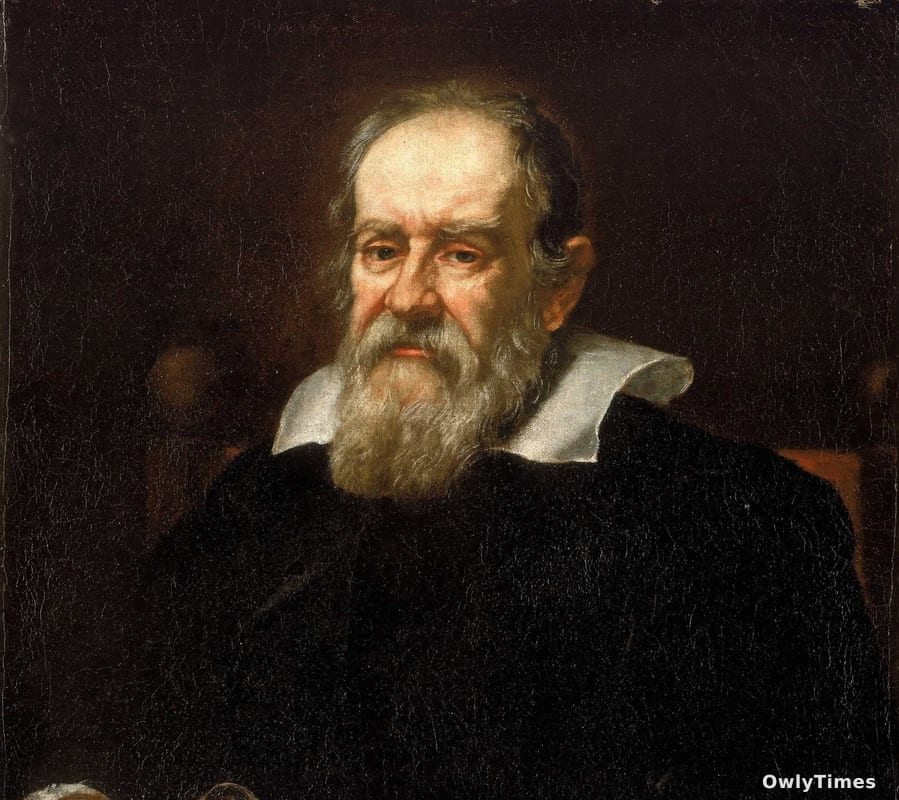

The narrative of scientific revolution often focuses on moments of brilliant, disruptive insight. But the recent discovery of handwritten notes by a young Galileo Galilei within a 1551 copy of Ptolemy’s Almagest suggests a more nuanced, and perhaps more relatable, origin story for modern astronomy. It’s not a tale of instant rejection, but of meticulous engagement – a scientist mastering the established order before dismantling it. This isn’t simply about confirming Galileo’s eventual support for a heliocentric model; it’s about revealing the intellectual scaffolding he built to get there, and challenging the long-held assumption that he bypassed detailed study of the geocentric universe.
Historian Ivan Malara stumbled upon the annotations while researching at the National Central Library of Florence in January. He was examining the 1551 Basel edition of the Almagest, a text that for over a millennium served as the definitive, though ultimately incorrect, map of the cosmos. The marginalia, alongside a transcription of Psalm 145 on a loose page, immediately stood out. Subsequent analysis confirmed the handwriting belonged to Galileo, then a student grappling with the complexities of Ptolemaic astronomy. The significance isn’t that Galileo read the Almagest – scholars knew he would have – but that these notes provide a direct, physical record of his early intellectual struggle with the prevailing worldview. As Malara noted in Il Sole 24 Ore, archival research often yields “patient waiting,” but sometimes rewards “perseverance…with a discovery capable of changing the perspective of a gaze.”
For centuries, Ptolemy’s Almagest positioned Earth as the stationary center of the universe, a model that aligned with both observation and philosophical assumptions of the time. While Galileo is celebrated for challenging this, the newly discovered annotations demonstrate he didn’t simply dismiss it. Instead, he meticulously engaged with its mathematical framework. This is a crucial point often lost in popular accounts. James Evans, a historian of astronomy at the University of Puget Sound, explained to Science that Galileo has often been portrayed as a “big-picture sort of guy,” uninterested in the technical details. These notes, however, reveal a young scholar deeply immersed in the intricacies of the system he would later refute. The Almagest, it turns out, provided Galileo with the very “astronomical syntax” needed to understand and ultimately critique Nicolaus Copernicus’s 1543 De revolutionibus orbium coelestium, which proposed a sun-centered universe.
Based on the original zmescience.com report.
The discovery highlights a critical, often overlooked aspect of scientific progress: the importance of understanding the foundations of a field before attempting to overturn them. Copernicus provided the mathematical model for a heliocentric system, but Galileo provided the observational evidence. His observations of Venus’s phases, impossible to reconcile with an Earth-centered model, were pivotal. But those observations were interpreted through a lens honed by his deep understanding of Ptolemy’s system. Malara hypothesizes that this mastery of the geocentric model actually facilitated Galileo’s “cosmic rebellion,” as the two models shared underlying mathematical structures. He wasn’t starting from scratch; he was repurposing existing tools. Michele Camerota, a historian at the University of Cagliari, has affirmed the attribution of the notes to Galileo as “fully secure,” solidifying the importance of this find.
It’s also important to acknowledge the human element revealed in these marginalia. The presence of Psalm 145 alongside the astronomical calculations suggests Galileo routinely combined prayer with his scientific pursuits, challenging the modern tendency to compartmentalize faith and reason. This detail humanizes the legendary physicist, portraying him not as a purely rational actor, but as a man grappling with complex ideas within a deeply religious context. The notes, discovered in a previously overlooked collection at the library – separate from the official Galilean collection established in 1861 – offer a glimpse into his thought process, revealing a slow, painstaking intellectual transition rather than a sudden epiphany.
Malara’s comprehensive analysis is forthcoming in the Journal for the History of Astronomy, and future research will undoubtedly refine our understanding of this pivotal moment in scientific history. But the immediate takeaway is clear: the birth of modern science wasn’t a clean break from the past, but a complex process of engagement, adaptation, and ultimately, transcendence. The question now is, how many other crucial insights remain hidden within the margins of forgotten texts, waiting to reshape our understanding of the scientific journey? And, perhaps more importantly, what assumptions about the nature of scientific discovery will we need to re-evaluate as more of these hidden histories come to light?