
The Calculated Normalization of Gun Safety & The 2028 Democratic Succession Calculus
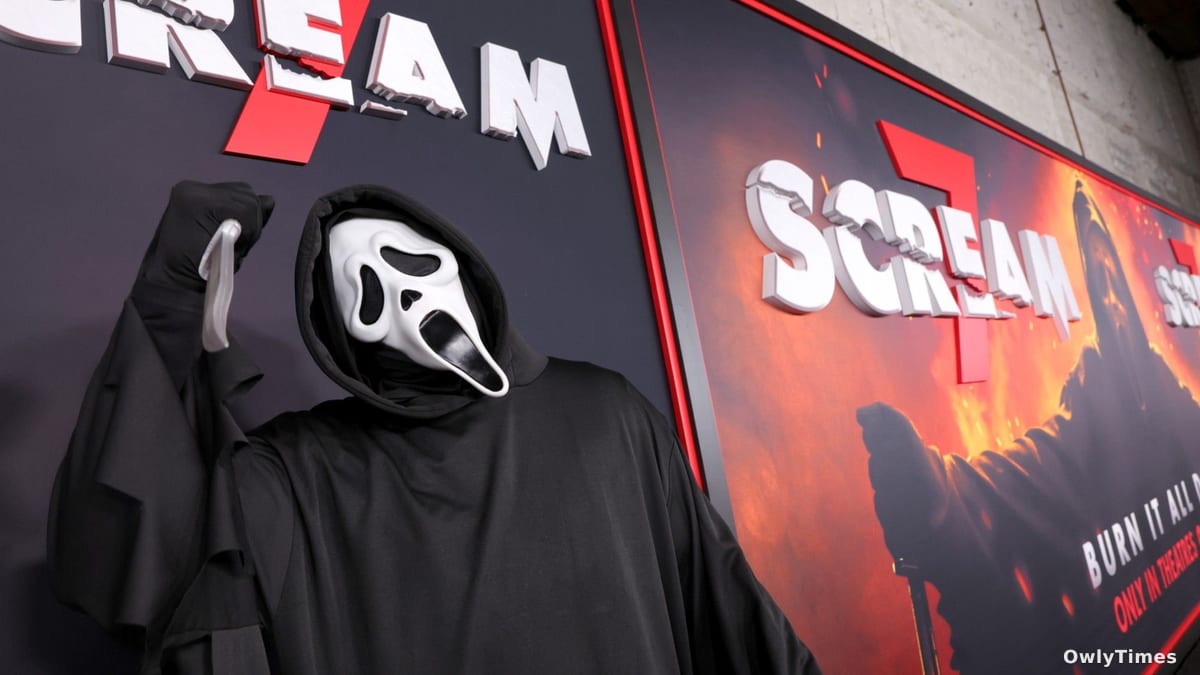
The seemingly innocuous detail of firearms safely stored in a gun safe within the latest “Scream” film isn’t a public service announcement; it’s a calculated insertion of a political message into popular culture, and a signal of where the gun control debate is shifting. Kris Brown’s observation that depictions matter isn’t about cinematic realism, but about subtly normalizing responsible gun ownership as a cultural expectation. This isn’t a new tactic – product placement has long been a staple of Hollywood – but the type of “product” being placed, and the implicit endorsement, reveals a strategic effort to bypass the legislative gridlock surrounding gun control. Who benefits? Advocates for stricter gun safety measures, who are increasingly recognizing the limitations of solely relying on legal channels. Who loses? The gun lobby, which traditionally thrives on framing any discussion of gun safety as an infringement on Second Amendment rights, and now faces a creeping normalization of responsible storage practices.
This subtle shift in cultural messaging operates on a similar principle to the re-evaluation of Donald Trump’s foreign policy, as dissected by Michelle Goldberg in The Seattle Times. Goldberg dismantles the narrative of Trump as an anti-war figure, arguing his aversion wasn’t to conflict itself, but to the cost of conflict – the sacrifice and constraints on American power. This isn’t a revelation, but the continued effort to debunk this myth is strategically important. It serves to inoculate voters against a potential 2024 campaign built on the premise of Trump as a peacemaker, and more broadly, to expose the transactional nature of his worldview. The benefit here accrues to those seeking to define Trump’s legacy as one of reckless self-interest, not principled isolationism. The loss falls to Trump’s supporters who may have genuinely believed in his anti-interventionist stance.
This article draws on reporting from theweek.com.
The parallel between these seemingly disparate stories – gun safety in horror films and the re-litigation of Trump’s foreign policy – lies in the recognition that shaping public perception is often more effective than direct confrontation. Both represent attempts to redefine the terms of debate, to subtly alter the baseline assumptions that underpin political discourse. This is particularly relevant as the Democratic party begins to eye the 2028 presidential race, with Kamala Harris reportedly keeping her options open, as noted by Arwa Mahdawi in The Guardian. Mahdawi’s blunt assessment – that Harris needs a “fundamental change” to be a viable candidate – isn’t simply a critique of her political skills, but a recognition of the shifting demands of the electorate. The Democratic party, still reeling from the near-miss of 2020 and the subsequent midterm disappointments, is acutely aware that simply nominating a woman to defeat a misogynist isn’t a winning strategy.
This brings us to a broader economic trend highlighted by Soumaya Keynes in The Financial Times: the decline of the “night owl” in America. Keynes attributes this to a shift in economic demands favoring “daytime pencil pushers,” suggesting a preference for efficiency and predictability over the flexibility traditionally afforded by 24/7 operations. This isn’t merely an observation about work habits; it’s a reflection of a broader societal trend towards standardization and control. The benefit here goes to corporations seeking to maximize productivity and minimize risk. The loss falls to those who thrive in non-traditional work environments, and to the broader ideal of individual autonomy. This trend, while seemingly unrelated to the other narratives, underscores the underlying theme of control – the attempt to shape behavior and optimize outcomes, whether through cultural messaging, political narratives, or economic structures.
The political chess move to watch next isn’t a policy announcement or a campaign rally, but the response of the Republican party to the increasingly normalized depiction of responsible gun ownership in popular culture. Will they attempt to counter this messaging with their own narratives, or will they dismiss it as “Hollywood liberalism”? The answer will reveal whether they recognize the power of cultural influence, and whether they are willing to adapt their strategies accordingly. More importantly, it will signal whether they are prepared to cede ground on an issue where public opinion is slowly, but steadily, shifting.