
The story of the Hessian fly isn’t simply a historical footnote about an agricultural pest; it’s a revealing case study in how national anxieties, nascent scientific methodologies, and even political rhetoric can intertwine around a biological threat. While recent headlines have focused on the fly’s connection to Thomas Jefferson and the early days of the American Revolution, the deeper significance lies in how this invasive species prompted a uniquely American response – one that blended suspicion, citizen participation, and a determined belief in the power of scientific inquiry to safeguard a new nation. It’s a story that resonates today as we grapple with increasingly complex challenges posed by invasive species and the spread of misinformation.
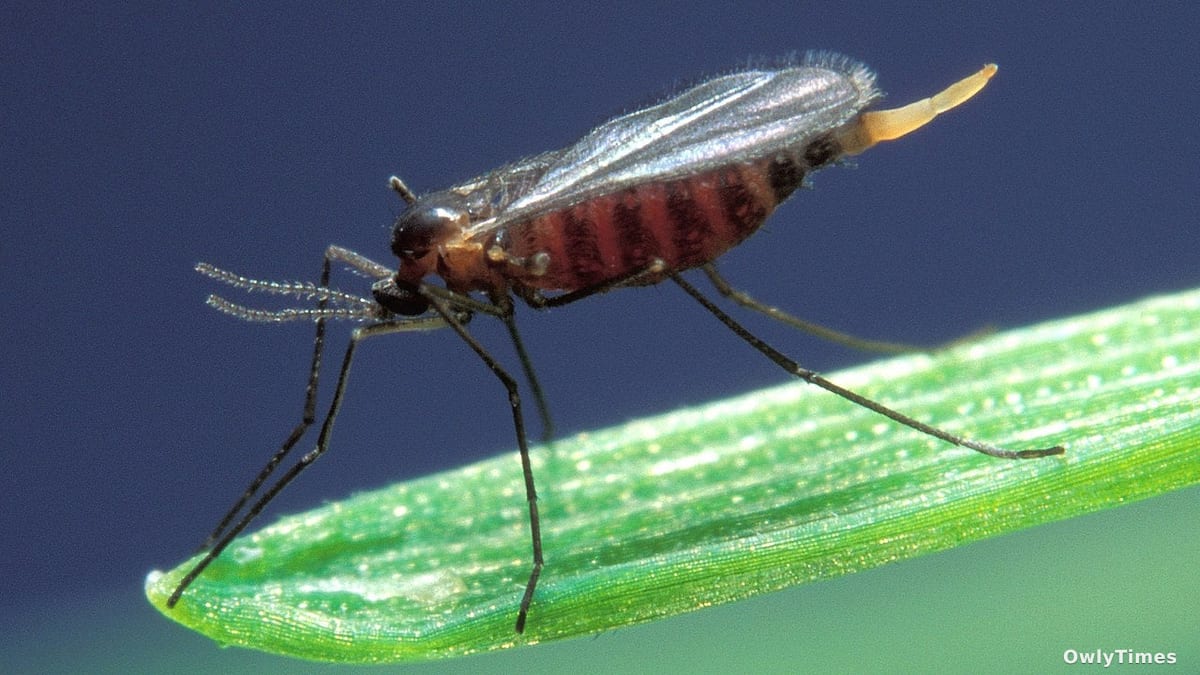
A few years before the drafting of the Declaration of Independence in 1776, farmers in Long Island and New Jersey began to experience devastating losses in their wheat crops. The culprit was a tiny fly, barely larger than a gnat, whose larvae fed on the developing wheat, barley, and rye. As Lou Masur, professor of American history at Rutgers University, explains, the timing of this outbreak was particularly alarming. “It began in Long Island and Brooklyn, and they could sit and watch as the insect moved further west and further south,” he said, noting the worry among farmers who were simultaneously delegates to the Continental Congress, acutely aware of the economic implications. Wheat wasn’t just a staple crop; it was a crucial export, and its failure threatened the fragile economic foundation of the fledgling nation.
The context of the Revolutionary War dramatically colored perceptions of the fly. Thousands of German soldiers, known as Hessians and hired by the British, had recently arrived on Staten Island, fueling resentment among colonists. The fly, arriving around the same time, quickly became associated with the enemy. George Morgan, a “gentleman farmer” and slave owner from Princeton, actively promoted this connection, coining the name “Hessian fly” in 1788. In a letter to Britain’s Consul General John Temple, Morgan explicitly stated his intention to link the pest to the hated soldiers, hoping to “add, if possible to the detestation in which the human and insect [were] generally held.” This wasn’t merely naming a pest; it was a deliberate act of rhetorical propaganda, capitalizing on existing animosity to rally support for the revolutionary cause. The term stuck, becoming, as Morgan noted, “the most opprobrious Term our Language affords.”
Source material: whyy.org.
However, the narrative of deliberate biological warfare – the idea that the British intentionally introduced the fly to sabotage the American rebellion – remains unsubstantiated. While theoretically possible, there’s no evidence to support it. The fly’s origins, as modern entomological research reveals, lie in the fertile crescent of North Africa and the Middle East, the birthplace of wheat itself. As David Buntin, professor of entomology at the University of Georgia, points out, “The fact is, like a lot of these invasive pests, we really don’t know exactly how they get here. We just know when they show up.” This doesn’t diminish the impact of the fly, but it does highlight the tendency to seek explanations – even conspiratorial ones – in times of crisis. The association with the Hessians, while historically inaccurate in its origin, proved a potent symbol of colonial grievances.
Following the Revolution, Thomas Jefferson took a leading role in understanding and documenting the Hessian fly. As a member of the American Philosophical Society, founded by Benjamin Franklin in 1743, Jefferson spearheaded a citizen science project, requesting farmers to submit observations and data about the pest. Adrianna Link, the society’s history of science curator, emphasizes the significance of this approach. “I don’t think you get as many people in the Royal Society conversation who are gentlemen farmers sending in their letters about pest sightings of the day,” she said. “That I think is distinct. There’s this kind of optimism in the power of collective scientific work.” This initiative, while not yielding the volume of responses hoped for, exemplifies a uniquely American approach to scientific problem-solving – one that valued practical knowledge and broad participation. Jefferson saw this research not only as vital for the nation’s economic security but also as a demonstration of American scientific capability, a challenge to European dominance in the field.
It’s crucial to acknowledge the limitations of this early research. The methods were rudimentary, data collection was inconsistent, and the understanding of insect biology was limited. The 1788 British ban on wheat imports from the U.S., which Jefferson decried as a “libel on our wheat,” was likely motivated by broader trade disputes rather than solely by the presence of the fly. Furthermore, the reliance on anecdotal evidence and the strong political biases of the time inevitably shaped the narrative. Nevertheless, the response to the Hessian fly laid the groundwork for future agricultural research and pest management strategies. The development of wheat varieties resistant to the fly, a process that began in the late 19th and early 20th centuries, stands as a direct legacy of this early investigation.
Looking ahead, the story of the Hessian fly serves as a cautionary tale and a call to action. Climate change is altering the distribution and behavior of invasive species, increasing the risk of outbreaks and challenging existing control measures. The ongoing adaptation of the Hessian fly itself, as documented by David Buntin’s decades of research, underscores the need for continuous monitoring and the development of new resistant wheat strains. But perhaps the most important lesson lies in the importance of clear communication and evidence-based decision-making. We must be vigilant against the spread of misinformation and resist the temptation to attribute complex problems to simple, politically motivated explanations. The question now isn’t whether another “Hessian fly” – another invasive species with significant economic and ecological consequences – will emerge, but whether we will be prepared to respond with the same combination of scientific rigor, citizen engagement, and clear-headed analysis that characterized the response 250 years ago.