
The Economic Fallout of Enforcement: How ICE Tactics Triggered a Parallel Relief System in Minnesota
The recent surge in Immigration and Customs Enforcement (ICE) and Customs and Border Protection (CBP) activity in Minnesota wasn’t simply a matter of heightened border security; it was a calculated disruption with predictable economic consequences. The strategic aim, whether explicitly stated or not, was to demonstrate the reach of federal enforcement power, particularly in sanctuary-leaning jurisdictions. But the resulting climate of fear – and the subsequent economic impact – exposed a critical vulnerability: the reliance of local economies on the participation of immigrant communities, and the speed with which those communities can be destabilized. The ripple effects are now being addressed not by government programs, but by a rapidly expanding network of mutual aid groups, revealing a parallel system of support born from federal action.
This article draws on reporting from CNN.
The immediate impact was a contraction in economic activity. Workers, documented or not, stayed home, fearing encounters with agents. Businesses, particularly small enterprises reliant on both immigrant labor and immigrant customers, saw revenue plummet. Minneapolis alone estimates 76,000 residents – roughly 20% of the city’s population – are now facing urgent needs related to lost income, food insecurity, and housing instability. This isn’t simply a humanitarian crisis; it’s a localized recession triggered by enforcement policy. The estimated $16 million needed in additional rent assistance underscores the scale of the economic damage, a figure exceeding initial projections and highlighting the depth of the disruption.
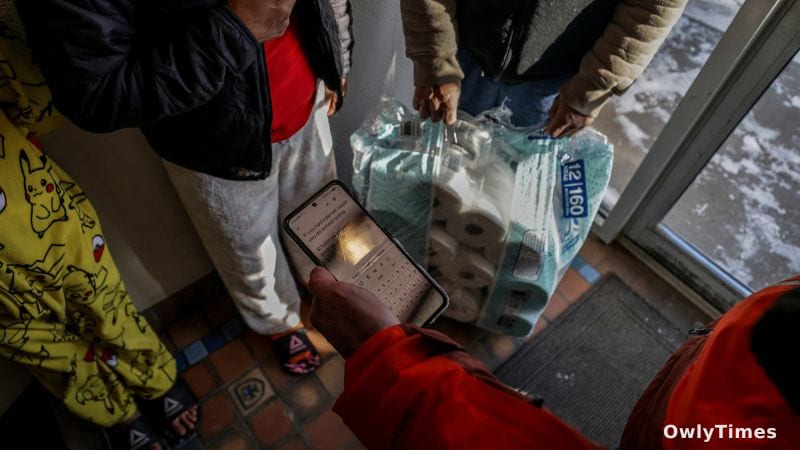
This situation isn’t unique to Minnesota, but the response has been particularly notable. The spontaneous emergence of numerous mutual aid groups – volunteer-run networks offering direct, peer-to-peer assistance – speaks to a deep-seated community resilience. Rachel Sayre, director of emergency management for Minneapolis, points out their agility: “They can move the fastest because they’re volunteer-run and hear directly from neighbors who need assistance.” This contrasts sharply with the often-slow and bureaucratic processes of traditional non-profits and government aid programs. The speed of response is critical, as the immediate need is not long-term case management, but immediate survival – food, rent money, and a sense of security.
The creation of StandWithMinnesota.com, launched just a week after the killing of Renee Good by ICE agents, exemplifies this organized response. Created by former Minnesota resident Ashley Fairbanks, the site has become a centralized hub for mutual aid efforts, listing crowdfunding campaigns, non-profits, and local groups. Fairbanks and others have collectively raised nearly $20 million, a substantial sum generated not through government funding, but through grassroots donations. This fundraising success, however, is a symptom of systemic failure – a reliance on private charity to mitigate the consequences of federal policy. The “Keep MN Housed” campaign, also spearheaded by Fairbanks, directly addresses the looming eviction crisis, but it’s a reactive measure, not a preventative one.
Organizations like the Hmong American Partnership (HAP), traditionally focused on microlending and community development, were forced to pivot. Facing ICE activity directly outside their facility, May yer Thao, HAP’s president, redirected resources to provide emergency grants of $2,500 to $5,000 to struggling businesses. While a modest amount, it’s intended to provide a crucial month of breathing room. Simultaneously, HAP leveraged a $50,000 grant from the Immigrant Rapid Response Fund to distribute essential goods to families, prioritizing culturally appropriate food items. This shift demonstrates a broader trend: established organizations adapting to fill the gaps left by the disruption caused by ICE.
Historically, this dynamic echoes periods of intense federal intervention that created economic precarity within targeted communities. The Dust Bowl era, for example, saw the failure of agricultural support systems and the rise of informal networks of aid as families were displaced and livelihoods destroyed. More recently, the aftermath of Hurricane Katrina revealed similar patterns – a breakdown of official channels and the emergence of grassroots relief efforts. In both cases, the common thread is a loss of trust in government’s ability to protect its citizens, leading to self-reliance and community-based solutions. The current situation in Minnesota is a microcosm of this pattern, playing out not in response to a natural disaster, but to a deliberate enforcement strategy.
The long-term implications are significant. While reporting suggests ICE may adopt more “targeted” tactics, the underlying risk for immigrant and refugee communities remains. The need for mutual aid is likely to persist, and the question now is whether this parallel system of support will become institutionalized. Will these volunteer networks evolve into formalized organizations, or will they remain a temporary response to a continuing threat? The political chess move to watch is whether Minnesota’s state legislature will allocate dedicated funding to support these mutual aid efforts, effectively acknowledging the economic damage caused by federal policies and creating a sustainable infrastructure for community resilience.