
The Echo of Past Promises: Calculating Trump’s Risk in Iran
Pete Hegseth’s pronouncements on Monday – promising victory over Iran with the bluster often preceding American military engagements – weren’t simply rhetoric. They were a calculated signal, a deliberate invocation of a specific historical narrative. The “America First” framing, the insistence on dictating terms, directly mirrored President George W. Bush’s declaration in 2001 following 9/11: “This conflict was begun on the timing and terms of others; it will end in a way and at an hour of our choosing.” This isn’t accidental. It’s a strategic attempt to preemptively control the narrative, to establish a perception of decisive action and inevitable success, a tactic that belies the immense uncertainty surrounding the current escalation. The core calculation is a gamble – a high-stakes bet that a swift, decisive blow can neutralize a decades-long adversary, but one that carries the very real risk of replicating the protracted chaos of past interventions.
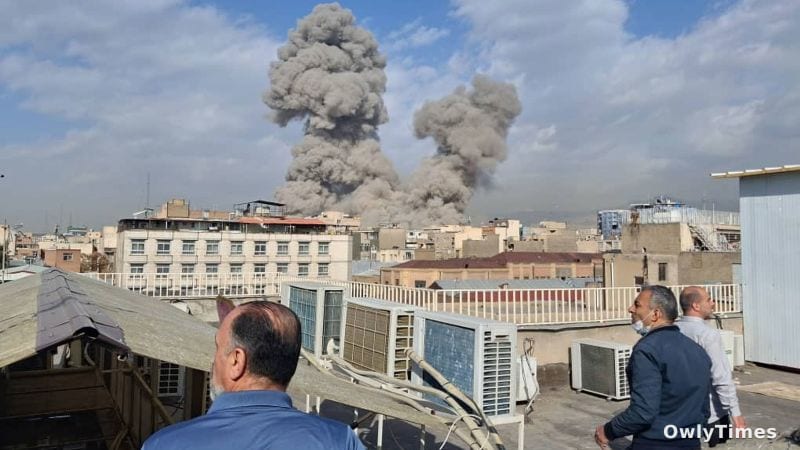
The assassination of Iranian Supreme Leader Ayatollah Ali Khamenei has fundamentally altered the risk assessment. The scale of potential outcomes, as outlined by sources like the Council on Foreign Relations, is staggering. While a “rosiest scenario” envisions a popular uprising leading to a transformed Middle East, the more probable outcomes range from a gutted but resilient Iranian regime capable of future conflict, to a complete collapse into Libyan-style factionalism and a refugee crisis. This isn’t simply a military operation; it’s a geopolitical experiment with potentially catastrophic consequences. Who benefits and who loses isn’t immediately clear, but the immediate losers are likely to be the civilian populations of Iran and the surrounding region, while Israel stands to gain from a weakened adversary, even if temporary. The long-term beneficiaries, if any, remain highly speculative.
See the original CNN story for the full account.
The administration’s shifting rationale for war – regime change, destroying a nonexistent nuclear program, avenging past attacks, preempting Israeli action – reveals a fundamental lack of strategic coherence. Secretary of State Marco Rubio’s argument that the US launched a preemptive war to protect American troops from potential Iranian reprisals against an Israeli attack is particularly revealing. It frames the conflict not as a US initiative, but as a defensive measure undertaken to safeguard a key ally, a justification likely intended to shore up domestic and international support. However, this explanation, coupled with President Trump’s stated desire to “give Iranians their freedom,” highlights a dangerous tension: is this a limited military operation or a full-scale attempt at regime overthrow? This ambiguity, as noted by Senator Jeanne Shaheen, underscores the absence of a clear strategy and the need for presidential clarity.
This imprecision isn’t a bug, it’s a feature. President Trump appears to be deliberately cultivating ambiguity, creating political space to declare victory on his own terms, a lesson seemingly learned from the quagmires of Iraq and Afghanistan. He’s signaling a preference for air power over large-scale land wars, a strategy that reflects a desire for a quick, decisive outcome with minimal American casualties. But history offers little evidence to support the notion that air power alone can trigger regime change and establish a stable successor state. The comparison to Trump’s Venezuela strategy, where a special forces raid aimed to extract President Nicolás Maduro, is a flawed analogy. Washington has struggled for decades to identify and cultivate moderate Iranian officials, and the assassination of Ayatollah Khamenei has likely extinguished any remaining incentives for such figures to emerge.
Even optimistic assessments acknowledge the “curse of post-World War II US foreign policy” – the tendency for well-intentioned interventions to unravel in the face of local realities. The repeated failures in Afghanistan and Iraq serve as stark reminders of this pattern. Elliott Abrams, a veteran of the Bush administration, suggests that even a limited military success could “gut” Iran’s military capabilities, but acknowledges that this outcome doesn’t guarantee a broader political shift. The crucial question now isn’t simply whether the US can inflict military damage on Iran, but whether it can translate that damage into a sustainable political outcome. The next political chess move to watch is whether President Trump will attempt to engage with any surviving elements of the Iranian regime, or double down on a strategy of maximal pressure and regime collapse, a move that could easily escalate the conflict beyond control.