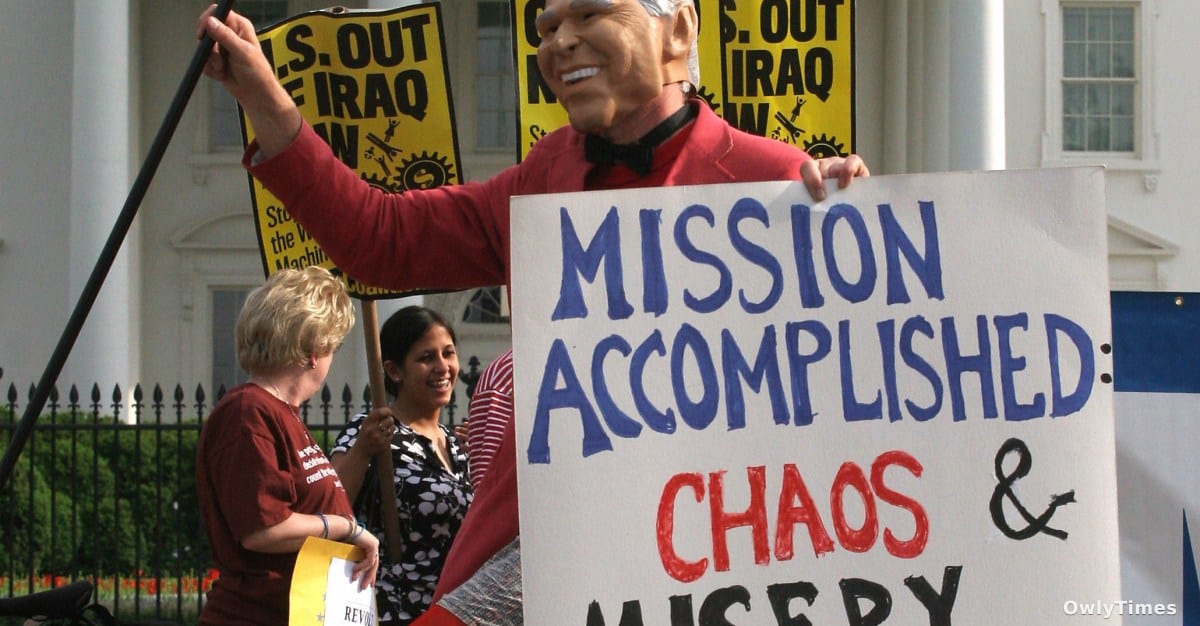

The unraveling isn’t happening on the economic front, despite warnings of recession and a stalled manufacturing sector. It’s unfolding in the Middle East, and the strategic calculus is brutally simple: Donald Trump is replicating the foreign policy failures of George W. Bush, effectively dismantling the anti-establishment coalition that propelled him to power. For nearly a month, the administration has prioritized escalating tensions with Iran, justifying intervention with the same rhetoric of weapons of mass destruction and liberation that defined the lead-up to the 2003 Iraq War – a move that’s fracturing his base and raising uncomfortable questions about the true nature of “Trumpism.”
The initial appeal of Trump lay in a rejection of the post-Cold War consensus championed by the Bush dynasty. For decades, the Republican party, under the Bush family’s influence, prioritized tax cuts for corporations, free trade agreements designed to lower labor costs, and a hawkish foreign policy predicated on maintaining American global hegemony – often with a clear tilt towards Israeli interests. But this “globalist agenda” resonated with a shrinking segment of the American electorate. The forgotten men and women, as Trump famously labeled them, wanted protectionist tariffs, a stronger social safety net, and an end to endless wars that drained resources and American lives. Trump promised all of this, and for a time, delivered.
However, the illusion of a fundamentally different approach began to crack with the escalating conflict with Iran. The justification – preventing Iran from acquiring nuclear weapons and liberating its people – echoes the very arguments used to justify the invasion of Iraq. This isn’t a deviation from Trump’s core principles; it’s a return to a familiar, and deeply unpopular, playbook. Figures like Joe Rogan and Tucker Carlson, once staunch defenders of Trump’s populist message, are now voicing their dismay, recognizing the unsettling parallels. Christopher Caldwell of the Claremont Institute has gone so far as to declare the Iran conflict “the end of Trumpism,” while Micael Lind argues Trump has revealed himself to be simply “George W. Bush with a more colorful personality.”
This piece references the vox.com report.
Lind’s assessment, while provocative, isn’t entirely off-base. While Trump’s immigration policies diverge sharply from Bush’s, a closer examination reveals striking continuities in their foreign policy approaches. Both presidents launched preemptive wars against nations posing no direct threat to the United States, attempted to topple regimes deemed “anti-American,” oversaw significant increases in defense spending, maintained a vast global military presence, and championed American dominance even at the expense of alliances – Trump even threatened a NATO ally with invasion. Both administrations also authorized actions that skirted, or outright violated, international law and, in the case of Bush, tacitly oversaw widespread war crimes, while Trump explicitly endorsed torture and loosened civilian protections.
The key difference lies not in what they did, but why. George W. Bush operated under the banner of “neoconservatism,” a belief system rooted in the Cold War that advocated for spreading democratic capitalism and maintaining military dominance to safeguard American security. Bush genuinely believed, however misguidedly, in exporting freedom, even if national interests often took precedence. He framed American intervention as a benevolent project, seeking to uplift and integrate nations into a global order led by the United States. Trump, conversely, operates from a position of unabashed nationalism and opportunism. He views foreign aid as a waste of resources, allies as burdens, and international agreements as exploitative.
This isn’t a policy driven by ideology, but by a transactional worldview. Trump sees foreign policy as a zero-sum game, where America’s gain must come at another nation’s expense. He openly seeks to confiscate jobs through tariffs, expropriate resources through military intervention, and abandon any pretense of “soft power.” He gutted foreign aid programs and global health initiatives, a decision that, according to estimates from the Harvard T.H. Chan School of Public Health, has already contributed to hundreds of thousands of preventable deaths. This isn’t simply a different approach to foreign policy; it’s a fundamental rejection of the principles of international cooperation and humanitarianism.
Who benefits and who loses from this shift? The military-industrial complex, predictably, stands to gain from increased defense spending and ongoing conflicts. Certain oil interests may also benefit from instability in the Middle East. But the American public, already burdened by economic anxieties, loses. The cost of these interventions – both in terms of financial resources and human lives – will ultimately be borne by taxpayers. US allies, increasingly wary of American reliability, are seeking alternative partnerships, particularly with China. And the global poor, deprived of vital aid and assistance, will continue to suffer. The long-term consequences of this erosion of American leadership are difficult to predict, but they are likely to be profound.
The political chess move to watch next isn’t about domestic policy or economic maneuvering. It’s about the reaction within the Republican party itself. Will the traditional, establishment wing – the remnants of the Bush dynasty and their allies – attempt to reclaim control, capitalizing on the disillusionment of Trump’s base? Or will the populist right double down on its support for Trump, even as he embraces policies that betray their core principles? The answer to that question will determine not only the future of the Republican party, but the direction of American foreign policy for years to come. Specifically, monitor the upcoming primary debates: will challengers directly confront Trump on Iran, or will they remain silent, signaling tacit approval of his increasingly hawkish stance? That silence will be telling.