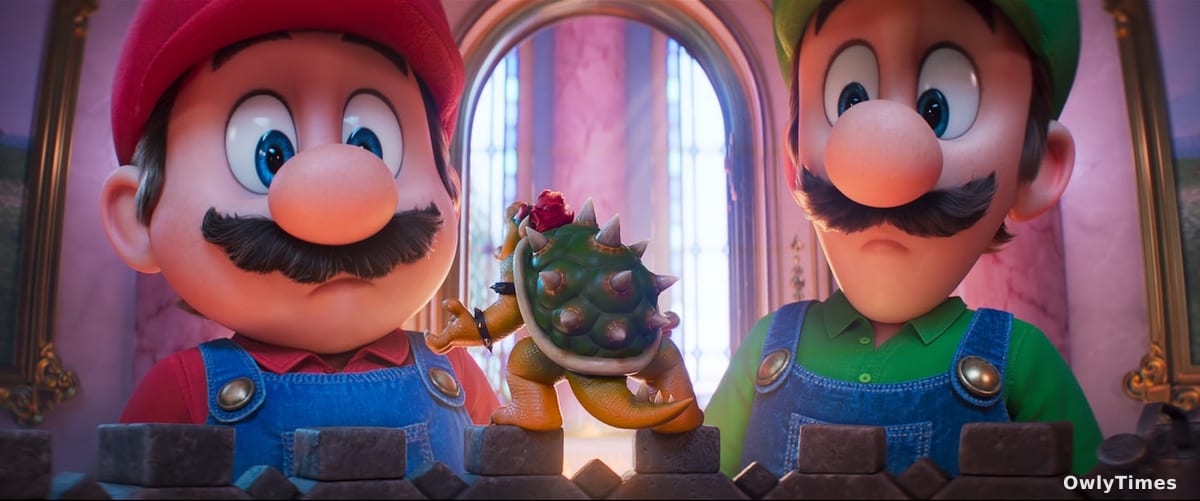

The scent of popcorn hung thick in the air at the AMC in Times Square Wednesday night, but it wasn’t just the promise of a new movie drawing the crowds. It was a pilgrimage. A return to a childhood, a shared cultural touchstone, a brightly colored, pixelated reassurance in a world that feels increasingly… unstable. “The Super Mario Galaxy Movie,” the sequel to 2023’s surprisingly successful “The Super Mario Bros. Movie,” arrived not as a film release, but as an event, projected to be one of the year’s biggest box office draws. But beyond the hype and the mushroom power-ups, this isn’t just about Mario anymore. It’s about nostalgia as a dominant force in modern entertainment, and what happens when a generation collectively decides it wants to feel something familiar.
The Power of Pre-Existing IP
The original “Super Mario Bros. Movie” grossed over $1.36 billion worldwide, a figure that stunned Hollywood and immediately recalibrated the value of pre-existing intellectual property (IP). To put that in perspective, it outperformed even the most optimistic projections, exceeding the lifetime gross of films like “Top Gun: Maverick” and approaching the heights of “Avatar.” This wasn’t a case of a great movie becoming popular; it was a popular thing becoming a movie. And it worked. The sequel’s immediate anticipation, despite a lukewarm 2.5-star review from some critics, proves the point. Nintendo and Illumination Entertainment aren’t selling a story; they’re selling access to a shared emotional history. For those born after 1980, as the New York Times pointed out, Mario isn’t a character, he’s a constant.
Based on the original The Washington Post report.
A Generational Comfort Blanket
That constancy is key. We’re living in an era defined by rapid change, political polarization, and economic uncertainty. It’s no accident that reboots, remakes, and sequels dominate the box office and streaming charts. These aren’t simply creative bankruptcies; they’re a desperate search for stability. Mario represents a simpler time, a pre-internet world of straightforward gameplay and uncomplicated narratives. The appeal isn’t necessarily about the quality of the film itself, but the emotional resonance of revisiting a beloved universe. This is a generation that grew up with Mario, Link, and Pikachu as reliable companions, and now, facing the anxieties of adulthood, they’re turning to those familiar faces for comfort. The success of these films isn’t about escaping reality, but about momentarily anchoring themselves to a reality they remember fondly.
Beyond the Box Office: The Shifting Landscape of Storytelling
The financial implications are massive. Studios are now prioritizing IP with built-in audiences over original concepts, leading to a homogenization of content. While original storytelling isn’t dead, it’s increasingly difficult to break through the noise. The risk is that Hollywood becomes less a creator of culture and more a curator of nostalgia, endlessly repackaging the past for a willing audience. This isn’t necessarily a bad thing – joy is joy, after all – but it does raise questions about the future of cinematic innovation. Will studios continue to invest in new ideas, or will they simply double down on what already works? The April 1, 2026 release date of “The Super Mario Galaxy Movie” feels less like a scheduled event and more like a data point in a larger trend.
What Happens When the Well Runs Dry?
The current strategy is sustainable… for now. But nostalgia isn’t infinite. Eventually, even the most beloved franchises will face diminishing returns. What happens when the generation that grew up with Mario ages and their children aren’t as captivated? What happens when the emotional connection fades? Studios need to start thinking beyond the immediate box office and invest in creating new cultural touchstones, new universes that can inspire the same level of devotion. The success of “The Super Mario Galaxy Movie” isn’t a victory for originality, but a warning. It’s a signal that the industry needs to find a way to balance the comfort of the familiar with the excitement of the new, or risk becoming a museum of its own past. The question isn’t whether Mario will continue to be popular, but whether Hollywood can create the next Mario – and more importantly, whether it wants to.