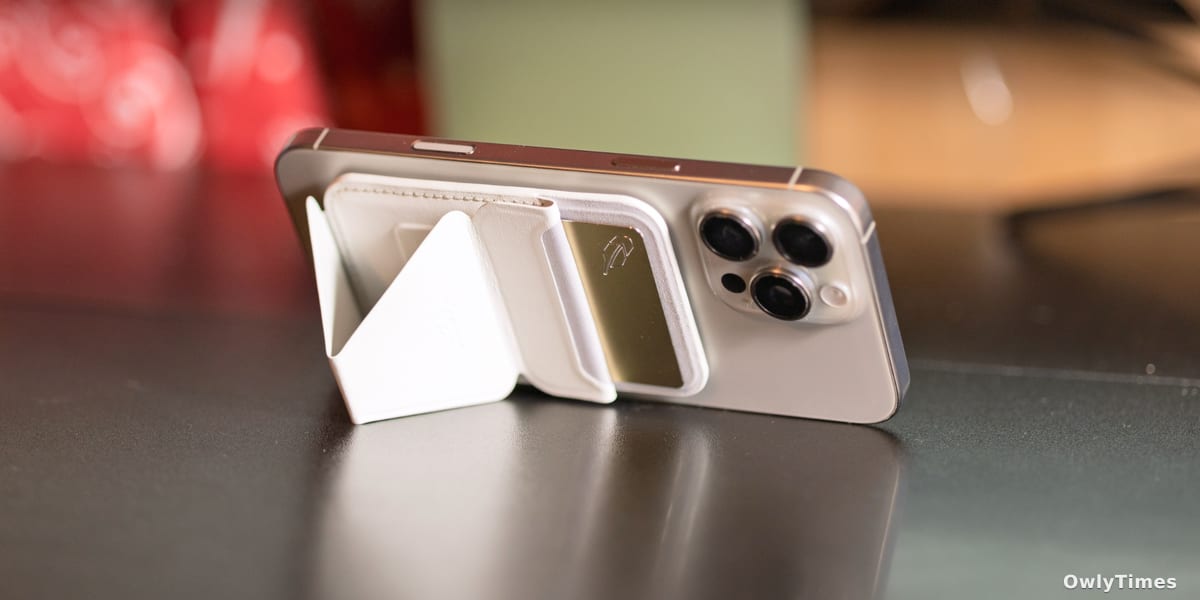

Is the future of “find my” tech just…wallets? We’ve spent years obsessing over AirTags for keys and Tile trackers for everything else, but MOFT’s belated release of its Find My-integrated MagSafe wallet quietly highlights a shift: the everyday objects we actually lose are the ones ripe for tech intervention. After a year-long delay following its CES 2025 debut, the Trackable Snap On wallet is finally available, and the real story here isn’t just another gadget – it’s a tacit admission that our pockets are the black holes of the digital age.
The original MOFT MagSafe wallet with kickstand, as detailed by my colleague over at 9to5Toys, already had a devoted following. It’s a deceptively simple product: vegan leather, slim profile, holds up to three cards, and crucially, features a built-in kickstand for propping up your phone. It solved a genuine problem – the awkwardness of balancing a phone for video calls or media consumption – and did so elegantly. But even the best design can’t prevent the inevitable: misplacement. That’s where the Find My integration comes in, and it’s a surprisingly thoughtful addition.
Reporting from 9to5mac.com informs this analysis.
For $49.99, you get all the benefits of the original wallet, plus the peace of mind knowing you can locate it via Apple’s extensive Find My network. Unlike some competitors, MOFT didn’t lock users into proprietary charging cables; it leverages wireless charging and MagSafe compatibility, a detail that stood out even at CES last year. A single charge, MOFT claims, will last up to six months, and the integrated speaker can reach 70dB – loud enough to pinpoint the wallet even if it’s buried under a couch cushion. This isn’t a revolutionary leap in technology, but it’s a remarkably practical application of existing tools.
The timing is also telling. We’re entering a phase where “smart” everything feels…exhausting. The initial rush to connect every appliance to the internet has given way to a more discerning consumer base. People aren’t clamoring for a smart toaster; they want solutions to real, everyday frustrations. Losing a wallet is a universal experience, and the anxiety it causes is disproportionate to the object’s monetary value. MOFT isn’t selling a futuristic fantasy; it’s selling a small dose of stress relief. The availability of four colors – Jet Black, Misty Cove, Blackberry, and Terracotta – feels less like a design choice and more like an acknowledgement that this is an accessory meant to blend into your life, not stand out. (Though, admittedly, the Terracotta does sound particularly striking with the rumored orange iPhone 17 Pro.)
But the success of this wallet hinges on Apple’s ecosystem. The Find My network’s effectiveness relies on a critical mass of iPhone users, and while that number is substantial, it’s not universal. Android users are, as usual, left out in the cold. This highlights a growing tension in the “find my” space: the walled garden approach versus the desire for interoperability. Apple’s dominance in this area is convenient for its users, but it also reinforces the platform lock-in that many consumers are actively trying to avoid.
Looking ahead, watch for a surge in “loss prevention” accessories targeting everyday items. The market for AirTags and similar devices will likely plateau as manufacturers realize the real opportunity lies in integrating tracking technology directly into the objects we lose most often. The question isn’t if more wallets will follow suit, but when other manufacturers will offer comparable solutions – and whether they’ll be able to match MOFT’s commitment to a seamless, non-proprietary charging experience. Will we see Find My integration in keychains, passport holders, even eyeglasses? I predict that by this time next year, the “find my” feature will be less of a premium add-on and more of a standard expectation for any small, easily misplaced accessory.