
The Unexpected Difficulty of Play: Deconstructing Today’s Connections Puzzle
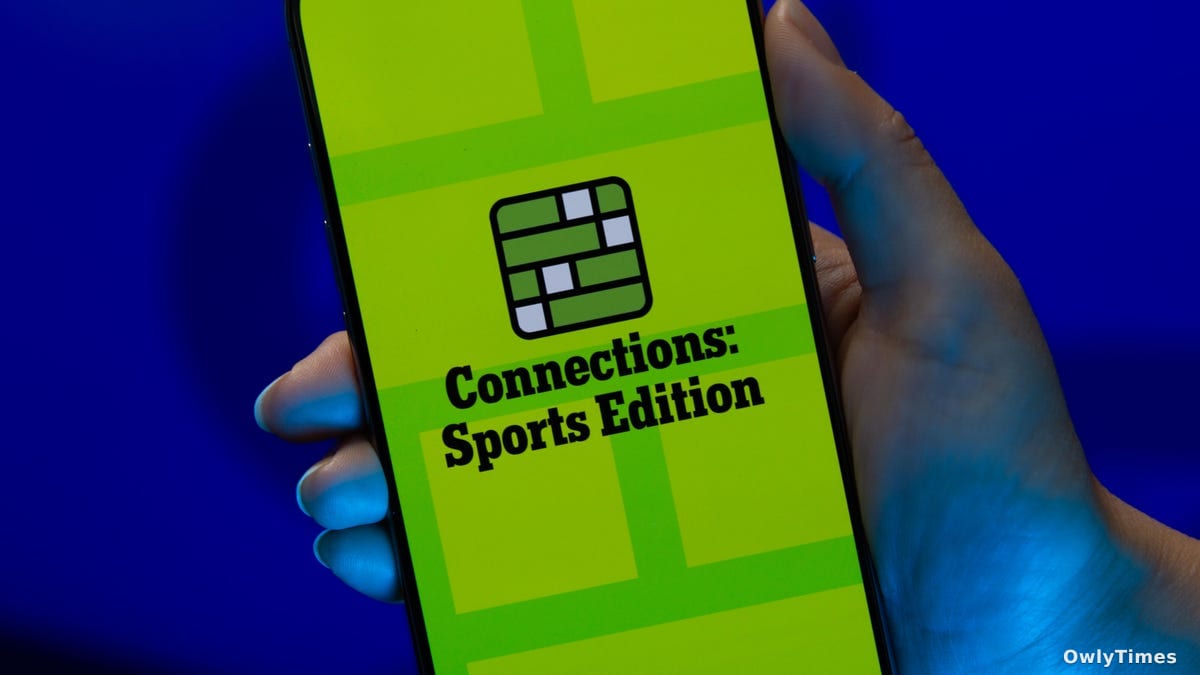
The daily ritual of online puzzles – Wordle, Connections, the Mini Crossword, Strands – has become a significant cultural touchstone, offering a brief mental respite and a shared experience for millions. But today’s Connections: Sports Edition puzzle, published by The Athletic (owned by The New York Times), isn’t just a game; it’s a fascinating case study in how subtle shifts in category construction can dramatically alter perceived difficulty. The particularly challenging purple category – requiring players to identify homophones of Cy Young Award winners – highlights a growing trend towards increasingly oblique and linguistically complex puzzle design. This isn’t simply about making things harder; it’s about testing the boundaries of associative thinking and cultural knowledge.
Background & Context: The Evolution of the NYT Games Suite
The rise of The New York Times’s gaming portfolio is a remarkable success story. Initially focused on traditional crosswords, the acquisition of The Athletic and the subsequent launch of dedicated puzzle variations like Connections: Sports Edition represent a deliberate expansion into niche audiences. Importantly, Connections differs from its counterparts in that it doesn’t appear in the main NYT Games app, residing instead within The Athletic’s app or available for free online. This distribution strategy suggests a targeted effort to drive subscriptions to the sports journalism site. The puzzle’s journey “out of beta,” as reported by CNET, indicates a period of refinement and testing, likely focused on balancing challenge and accessibility. However, today’s puzzle demonstrates that the balance remains precarious, particularly when venturing into highly specific and playful categories.
Original reporting: cnet.com.
Decoding the Difficulty: A Look at Today’s Categories
The February 16, 2026 puzzle presented a clear hierarchy of difficulty. The yellow category – California NBA teams (Clippers, Kings, Lakers, Warriors) – was readily solvable for most basketball fans. The green category, centered around elements of a “SportsCenter” broadcast (anchor, chyron, highlights, ticker), required a familiarity with sports television but remained relatively straightforward. The blue category, linking terms to Jim Harbaugh (49ers, Chargers, Michigan, Stanford), demanded a more focused knowledge base, but the common thread of the coach provided a strong clue. However, the purple category – homophones of Cy Young Award winners (Burns, Coal, Cologne, Sail) – was a significant outlier. This wasn’t a test of sports knowledge, but of phonetic awareness and a surprisingly deep understanding of baseball history. The leap from award winner to sound-alike word is a cognitive jump that few players would anticipate.
What This Means: Implications for Players and The Athletic
The difficulty of the purple category isn’t a flaw, but a deliberate design choice. It signals a willingness to push the boundaries of the Connections format, moving beyond simple categorization and into more abstract and playful territory. For players, this means a greater reliance on lateral thinking and a willingness to embrace ambiguity. For The Athletic, the increased challenge could serve multiple purposes. It generates buzz and discussion – as evidenced by the demand for hints and answers – and reinforces the perception of the puzzle as intellectually stimulating. However, it also risks alienating casual players who might be discouraged by the difficulty. The reliance on niche knowledge (baseball history, homophones) also subtly reinforces the value proposition of a subscription to a dedicated sports journalism outlet like The Athletic – where such knowledge is cultivated and readily available.
Looking Ahead: The Future of Puzzle Design
The success of Connections and its variants hinges on maintaining a delicate balance between challenge and accessibility. We should expect to see continued experimentation with category construction, potentially incorporating more obscure references, linguistic puzzles, and multi-layered associations. The key will be to avoid becoming too esoteric, lest the puzzles become exercises in trivia rather than engaging mental challenges. The fact that today’s puzzle sparked such widespread discussion and a search for solutions suggests that The Athletic is onto something. The next few weeks will reveal whether this increased difficulty is a temporary deviation or a sign of a broader shift in the puzzle’s design philosophy. Players should prepare for more unexpected connections and a greater need for creative problem-solving.