
The pursuit of quantum technology often feels like a race happening in isolated labs, a fragmented effort where breakthroughs in materials science don’t readily translate into functional devices. But what if the key to unlocking quantum’s potential isn’t just better science, but a fundamentally different location for doing that science? New York University is betting on precisely that idea with the launch of its NYU Quantum Institute (NYUQI), a bold initiative designed to leverage the unique density and interconnectedness of New York City as a catalyst for quantum innovation. This isn’t simply about proximity to industry – though the fact that over 500 tech giants, banks, and hospitals exist within a six-mile radius of the NYU campus is undeniably significant – it’s about intentionally engineering collisions between disciplines to accelerate a field historically hampered by siloing.
The core premise, as articulated by Juan de Pablo, Executive Vice President for Global Science and Technology at NYU and Executive Dean of the NYU Tandon School of Engineering, is that “breakthroughs happen at the interfaces between different domains.” For years, physicists have developed novel quantum materials, computer scientists have designed algorithms to exploit quantum phenomena, and engineers have attempted to build the hardware to realize these concepts. However, the translation between these stages has been slow and inefficient. NYUQI aims to dismantle these barriers by physically and intellectually integrating physicists, engineers, materials scientists, computer scientists, biologists, and chemists into a single, holistic operation. This isn’t merely an organizational restructuring; it’s a deliberate attempt to mimic the rapid iteration cycles found in successful tech companies, where hardware and software development occur in tandem.
Based on the original spectrum.ieee.org report.
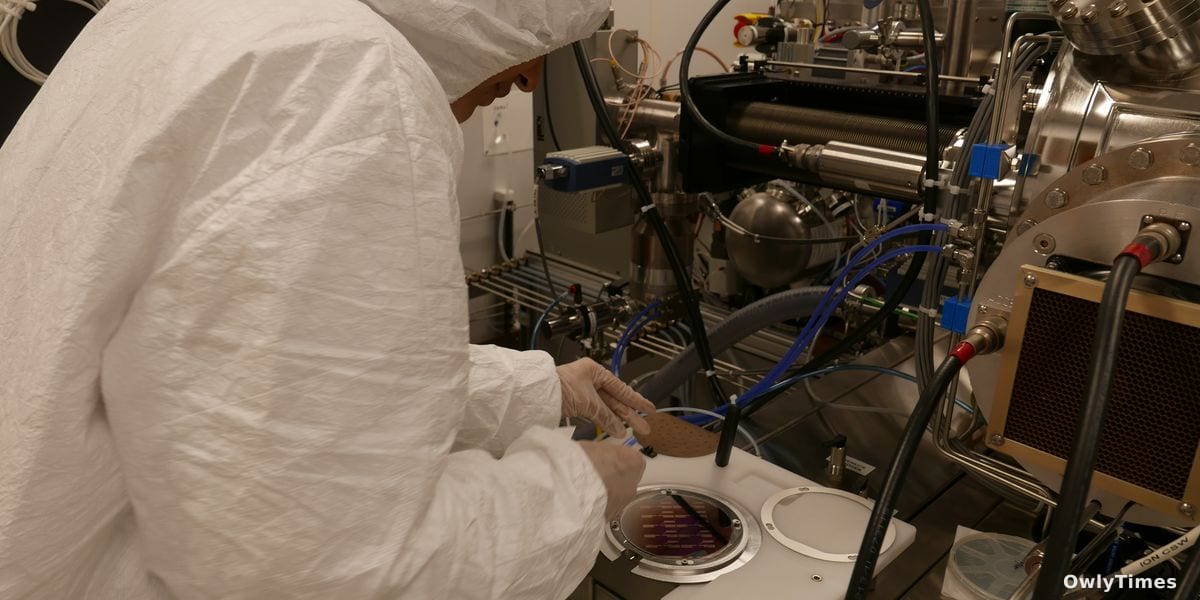
This integrated vision is backed by a substantial physical investment. The NYUQI will occupy a renovated one-million-square-foot facility in Manhattan’s West Village, complemented by a state-of-the-art Nanofabrication Cleanroom in Brooklyn. This combination is crucial. The Manhattan facility will serve as the hub for theoretical research and algorithm development, while the Brooklyn cleanroom will act as a “high-tech foundry” where these concepts are translated into physical devices. This close proximity allows for immediate testing and refinement, a process that traditionally takes months or even years in more dispersed research environments. The recent securing of $1 million in funding, spearheaded by Senators Charles Schumer and Kirsten Gillibrand, to bring Thermal Laser Epitaxy (TLE) technology to NYU’s Nanofab further underscores this commitment to cutting-edge fabrication capabilities – marking the first time this equipment will be utilized in a U.S. academic setting.
What’s particularly noteworthy is NYU’s early focus on real-world deployment. While many quantum research institutions remain focused on fundamental science, NYUQI is already leveraging its urban location to test critical applications like Quantum Communications. In a first-of-its-kind demonstration, NYU collaborated with the quantum start-up Qunnect to successfully transmit quantum information through existing telecom fiber optic networks between Manhattan and Brooklyn, spanning a ten-mile distance. This isn’t a simulated experiment; it’s a functioning prototype operating in the most demanding urban environment imaginable. Headlines often proclaim the imminent arrival of a “quantum internet,” but NYUQI is actively building the infrastructure to make that a reality, and crucially, doing so in a context that reflects the challenges of real-world implementation.
However, it’s important to temper expectations. While this demonstration is a significant step, scaling quantum communication networks remains a formidable challenge. Fiber optic cables aren’t perfect, and quantum signals degrade over distance, requiring sophisticated error correction techniques and potentially the deployment of quantum repeaters. The NYUQI’s success isn’t guaranteed, and the technology still faces significant hurdles before it can be widely adopted. Furthermore, the Institute’s reliance on existing telecom infrastructure introduces dependencies and potential limitations on control and customization.
Looking ahead, the most enduring contribution of NYUQI may not be specific technological breakthroughs, but the specialized workforce it cultivates. The quantum field suffers from a critical skills gap – a shortage of individuals trained not just in physics, but in the integrated, “full-stack” approach that quantum demands. NYUQI aims to address this by creating a pipeline of 100 to 200 graduate and doctoral students, fostering collaboration across Computing, Sensing, and Communications. The launch of a new Master of Science in Quantum Science & Technology at NYU Tandon further solidifies this commitment to interdisciplinary education. This focus on creating professionals who can seamlessly communicate across disciplines is a strategic move, recognizing that quantum challenges are as much managerial and philosophical as they are technical.
The question now is whether this model – a densely integrated, urban-based quantum institute – will prove to be more effective than the traditional, siloed approach. Will the constant interaction between disciplines and the proximity to potential industry partners truly accelerate the pace of innovation? And, perhaps more importantly, will NYUQI be able to attract and retain the top talent needed to sustain this ambitious endeavor? The next five years will be critical in determining whether NYU’s bet on strategic geography and interdisciplinary collaboration will pay off, and whether New York City will emerge as a global leader in the quantum revolution.