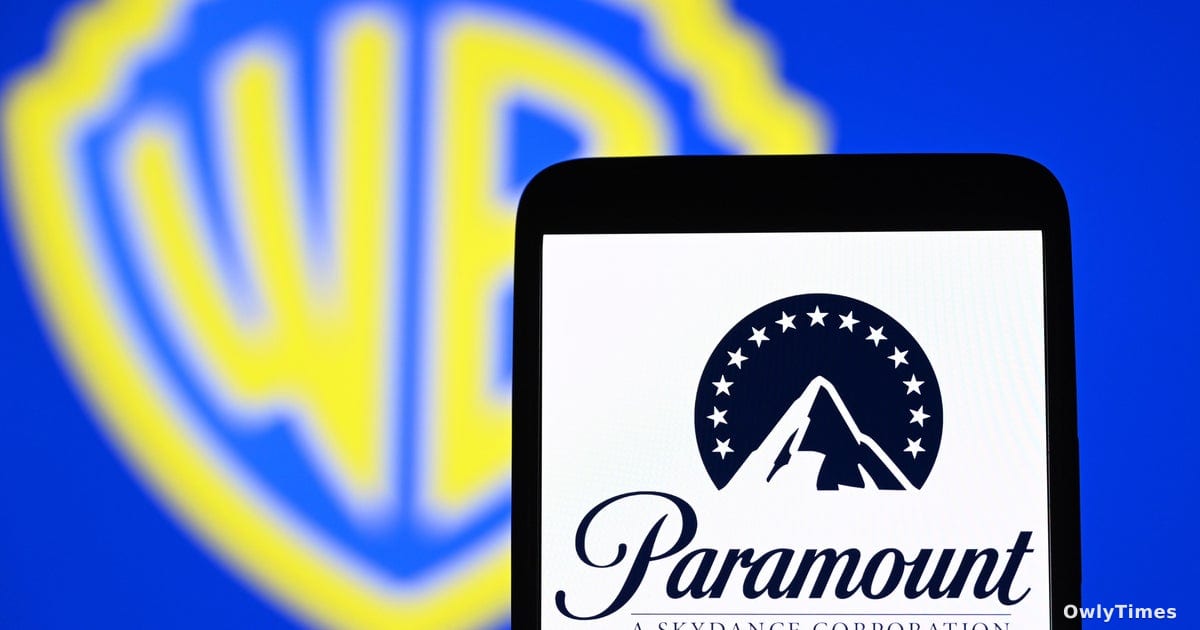

A $110 billion mega-merger that would fundamentally restructure the American media landscape is facing a decisive week in federal court, as state regulators, consumer groups, and labor unions launch coordinated legal challenges. The proposed combination of Paramount Skydance and Warner Bros. Discovery (WBD) represents one of the largest corporate consolidations in entertainment history, but it has triggered intense regulatory scrutiny. While the Justice Department closed its investigation into the transaction in June, a coalition of 12 states led by California Attorney General Rob Bonta filed a major antitrust lawsuit on Monday to block the deal.
There is slight disagreement on the exact transaction value among financial reports; CBS News reports the deal at $110 billion, while Variety values the merger at $111 billion. If completed, the combined behemoth would unite Paramount’s studio and cable networks, including Comedy Central and Nickelodeon, with WBD’s massive portfolio, which includes the "Harry Potter" franchise, CNN, HBO Max, TBS, and TNT. The state coalition's lawsuit, filed under the Clayton Act of 1914, argues that this massive consolidation will stifle competition, drive up consumer prices, and reduce employment opportunities for industry professionals.
The Financial Stakes and the Ticking Fee
To understand the urgency behind the legal maneuvering, one must follow the money. Paramount has stated it expects the transaction to close in the third quarter of 2026. However, if the merger is not completed by September 30, Paramount has committed to paying its shareholders a 25-cent-per-share "ticking fee." According to CBS News, this penalty will cost the company a staggering $650 million per quarter, creating immense financial pressure on executives to resolve these legal disputes swiftly.
The states are not the only entities attempting to halt the deal. In a separate legal battle, a group of consumers had previously filed a lawsuit in April seeking an immediate halt to the transaction. However, as reported by Deadline, U.S. District Judge Araceli Martínez-Olguín denied the consumers' motion for a preliminary injunction, stating they failed to show a likelihood of success or "irreparable harm." While the judge took Paramount's motion to dismiss the consumer lawsuit under advisement, she turned her attention to the more formidable challenge mounted by the state attorneys general.
Market Concentration and the Battle Over Box Office Share
The 12-state coalition—which includes Arizona, California, Colorado, Connecticut, Massachusetts, Minnesota, Nevada, New Jersey, New Mexico, New York, Oregon, and Washington—claims the merged entity would wield dangerous market power. According to Bonta’s office, the combined company would control nearly one-third of all cable programming and more than one-third of blockbuster films. As reported by Variety, the lawsuit alleges that just four major companies—Disney, Universal, Sony, and the newly merged Paramount-WBD—would command a crushing 93% of the blockbuster film distribution market.
Paramount’s legal team filed an aggressive opposition to the states' motion for a temporary restraining order on Thursday, branding the lawsuit "one of the weakest merger challenges in modern antitrust history." According to Variety, Paramount argued that the states’ market concentration figures ignore the "real-world economics" of the film business. To prove that barriers to entry are low, Paramount pointed to competitors like Universal, Disney, Sony, Lionsgate, A24, NEON, and Amazon MGM Studios, citing the massive success of Amazon MGM’s "Project Hail Mary" as evidence that rival distributors can easily scale up production if Paramount were to reduce its theatrical output.
Labor Backlash and Cable Affiliate Fees
Adding to the corporate headwinds, the Writers Guild of America (WGA) filed its own independent lawsuit on Tuesday to block the merger. Michele Mulroney, President of the Writers Guild of America West, warned that the merged firm would become the largest buyer of original film and television programming in the country, effectively eliminating buying competition and harming creative diversity. Paramount has strongly contested this narrative, asserting that the combined company, led by CEO David Ellison, will actually expand opportunities by guaranteeing the release of 30 films per year in theaters and maintaining two distinct, independent film studios to foster creative competition.
On the television front, state regulators argue that combining two of the three largest basic cable channel owners gives the new entity unfair leverage to inflate carriage fees for satellite and cable providers. Paramount's defense team countered that their respective cable lineups are complementary rather than direct substitutes. Furthermore, Paramount noted that the ongoing trend of cord-cutting is actively eroding the leverage of all programmers, as the overall pay-television subscriber base shrinks annually.
What this means for your wallet comes down to the direct cost of entertainment. If the state attorneys general succeed in proving that this merger violates antitrust laws, it could prevent a consolidated duopoly from raising monthly cable subscription rates and theater ticket prices. Conversely, if the courts side with Paramount, the company promises that its increased scale will secure the survival of legacy theater releases and protect creative jobs. The immediate financial and regulatory future of this deal rests on a crucial hearing scheduled for Friday at 10 a.m., where Judge Martínez-Olguín will rule on the states' motion for a temporary restraining order.