
The Unexpected Power of Teaching to Learn: Sandpoint High’s Science Circuit
The enduring question of how students truly master a subject isn’t about more textbooks or longer lectures. Increasingly, research suggests that the act of teaching itself is a powerful engine for learning – a principle vividly demonstrated at Sandpoint High School’s annual Science Circuit. This isn’t simply a science fair; it’s a carefully constructed experience where high school students transform into educators for a captivated audience of elementary schoolers, and the benefits ripple outwards, impacting not just the presenters but also their future teachers and the broader school community. While headlines might focus on the “cool” demonstrations – inflating cow lungs with bicycle pumps, narrowly avoiding bowling balls, crafting bubble tea – the core innovation lies in the pedagogical shift, forcing students to confront the complexities of knowledge transfer.
See the original bonnercountydailybee.com story for the full account.
The Science Circuit, now in its tenth year after a brief pause during the COVID-19 pandemic, began with science teacher Mamie Jennings and is now spearheaded by assistant principal Kari Grainer. It tasks students in three honors science classes with designing and executing interactive science lessons for younger students. This year’s event, held in the Sandpoint High School gym, saw elementary students enthusiastically engaging with exhibits ranging from the physics of pendulums to the intricacies of human physiology. Mike Martz, a physics teacher at SHS, emphasizes the crucial element of role reversal. “It's so cool, because the students are having to play the teacher, right? So, it helps them recognize how hard it is to be the teacher sometimes,” he explained. This isn’t about rote memorization; it’s about understanding a concept deeply enough to explain it clearly to someone else – a benchmark of true comprehension. The event’s low cost to the district, creating a field trip experience within school walls, adds another layer of value.
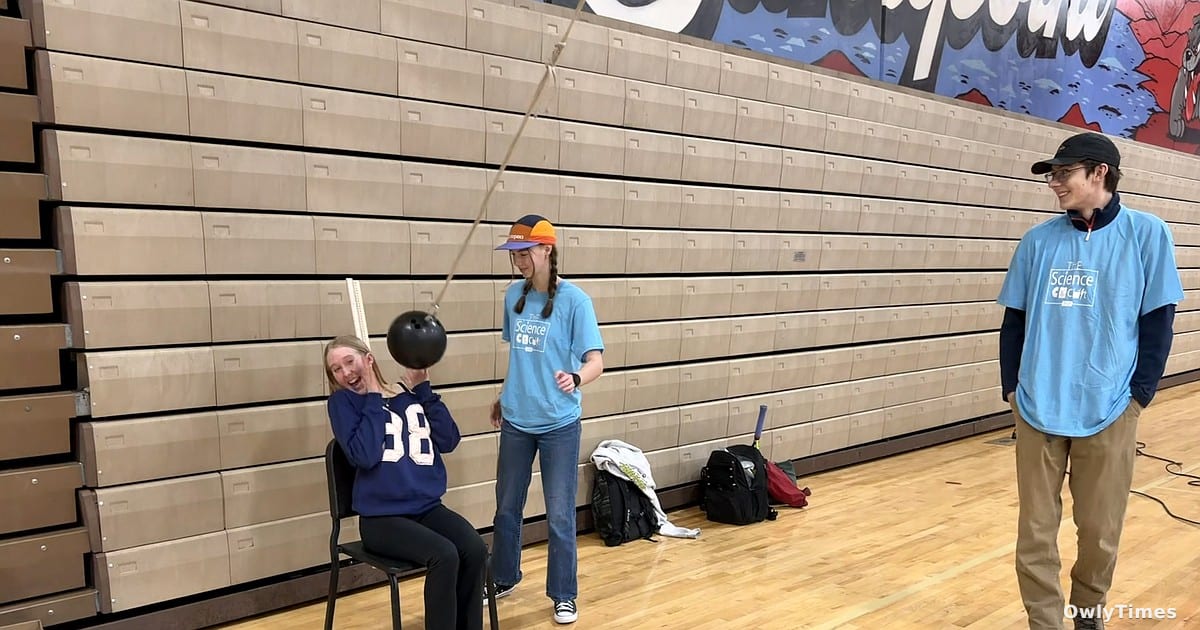
The “Don’t Flinch” exhibit, featuring a bowling ball swung precariously close to a student’s face, consistently draws attention – and anxiety, according to Grainer. But beyond the spectacle, it’s a demonstration of fundamental physics principles, specifically the conservation of energy. Similarly, the cow lung inflation station, while perhaps visually arresting, isn’t merely about grossing out fifth graders. It’s a tangible way to understand the mechanics of respiration, a concept that can often feel abstract in a textbook. What’s notable is that many of these demonstrations aren’t dictated by teachers; students often generate their own ideas, with some, like the bowling ball pendulum, becoming enduring favorites. This student-led creativity is a key component of the Circuit’s success, fostering a sense of ownership over their learning.
However, it’s important to consider the limitations of drawing broad conclusions from a single school’s program. The Science Circuit operates within a specific context – a high school with honors science classes and a supportive administration. The observed benefits – increased student understanding, development of teaching skills – may not be directly transferable to schools with different resources or student demographics. Furthermore, the long-term impact is difficult to quantify. While Martz notes that he occasionally hears from former students recalling their experiences as elementary students attending the Circuit, systematic tracking of these students’ academic trajectories is currently lacking. The anecdotal evidence is compelling, but more rigorous data collection is needed to establish a definitive link between participation in the Science Circuit and long-term academic success.
Looking ahead, the most valuable next step would be to expand the scope of the study. Researchers could compare the academic performance of students who participate in similar “teach-to-learn” programs with those who receive traditional instruction. Investigating the cognitive processes involved – how students adapt their understanding when preparing to teach – would also be insightful. Perhaps most importantly, educators should consider how to integrate elements of the Science Circuit model into regular classroom practice. Could assigning students the task of explaining concepts to their peers become a standard pedagogical tool? The question isn’t simply whether this event is “neat,” as Martz puts it, but whether it offers a glimpse into a more effective and engaging future for science education. Will we see a wider adoption of this model, and more importantly, will we see a measurable improvement in student understanding as a result?