
Is it possible for a nation’s social contract to dissolve under the weight of a 30% unemployment rate? The ongoing volatility in South Africa suggests that when economic anxiety hits a boiling point, the first thing to be discarded is the nuance of policy, replaced instead by the blunt instrument of "deadlines" and mass displacement.
The real story here isn't just the logistical chaos of the June 30th deadline; it is the terrifying speed at which the digital-era rhetoric of anti-migrant groups has translated into physical, real-world eviction notices.
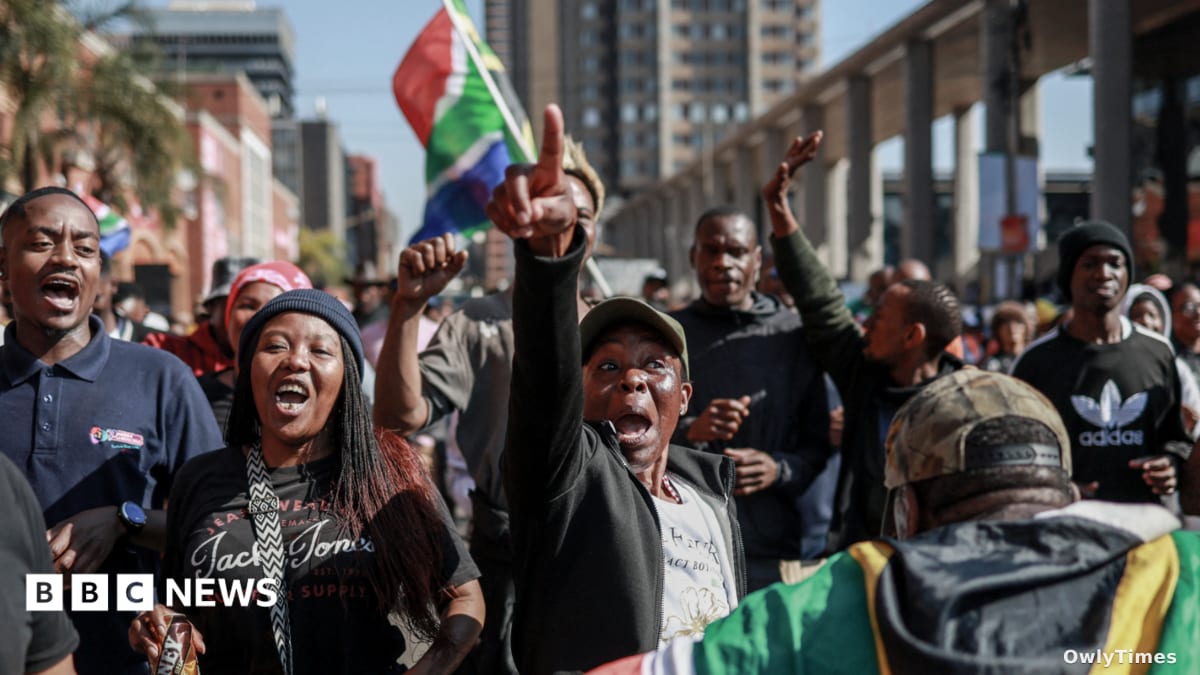
While the BBC reports that the government characterized the protests as "largely peaceful" with only isolated incidents of looting, the ground-level reality reported by The Guardian paints a bleaker picture of systematic intimidation. Protesters in Durban were observed making throat-slitting gestures toward residents, and there are verified accounts of demonstrators in Germiston forcibly evicting residents to hand them over to police for document checks.
The Math of Displacement
The scale of this exodus remains a point of contention among reporting bodies. The Guardian cites estimates that tens of thousands have fled, noting that police report over 25,000 individuals have been repatriated. However, the BBC notes that over 50,000 migrants have been arrested for illegal status since January, illustrating a massive state-led effort to mirror the demands of groups like Operation Dudula.
There is also a stark divide in the reported human cost. The Guardian reports that at least four people have been killed in the lead-up to these protests, including a 29-year-old Malawian man in Pietermaritzburg. In contrast, the BBC cites the African Centre for Migration and Society’s "Xenowatch" tracker, which identifies two deaths for the year. This discrepancy underscores how quickly information—and tragedy—can be obscured when a country is in the grip of a security-heavy crackdown.
Technology and the Echo Chamber
For the ordinary user in Johannesburg or Durban, this isn't a headline—it’s an environment defined by the "deadline." Much like how an algorithm filters out uncomfortable truths to keep a user engaged in a specific narrative, the anti-migrant movement has effectively used social pressure to "filter" foreign nationals out of public spaces.
This is not a new phenomenon, but rather a recurring cycle. The Guardian notes that in 2008, similar riots led to 62 deaths and the displacement of 150,000 people. We are seeing the same patterns of economic scapegoating, where high unemployment is mapped directly onto the presence of foreign workers. President Cyril Ramaphosa has attempted to thread the needle by meeting with protest leaders while simultaneously condemning vigilantism, but his calls for constitutional protection seem increasingly drowned out by the rallying cry of "Abahambe!"—or "They must go!"
The Cost of the "Deadline"
The most profound impact is on those caught in the middle of the system's failure. Migrants like Jackson Makungwa, who held legal status but found the bureaucracy of permit renewal impossible to navigate, represent the "hidden" victims of this crackdown. As Al Jazeera reports, the June 30th deadline has passed, but the structural issues driving this tension—weak governance and economic inequality—remain untouched.
The next phase of this crisis will be determined by whether the state can maintain its monopoly on law enforcement. Jacinta Ngobese-Zuma of the group March and March has promised protests every Thursday for the next six months. Unless the government provides a clear path for legal migrants and a stable economic floor for its own citizens, the cycle of "taking action" against neighbors will likely continue, further fracturing the social fabric of the region.