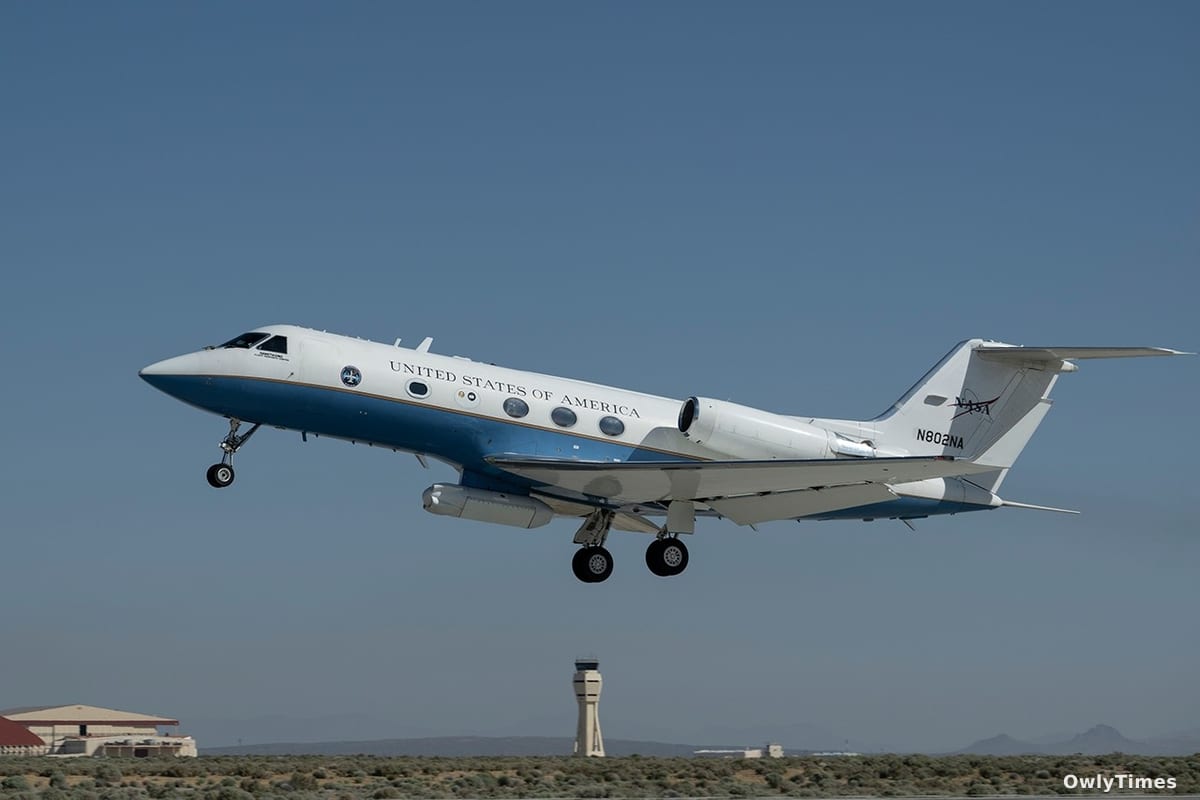

How do we measure the infinitesimal shifts of the Earth’s crust before they manifest as catastrophic seismic events? While ground-based sensors provide localized snapshots of tectonic activity, the challenge of mapping deformation across entire fault systems requires a vantage point that is both precise and expansive. The recent deployment of NASA’s C-20A aircraft, which completed a series of flights on April 29 over Central California, represents a critical bridge between localized field measurements and the global monitoring capabilities of the NISAR (NASA-ISRO Synthetic Aperture Radar) mission.
Calibrating the Eyes in the Sky
The scientific objective here is not merely to observe the San Andreas fault, but to calibrate the highly sensitive L-band radar that will soon define the NISAR mission’s performance. By flying the Uninhabited Aerial Vehicle Synthetic Aperture Radar (UAVSAR), an instrument developed at NASA’s Jet Propulsion Laboratory in Southern California, researchers can create a high-resolution reference map. This airborne data acts as a "ground truth," allowing scientists to account for how the Earth’s atmosphere might distort or dampen the signals received by the satellite once it is fully operational.
It is important to distinguish what this campaign achieved versus the broader goals of the satellite mission. While news headlines might suggest that these flights are actively predicting earthquakes in real-time, the reality is more methodological. The UAVSAR flights are effectively tuning the instrument. They are documenting surface motion driven by crustal deformation and mapping land subsidence in the Central Valley—the latter being a distinct process caused by groundwater withdrawal rather than tectonic movement. Distinguishing between these two types of surface changes is essential for the accuracy of future seismic models.
The Technical Burden of Precision
Operating out of NASA’s Armstrong Flight Research Center in Edwards, California, the C-20A serves as a mobile laboratory. The campaign, which began on September 30, 2025, is designed to build a robust time series. This longitudinal approach is necessary because the Earth’s crust does not move in a uniform or predictable rhythm. By capturing multiple data points over a six-month period, the team can isolate long-term tectonic trends from transient surface phenomena.
However, there are inherent limitations to consider when interpreting these data. Airborne radar provides exceptional detail for a specific region, but it is limited by the flight path and the duration of the campaign. Furthermore, the correlation between surface deformation and earthquake likelihood remains an area of active research. While we know that subtle motions around faults are precursors to stress buildup, translating these measurements into a definitive assessment of seismic risk is a complex analytical process that requires years of historical data to refine.
Expanding the Global Watch
The ultimate goal of this joint mission between NASA and the Indian Space Research Organisation (ISRO) is to achieve a level of coverage previously unattainable. Once the NISAR mission reaches its full potential, it is designed to scan nearly all of the planet’s land and ice surfaces twice every 12 days. This frequency of observation is the real breakthrough; it shifts the paradigm from periodic, reactive monitoring to a near-continuous watch over the planet’s most volatile geological processes.
The next readings from the ongoing UAVSAR flight series will show whether the calibration data successfully aligns with the satellite's initial inputs. As the team continues to integrate these airborne measurements with the broader mission data, the focus will remain on refining the algorithms that detect the earliest signs of fault-line deformation. This iterative process of validation is what will ultimately determine the reliability of the global seismic models that depend on NISAR’s high-frequency mapping.