
The Geopolitics of Reconstruction: Trump’s Board of Peace and the Shifting Middle East Order
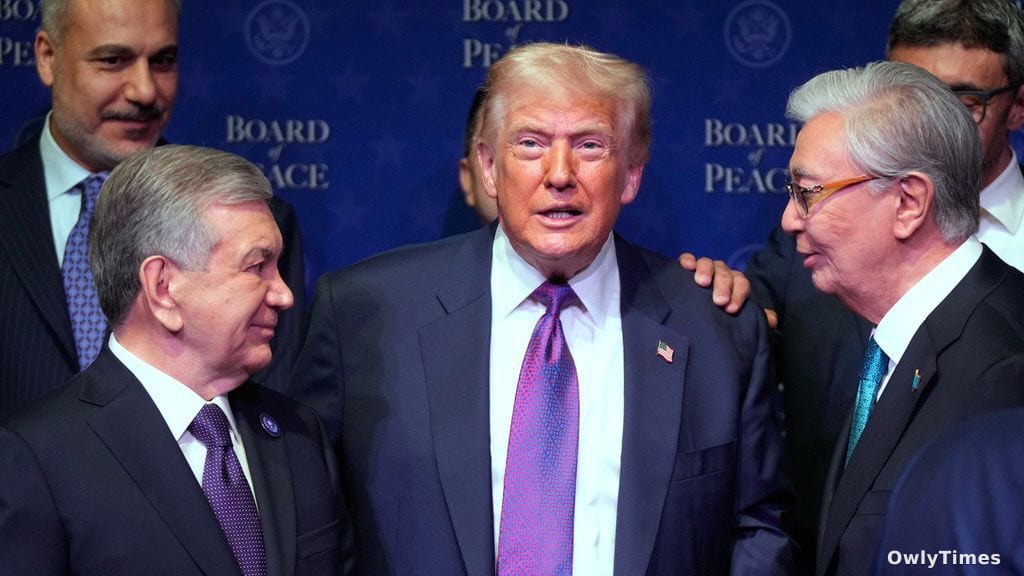
The $10 billion pledge from the United States to the Board of Peace isn’t simply humanitarian aid; it’s a calculated assertion of influence, a direct challenge to established international structures, and a strategic bet on a new regional order. President Trump’s initiative, launched in January and formalized with Thursday’s meeting of 17 world leaders, bypasses traditional multilateral institutions like the United Nations – and that’s precisely the point. The move isn’t about solving the Gaza crisis in isolation, but about leveraging reconstruction as a vehicle for reshaping the geopolitical landscape, offering a parallel power center to the UN and its existing constraints.
The financial commitments announced – $7 billion from seven other nations including Kazakhstan, Azerbaijan, and Saudi Arabia, alongside the UN’s $2 billion and FIFA’s $75 million – paint a picture of broad, if carefully curated, international buy-in. However, the composition of the Board is revealing. The attendance of nations like Indonesia and Morocco, actively seeking to expand their regional roles, suggests a coalition built not on shared values, but on shared interest in a less US-constrained Middle East. Conversely, the conspicuous absence of key European powers like France and Germany, who have declined membership citing concerns over undermining the UN, highlights the growing fissure in transatlantic relations and a resistance to perceived American overreach. President Macron’s statement last month – that the Board’s charter “raises serious questions…with respect to the principles and structure of the United Nations” – underscores the depth of this concern.
Who benefits and who loses from this new structure? Israel stands to gain significantly. The Board’s commitment to dismantling Hamas’ infrastructure, a key Israeli demand, is explicitly enshrined in the ceasefire deal and reinforced by the planned International Stabilization Force. The commitment of Albania, Indonesia, Kazakhstan, Kosovo, and Morocco to contribute troops, alongside Egyptian and Jordanian training support, provides a security framework that directly addresses Israeli concerns. The Palestinian population, ostensibly the primary beneficiary of the reconstruction efforts, is positioned as a dependent variable in this power play. While the promise of 400,000 new homes and $30 billion in infrastructure, as outlined by Apollo Global Management CEO Marc Rowan, is substantial, it comes with the implicit condition of demilitarization and acceptance of the Board’s security protocols. The United States, meanwhile, gains a platform to project influence, cultivate alliances, and potentially broker further regional deals outside the traditional UN framework.
This article draws on reporting from Spectrum News.
This isn’t the first instance of a major power attempting to circumvent or supplant the UN. The Suez Crisis of 1956 saw a similar attempt by Britain, France, and Israel to act outside the UN framework, ultimately resulting in international condemnation and a retreat. However, the current situation differs in its scale and ambition. The Board of Peace isn’t a reactive intervention; it’s a proactively constructed alternative, backed by significant financial resources and a clear long-term vision – a “self-governed” Gaza integrated into a wider regional economic network by Year 10, as presented in the Board’s promotional video. The emphasis on private sector involvement, with figures like Israeli billionaire Yakir Gabay and FIFA playing prominent roles, further distinguishes it from traditional, state-led reconstruction efforts. This reliance on non-governmental actors allows for greater flexibility and potentially faster implementation, but also raises concerns about accountability and transparency, as acknowledged by the Board’s unanimous vote to establish “principles of financial integrity.”
The logistical challenges are immense. Removing 70 million tons of rubble and dismantling hundreds of miles of tunnels, as Yakir Gabay pointed out, is a monumental undertaking. The success of the International Stabilization Force, commanded by Maj. Gen. Jasper Jeffers, hinges on its ability to effectively disarm Hamas and maintain security without exacerbating existing tensions. But the more critical question is whether the Board of Peace can overcome the inherent contradictions within its own structure. Can a security framework imposed by nations with varying geopolitical agendas truly foster a “self-governed” Gaza?
The political chess move to watch next is the response from the UN Security Council. Will they attempt to integrate the Board of Peace into the existing UN framework, potentially legitimizing its existence? Or will they continue to view it as a rival, leading to a further fragmentation of international efforts and a deepening of the divide between the US and its European allies? The answer will reveal whether President Trump’s gamble on a new Middle East order will pay off, or whether the Board of Peace will ultimately become another example of a power attempting to rewrite the rules of the game – and failing.