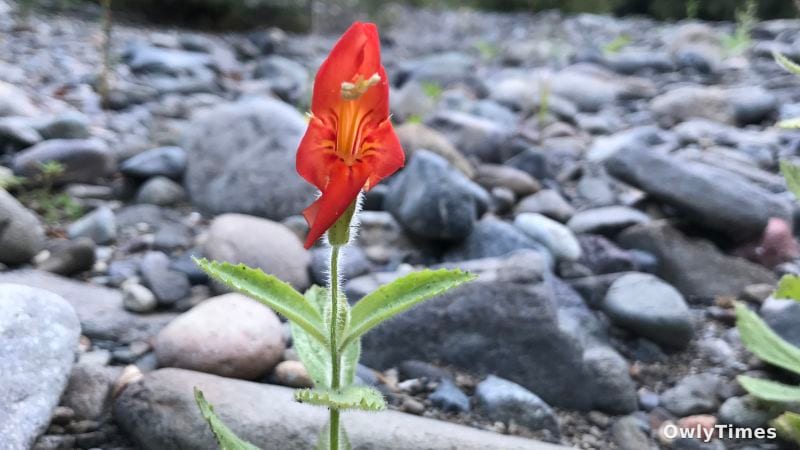

The narrative around climate change is often dominated by loss – shrinking habitats, species extinction, and irreversible damage. But a recent study published in Science offers a compelling, and cautiously optimistic, counterpoint: some species possess a remarkable capacity for rapid adaptation. The research, led by Daniel Anstett at Cornell University, doesn’t dispute the severity of the climate crisis, but it demonstrates a phenomenon called “evolutionary rescue” in action, revealing how a wildflower population in California not only survived the state’s worst drought in 1,200 years (2012-2015), but rebounded through surprisingly swift genetic changes. This isn’t simply a story of resilience; it’s a demonstration of evolution happening in real-time, a process previously observed primarily in laboratory settings.
The drought period in question was particularly devastating, contributing to the death of over 100 million trees across California and exacerbating an ongoing megadrought that began in 2000. While headlines have proclaimed the scarlet monkeyflower, Mimulus cardinalis, “defied the odds,” the study’s findings are more nuanced. Anstett and his team tracked 55 populations of the wildflower, noting declines of up to 90% in some areas. The species as a whole wasn’t facing immediate extinction, but localized populations were teetering on the brink. The crucial finding wasn’t simply survival, but how certain populations survived – and the speed with which they recovered, typically within two to three years.
For eight years, the researchers meticulously combined field observations with genomic analysis. They didn’t just count flowers; they visited 19 sites annually to document plant survival, then collected seeds to sequence the flowers’ genomes. This dual approach is what sets this study apart. Previous observations of evolutionary rescue, such as in Tasmanian devils developing cancer resistance or killifish adapting to pollution, lacked this level of comprehensive evidence linking genetic shifts directly to demographic recovery. The team identified genetic variations already present within the populations – not new mutations arising because of the drought, but existing traits that conferred a survival advantage. Plants carrying these drought-resistant genes were better equipped to “bunker down,” growing more slowly and prioritizing longevity over rapid reproduction, a strategy termed “drought avoidance.”
Based on the original CNN report.
This strategy is particularly relevant given the scarlet monkeyflower’s ecological niche. Found in streams and seeps across California, Baja California, and Southern Oregon, the plant relies on consistent water flow to complete its life cycle. When that flow stops, the choice isn’t about thriving, but about enduring. The study reveals that the plants that endured possessed genetic predispositions for slower growth, allowing them to conserve resources and survive until wetter conditions returned. The researchers quantified this evolution using a metric that directly correlated with population recovery, providing what Anstett calls “ironclad information” that evolutionary rescue was indeed occurring.
However, it’s crucial to acknowledge the limitations to consider. The study focused on a single species, albeit one studied with exceptional thoroughness. As Jeff Diez of the University of Oregon points out, demonstrating this process for one species doesn’t automatically translate to widespread resilience across entire ecosystems. The “extraordinary effort” required to reach these conclusions highlights the challenge of applying similar analyses to a broader range of species. Furthermore, the study doesn’t address the compounding effects of other stressors, such as habitat loss and invasive species, which Isaac Lichter Marck of the California Academy of Sciences notes are eroding genetic diversity – a critical component of adaptive potential.
The next steps in this research, potentially spanning decades, involve long-term monitoring of these populations. Will the genetic adaptations that allowed the scarlet monkeyflower to survive the megadrought continue to be beneficial if rainfall patterns shift again? Or will these same traits become liabilities in a different climate scenario? This is the central question driving the ongoing research. More broadly, this study underscores the importance of preserving genetic diversity within species. Conservation efforts focused on maintaining widespread populations and connectivity between habitats are not simply about preserving existing biodiversity, but about safeguarding the raw material for future adaptation. We should be asking ourselves: what other species harbor hidden genetic potential for resilience, and what proactive steps can we take to ensure they have the opportunity to utilize it?