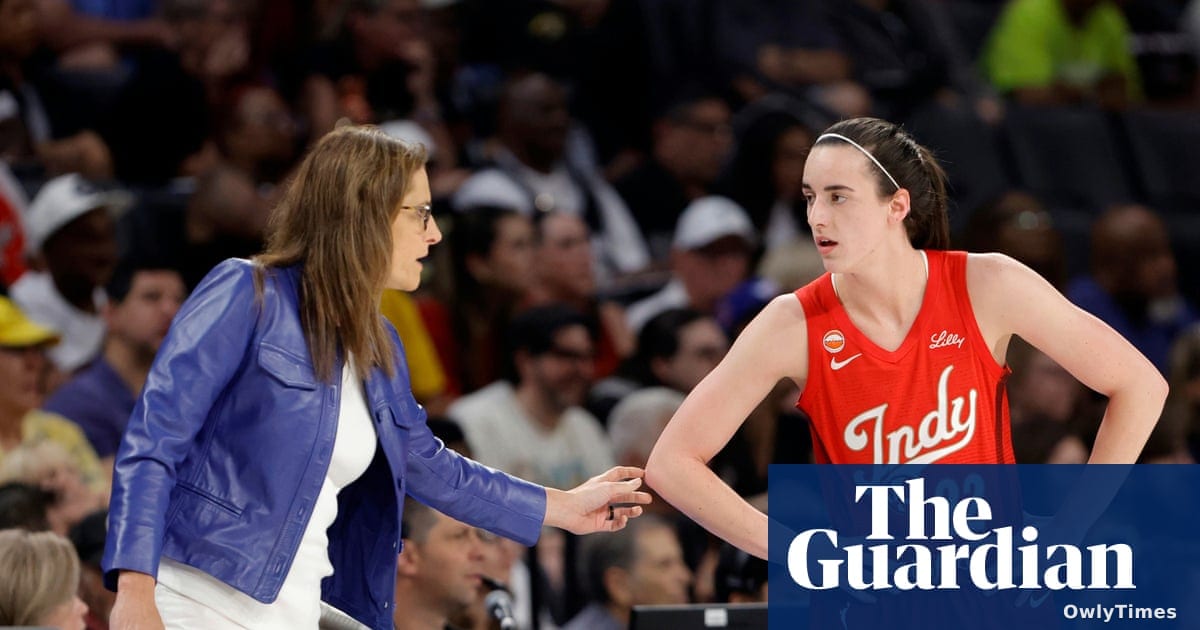

The hum of the crowd at the Game Plan Summit in New York shifted from professional curiosity to sharp focus on Thursday as Adam Silver stepped onto the stage. Standing alongside CNBC’s Andrew Ross Sorkin, the NBA commissioner turned his attention away from the boardroom and toward the center of the American cultural zeitgeist: Caitlin Clark. While the Indiana Fever guard has spent her season dominating the hardwood—most recently carving her name into the history books with a 45-point, 10-assist masterclass against the Seattle Storm—her presence has ignited a firestorm far beyond the painted lines of the court. According to The Guardian, Silver explicitly labeled the 24-year-old star a "political football," arguing that the discourse surrounding her treatment by opponents has been hijacked by forces far removed from the game itself.
From Basketball to Political Ping-Pong
The tension reached a boiling point last month following a June 24 incident where Phoenix Mercury forward Alyssa Thomas made contact with Clark’s throat. As reported by the BBC, the league responded by issuing a retrospective one-game suspension and a $1,000 fine to Thomas. The incident became a lightning rod, drawing in voices from across the political spectrum. A group of 11 Republican lawmakers even penned a letter to WNBA Commissioner Cathy Engelbert, demanding accountability and questioning whether the aggressive tactics used against Clark were racially motivated. Silver dismissed the notion that the core issue was officiating, stating, "I don't even think it's fair to her that this has become a separate storyline about one foul."
The Shadow of Toxicity
The reality of the WNBA’s current climate is, however, undeniable. Both the BBC and The Guardian highlight the mounting pressure on players, with Fever coach Stephanie White publicly decrying the "toxicity, racism, and homophobia" that has increasingly permeated online discourse. Thomas herself has spoken out about receiving death threats and racist abuse in the wake of the altercation. While the league faces scrutiny over its handling of these incidents, including a report in the Sports Business Journal alleging Silver pressured Engelbert to suspend Thomas—a claim the WNBA has labeled "absolutely false"—Silver declined to comment on the internal mechanics of the decision, choosing instead to emphasize the need for a calmer environment for Clark to develop as a professional.
A Historic Response on the Court
While the cultural noise swirls, Clark’s response has been purely athletic. As noted by CBS Sports, she emerged from a difficult stretch of play on Friday to lead the Fever to a 110-107 victory. In doing so, she became the first player in league history to record a 40-point, 10-assist game, all while playing just 29 minutes—a performance that set a new franchise scoring record for the Fever. Her ability to pivot from the "political ping-pong" described by Silver back to elite-level play suggests that despite the external pressures, her focus remains on the scoreboard.
The Measure of a League in Transition
This collision of celebrity, identity politics, and professional sports marks a pivotal juncture for the WNBA. The league is currently in a crowded playoff race, with the Fever sitting at 15-10, just one and a half games behind the Dallas Wings for a top-four seed. As the season progresses, the industry faces a dual challenge: improving officiating standards, which Silver acknowledged is "no doubt" necessary, while simultaneously insulating its players from the vitriol that has turned a simple basketball game into a national debate. The true test for the WNBA will be whether it can foster a space where its stars are defined by their historic 3-point shooting and court vision, rather than their utility in a broader, and often uglier, American culture war.