
Is technology really bringing us closer together, or is it just providing more efficient ways to surveil, categorize, and dismantle human lives? We often talk about the "digital transformation" of warfare as a matter of precision—the sleek promise of algorithms and drones cleaning up the "fog of war." But the real story here isn't the supposed accuracy of these systems; it’s the increasingly blurry line between combatant and civilian, and the devastating, tactile reality of what happens when that line is erased.
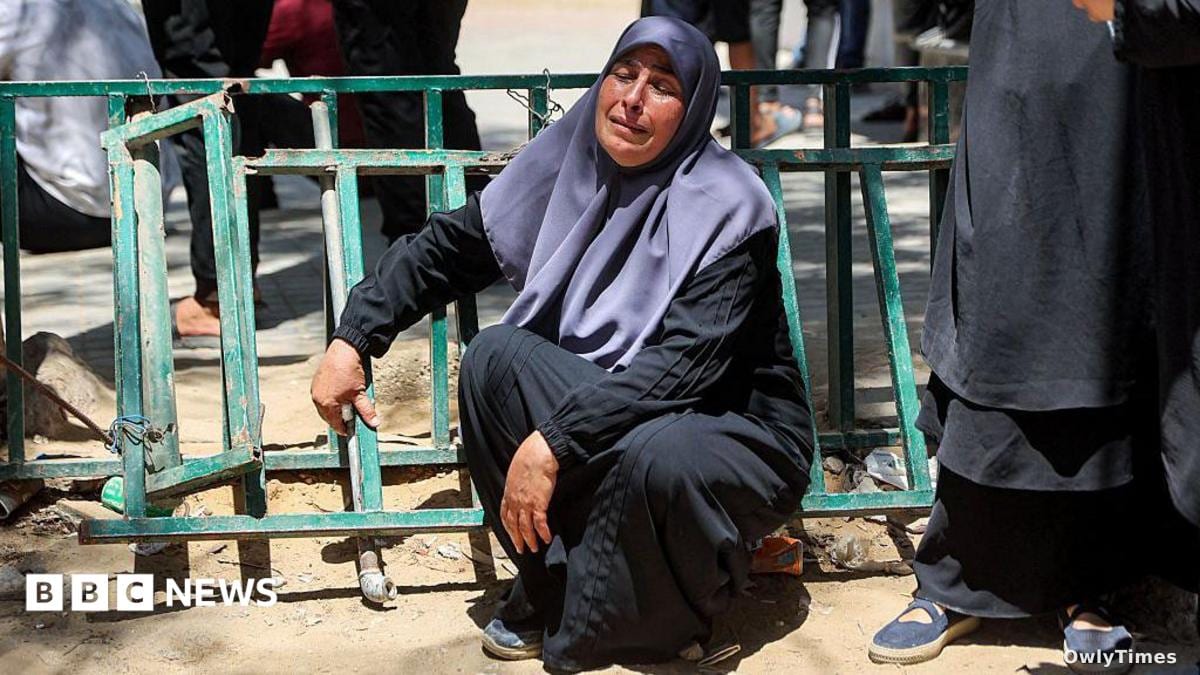
Recent events in Gaza highlight this disconnect between the sanitized language of military briefings and the brutal, lived experience on the ground. According to the BBC, an Israeli drone strike in the Jabalia area of northern Gaza killed seven people near a busy market. While the Israeli military identifies these individuals as members of the Hamas-run police force and military security, the distinction is fiercely contested. Mohammed Moussa, the uncle of one of the deceased, insisted to Reuters that his nephew was a civilian police officer patrolling in a vehicle, not a combatant.
This tension—where a surveillance drone’s target acquisition is viewed by one side as a tactical success and by the other as an act of indiscriminate violence—is now the standard operating procedure for the conflict. The BBC reports that the strike involved four missiles, highlighting the sheer scale of force used in a civilian-adjacent environment. Meanwhile, the human toll continues to mount in ways that defy military categorization; Al Jazeera reported that in a separate incident, an entire family—a father, mother, and their six-year-old daughter—were killed in an air attack on an apartment building in Deir el-Balah, leaving only their son as a survivor.
The crisis is not confined to the skies above Gaza; it has also permeated the walls of detention centers, where the same culture of dehumanization appears to be manifesting. The Guardian has documented a harrowing criminal complaint filed by Anna Liedtke, a 25-year-old activist who was part of a humanitarian flotilla intercepted in international waters last October. Liedtke alleges that she was raped by prison guards while in Israeli detention, a charge that highlights a systematic breakdown in accountability.
What makes the Liedtke case particularly chilling is the allegation that the abuse was not merely incidental, but performative. The Guardian reports that the attack occurred in an area where male guards could watch or potentially film the abuse, framing the violence as a tool for psychological intimidation. As her lawyer, Muna Haddad, noted, this represents an escalation in how Israeli detention systems interact with international citizens, moving from standard detention to the alleged weaponization of sexual violence.
For the average person watching these developments, the takeaway is clear: the mechanisms of modern control—be they high-altitude drones or the internal architecture of a prison—are rarely neutral. Whether it is the targeting of a police vehicle in a market or the systematic abuse of an activist, we are seeing a trend where the infrastructure of the state is being optimized for maximum trauma.
We can expect this cycle of volatility to intensify. As international bodies like the UN continue to add Israel to blacklists regarding sexual violence, and as multiple nations—including France and Australia—launch independent investigations into the treatment of their citizens, the next major trigger will be the legal response to these formal complaints. We are waiting to see if the Israeli judicial system will actually open a formal investigation into Liedtke’s claims, a move that would signal a rare, if belated, shift toward transparency. Until then, the disconnect between the high-tech narrative of "surgical" operations and the raw, unvarnished suffering on the ground will only continue to widen.