
If you think the internet is a utility that just "exists," you’re missing the frantic, multibillion-dollar celestial game of Tetris currently playing out above your head. Amazon, the retail giant that already owns your doorstep, is finally signaling it has enough satellites in orbit to start beaming high-speed internet to Earth later this year. But the real story here isn’t just the technical achievement of putting metal in the sky—it’s the brutal reality that Amazon is playing a high-stakes game of catch-up against a competitor that has spent years cementing its lead.
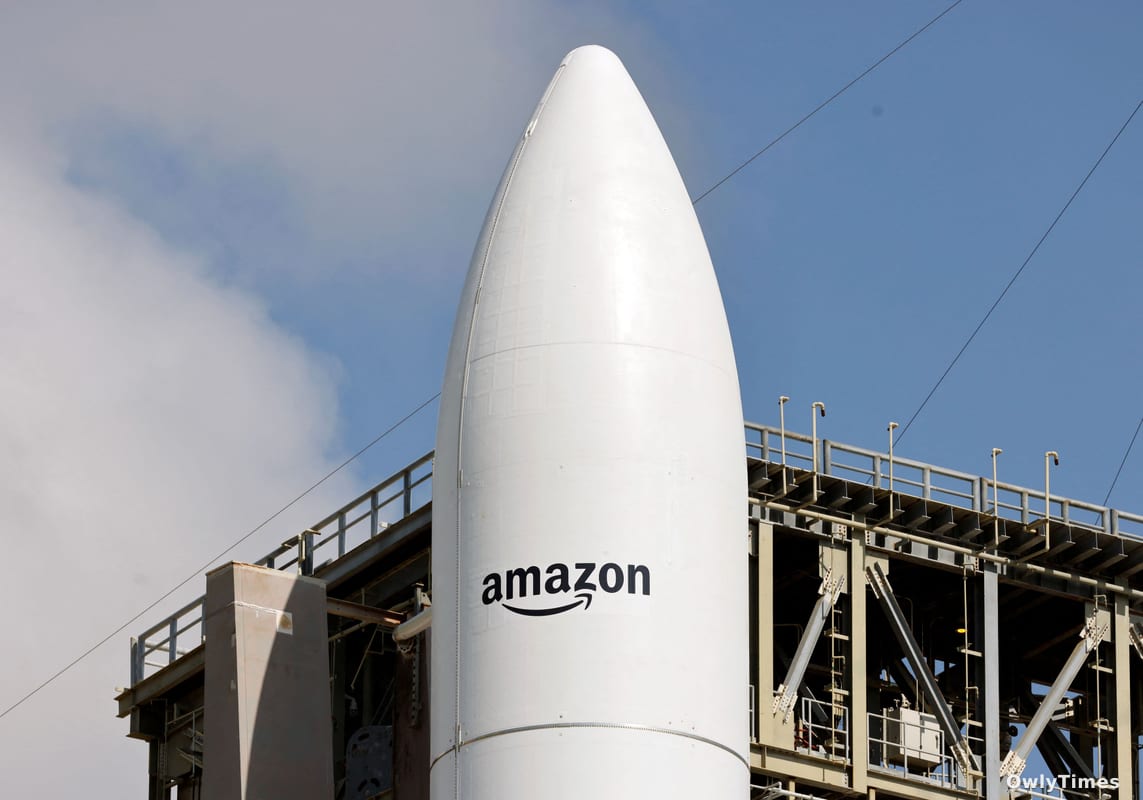
According to CNBC, Amazon confirmed it now has enough hardware in orbit to support "initial service" for its Leo network, formerly known as Project Kuiper. The milestone follows a successful launch on July 2, 2026, where a United Launch Alliance (ULA) Atlas V rocket carried 29 additional satellites into low Earth orbit from the Cape Canaveral Space Force Station. Engadget notes that Amazon has already established contact with these new units, though they must still be maneuvered to their operational altitude of 392 miles before service can flicker to life.
While both CNBC and Engadget place the current constellation count at over 390 satellites, Space.com provides a more granular look at the mission history, noting that roughly 400 craft have reached orbit across 15 total missions. There is also a slight discrepancy in the long-term scope of the project: Space.com reports the final constellation is intended to consist of about 3,200 satellites, whereas CNBC cites a target of roughly 7,700.
The disparity between Amazon’s ambitions and its current reality is stark. As CNBC and Space.com both point out, SpaceX’s Starlink has been running this race since 2015. While Amazon is just preparing to offer its first commercial service to select regions, Starlink already boasts a massive network of roughly 10,000 to 11,000 satellites and over 10 million subscribers. For the average user, this means that while Amazon promises competition, they are effectively entering a market where the incumbent has already built the highway, the gas stations, and the rest stops.
Amazon’s path to expansion has been marred by a recurring theme in the aerospace industry: a "shortage in the near-term availability" of rockets, as noted by CNBC. The company’s plans suffered a significant blow in May when a Blue Origin New Glenn rocket exploded during a hot-fire test. Despite the setbacks, Melissa Wuerl, Leo’s director of launch systems, expressed confidence in the company’s pivot to ULA’s heavy-lift Vulcan rocket, which Engadget highlights as a critical tool for increasing deployment cadence.
For the ordinary person in a remote or underserved area, this tech race isn't about bragging rights—it's about whether you'll have a viable alternative to traditional, often sluggish, terrestrial broadband. The immediate trigger to watch is the successful positioning of the current 29 satellites to their 392-mile operational altitude. Once those units are in place and the "initial service" rollout begins, we will finally see if Amazon’s late-to-the-game infrastructure can actually match the performance of the established giant in the sky.