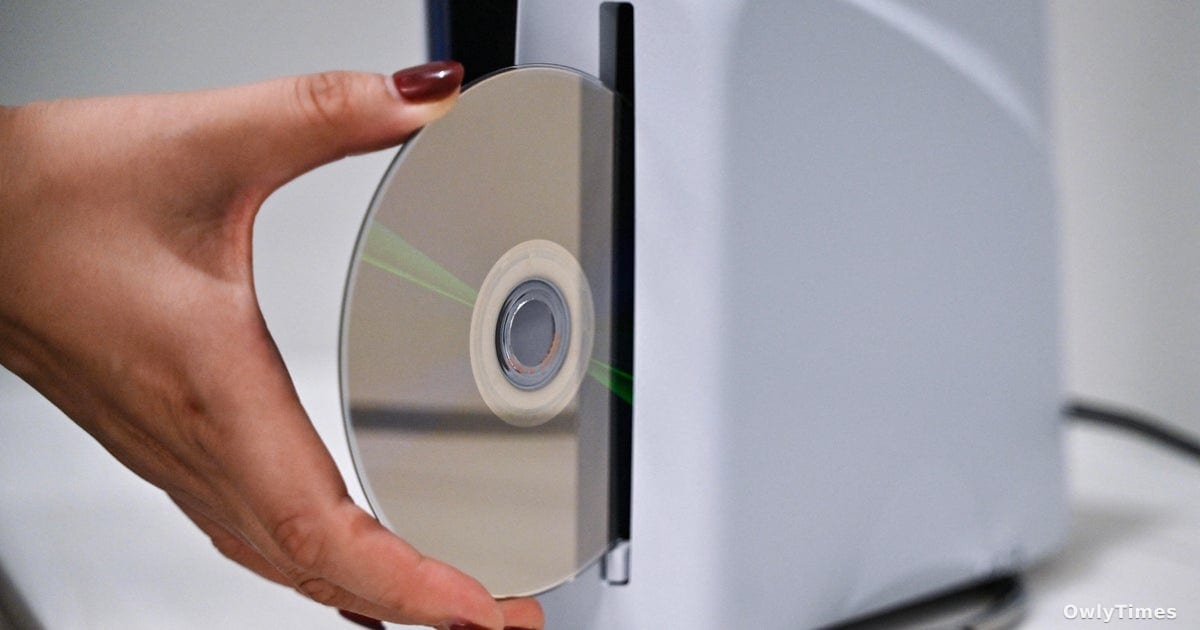

Is the "ownership" of your digital library just a polite fiction we’ve all agreed to play along with until the license expires? Sony’s announcement this week that it will cease releasing physical game discs for the PlayStation platform starting in January 2028 feels like the final nail in the coffin for the tangible media age. The real story here isn’t just about the convenience of a download; it’s about the total transition of gaming from a consumer-owned product to a leased utility, governed entirely by a single corporate gatekeeper.
As reported by CBS News, the BBC, and The Guardian, Sony Interactive Entertainment confirmed that after the 2028 deadline, all new titles will be available exclusively in digital format. While games will still be sold at retail, they will be restricted to digital codes rather than physical media. Sony frames this as a "natural direction" to meet consumer trends, a sentiment backed by market data: according to Piers Harding-Rolls at Ampere Analysis, digital sales accounted for nearly 80% of the market in 2025, a massive leap from the 13% share digital held during the 2013 launch of the PlayStation 4.
The shift is undeniably aggressive. Mat Piscatella, senior director at Circana, noted that spending on physical games dropped to $1.5 billion in 2025, the lowest point since the firm began tracking the metric in 1995. For perspective, that figure is a staggering decline from the $11.6 billion peak seen in 2008, as reported by CBS News. While the industry leans into these numbers to justify the move, the human cost is being felt by those who rely on the secondhand market. Gaming journalist Vikki Blake described the decision as a "body blow to consumer rights," specifically highlighting the loss of the ability to loan games or trade them in to offset the high costs of modern AAA titles.
Retailers are also feeling the heat. An independent shop in Delaware, Lootbox Gaming, explicitly labeled the move an "attack on anyone who cares about video games," while Christopher Dring of The Game Business pointed out that despite the digital surge, millions of physical units are still sold annually, making this a harsh blow to the retail sector. The anxiety is compounded by Sony’s recent history: the BBC notes that the company has faced criticism for pulling over 500 films and TV shows from users' collections—without compensation—due to expired licensing agreements with StudioCanal.
While the industry debates the loss of physical preservation, analysts are already looking toward the hardware implications. Daniel Ahmad of Niko Partners told The Guardian that this move "pretty much confirms" that the eventual PlayStation 6 will be a digital-only console.
The immediate trigger for the industry’s current temperature is the upcoming release of Grand Theft Auto VI. As noted by both CBS News and the BBC, the game is launching without a physical disc, setting the stage for a Nov. 19 release that will serve as the definitive stress test for a digital-only future. If the launch of GTA 6 proceeds without significant backlash, expect Sony’s 2028 roadmap to remain set in stone, effectively ending the era of the game disc for good.