
If you think the most significant news out of South Africa this week is the high-stakes drama on the cricket pitch, you’re looking at the scoreboard while the stadium is catching fire. We often treat international headlines like a curated social media feed—a mix of high-intensity sports and tragic breaking news—but the real story here isn’t the disconnect between a World Cup semi-final and a horrific bus crash; it’s the dangerous friction between economic instability and the narrative of national identity.
The Cost of a False Narrative
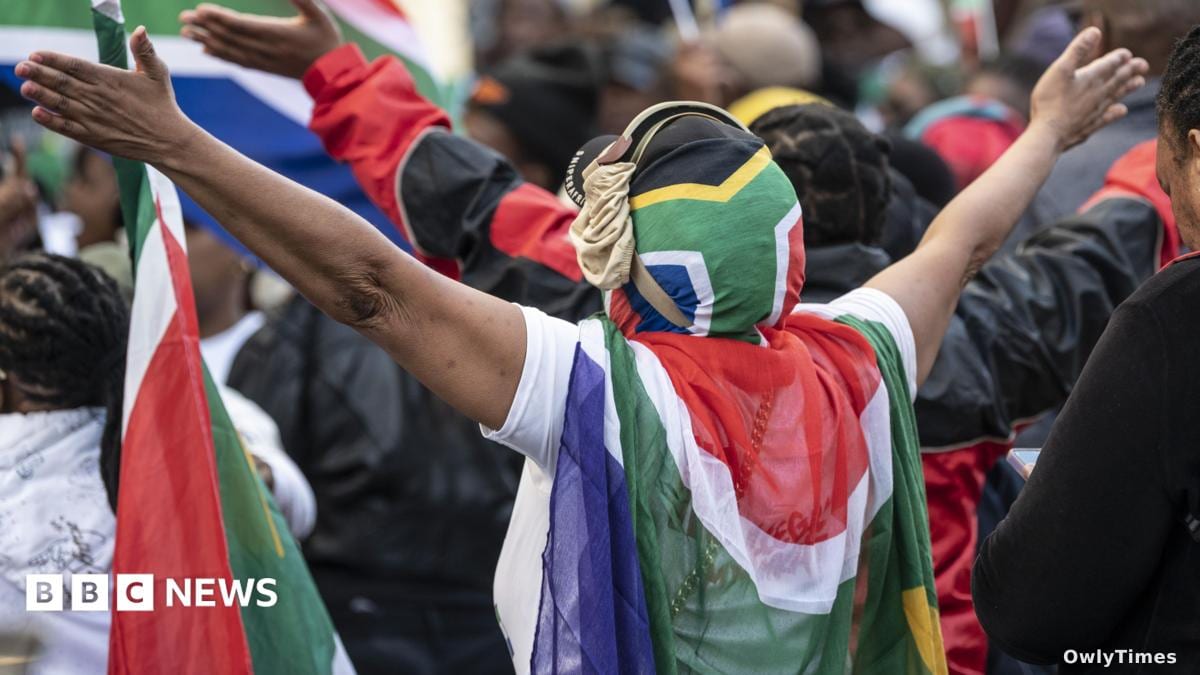
A diplomatic rift has opened between South Africa and Ghana, triggered by the reported killing of 40-year-old Ghanaian tailor Bashiru Isak in Cape Town’s Khayelitsha township. According to the BBC, Ghana’s Foreign Affairs ministry issued a statement of "profound shock" regarding the killing, which they linked to anti-migrant protests. However, South African authorities have vehemently pushed back, with foreign ministry official Clayson Monyela labeling the link to anti-migrant protests a "fabricated tale."
The friction here is a classic case of how digital-era misinformation scales into real-world diplomatic tension. While Ghanaian authorities claim Isak was targeted for "taking South African jobs," South African police report they have "no record" of the Khayelitsha murder at all. Instead, police are investigating the separate, extortion-linked killing of 35-year-old Kwabena Boagen in Nyanga. This isn't just a bureaucratic disagreement; it is a collision between the lived experience of vulnerable migrants in a country with unemployment rates exceeding 30% and a government struggling to manage its own internal security narrative.
Infrastructure Under Pressure
While diplomats trade barbs over the nature of these crimes, the nation’s infrastructure is facing its own brutal reality. The Associated Press, reporting via ABC News, confirms that a bus transporting 78 passengers from Cape Town to the Eastern Cape overturned on Thursday, leaving 16 dead and 20 injured.
The tragedy, which occurred near the town of Worcester, serves as a grim reminder of the physical risks inherent in a nation where long-distance travel is a necessity for the working class. Road Traffic Management Corporation spokesperson Simon Zwane noted the driver allegedly swerved to avoid a delivery vehicle—a detail that underscores how quickly a standard commute can turn catastrophic on roads prone to "fog, smoke, and black ice." This follows another fatal bus crash just one day prior in Limpopo, marking a dark week for South African transit safety.
The Distraction of the Pitch
Against this backdrop of diplomatic strife and transport tragedy, England defeated South Africa in the T20 World Cup semi-final at the Oval, as reported by The Guardian. The match, watched by a crowd of 21,000, saw England overcome an early collapse to win by 40 runs.
It is easy to get swept up in the heroics of Nat Sciver-Brunt and Heather Knight, whose record partnership of 133 runs secured England's spot in Sunday’s final against Australia. Yet, the match serves as a strange cultural mirror: South African coach Mandla Mashimbyi lamented the team's inability to replace aging stars like Shabnim Ismail, highlighting a need for "processes in place" to bring new talent through. Whether in sports or in the management of migration, the underlying challenge remains the same: a failure to build sustainable systems leads to reactive, often painful, transitions.
The next measurable signal in this unfolding saga is the ongoing investigation by the South African Police Services into the transit accidents, which will determine if infrastructure maintenance or driver error was the primary catalyst for the week's mounting death toll.