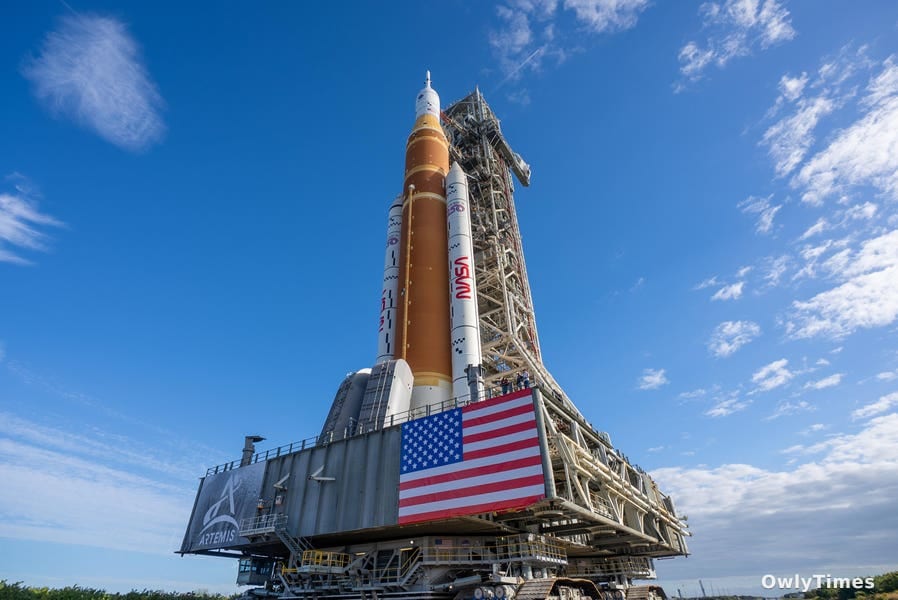

The launch of NASA’s Space Launch System (SLS) rocket and Orion spacecraft toward Launch Pad 39B isn’t simply a spectacle of engineering prowess; it’s a stark reminder of a looming question: are we adequately preparing the next generation to not just witness, but lead, the future of space exploration – and the increasingly complex world it represents? While headlines focus on returning humans to the Moon with the Artemis Program and eventual missions to Mars, the success of these endeavors hinges on a less visible, yet equally critical, component: the quality of science education happening in classrooms today. The recent surge in public fascination with space, fueled by both real-world achievements like the Perseverance rover landing in 2021 and captivating science fiction like Andy Weir’s The Martian and Project Hail Mary, underscores a growing societal expectation that science should be central to our educational priorities. But are we meeting that expectation?
The narrative often presented is that a STEM (Science, Technology, Engineering, and Mathematics) focus is paramount. However, the reality is more nuanced. It’s not simply about producing more scientists and engineers, though the demand is undeniably high – currently, there are roughly 2 million unfilled STEM jobs. It’s about cultivating a scientifically literate populace capable of critical thinking, problem-solving, and adapting to rapid technological change. As Jim Short, board chair for OpenSciEd and co-lead for the Catalyst Fund at Renaissance Philanthropy, explains, science class offers a unique opportunity to apply foundational skills – math, literacy, and analysis – to real-world “phenomena,” problems students can observe and relate to in their own lives. Yet, many schools treat science as an afterthought, with elementary students receiving, on average, less than 20 minutes of dedicated science instruction daily. This isn’t merely a matter of time allocation; it’s a systemic undervaluing of a discipline crucial for navigating the 21st century.
This underinvestment isn’t happening in a vacuum. We consistently prioritize math and literacy, rightly recognizing their importance, but often at the expense of robust science education. This creates a tension: we demand innovation and technological advancement, yet simultaneously limit the development of the very skills that drive them. The economic implications are significant. STEM careers boast median salaries exceeding $100,000, compared to $48,060 for non-STEM jobs, yet only 20% of high school graduates are prepared for college-level STEM coursework, and science proficiency has dropped to a concerning 22% by 12th grade, according to national assessments. This isn’t just a pipeline problem; it’s a missed economic opportunity, and a potential drag on future innovation. Businesses are acutely aware of this skills gap, but their engagement with science education remains surprisingly limited.
Original reporting: Forbes.
The rise of artificial intelligence (AI) further complicates the picture, and simultaneously elevates the stakes. The current focus on AI adoption – with billions being invested – often overlooks the crucial need for a workforce capable of effectively utilizing these tools. Short argues that the skills honed through scientific inquiry – formulating predictions, designing investigations, analyzing results – are precisely those needed to direct AI systems toward meaningful problems and critically evaluate their outputs. AI can generate code and analyze data at unprecedented speeds, but it cannot determine which questions are worth asking, nor can it navigate the ethical implications of scientific discoveries. The student learning to construct explanations from evidence is building the same systematic approach needed to prompt AI systems effectively. This isn’t just about preparing future scientists; it’s about equipping all professions with the ability to collaborate intelligently with AI.
So, what can be done? Short emphasizes the need for state leaders to recognize the explicit connection between science education and the skills outlined in their “Portrait of a Graduate” frameworks – those public commitments defining desired student competencies like critical thinking and problem-solving. He advocates for investment in curriculum-based professional learning for teachers, ensuring they have the expertise to implement inquiry-based learning effectively. Crucially, he calls for equitable access to high-quality materials and resources, recognizing that resource gaps perpetuate systemic inequalities. States also need to explicitly connect science education to economic mobility and workforce development, demonstrating to businesses that strong science programs produce the skilled workers they need. But perhaps the most fundamental shift is a change in mindset: viewing science education not as a “nice-to-have,” but as the foundational infrastructure for long-term economic competitiveness and civic health in an AI-shaped world.
Looking ahead, we should be watching for how states respond to this challenge. Will they prioritize sustained, curriculum-aligned professional learning for science teachers? Will they address the inequitable distribution of resources that leaves many schools ill-equipped for hands-on, inquiry-based learning? And, most importantly, will they recognize that investing in science education isn’t just about preparing the next generation of scientists – it’s about preparing all students to thrive in a future increasingly defined by scientific and technological innovation, and the ethical considerations that come with it? The success of the Artemis missions, and beyond, may well depend on the answers.