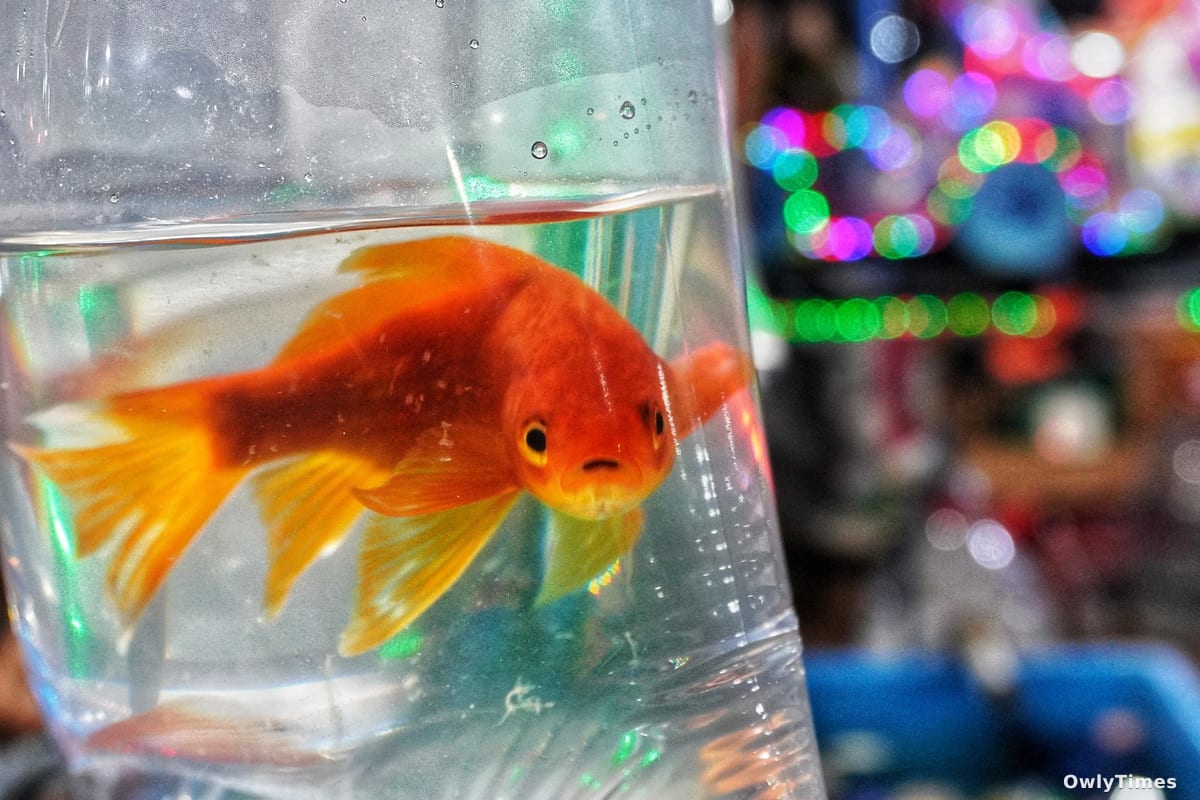

How do we reconcile the image of a bowl-bound goldfish with the reality of a disruptive invasive species? The answer lies in the transition from a controlled domestic environment to the complex, interconnected web of a natural lake. While the common goldfish (Carassius auratus) is often viewed as a low-stakes starter pet, recent research suggests that once these animals enter wild freshwater systems, they act as powerful agents of ecological change, capable of pushing stable environments toward a degraded, alternate state.
Published in the Journal of Animal Ecology, the study led by Dr. William Hintz, an associate professor in UToledo’s Department of Environmental Sciences and Lake Erie Center, moves beyond anecdotal reports of "giant" goldfish to quantify the specific mechanisms of their impact. To isolate these effects, the research team utilized large, controlled outdoor mesocosm experiments. By simulating both nutrient-poor (oligotrophic) and nutrient-rich (eutrophic) lake conditions, the researchers could observe how the introduction of goldfish altered water chemistry, invertebrate populations, and native fish health.
Distinguishing Experimental Findings from Ecological Alarmism
The study’s findings are distinct from the hyperbolic headlines that often frame goldfish as mere "monsters" in local ponds. Instead, the data provides a nuanced look at a "regime shift"—a scientific term for when an ecosystem crosses a threshold and reorganizes into a new, typically less productive state. The researchers found that goldfish did not simply exist alongside native species; they actively reduced the populations of snails, amphipods, and zooplankton. By consuming these foundational invertebrates and stirring up lake sediments, the goldfish degraded water quality and lowered the body condition of native fish.
It is important to clarify what the study actually found versus what public discourse might assume. The experiment demonstrated that these severe disruptions were unique to the presence of goldfish, rather than a byproduct of simple fish density. While total fish numbers can influence plant communities, the specific behavioral and predatory habits of the goldfish were the primary drivers of the observed environmental decline. The research confirms that no lake type—whether nutrient-poor or nutrient-rich—was immune to these pressures.
The Limitations of Controlled Mesocosms
While these results are compelling, it is necessary to consider the limitations inherent in this methodology. Mesocosm experiments are designed to mimic real-world environments, but they are contained systems. They cannot fully replicate the sheer scale, hydrologic connectivity, or predatory diversity found in a sprawling, natural lake system. While the study provides rigorous evidence of the potential for damage, the speed and severity of a regime shift in a natural, open-ended environment may vary based on local conditions such as climate, surrounding land use, and the presence of apex predators that might control goldfish populations.
Addressing the Global Ornamental Trade
The challenge highlighted by Rick Relyea, a professor in the University of Missouri College of Agriculture, Food and Natural Resources and director of Mizzou’s Johnny Morris Institute of Fisheries, Wetlands and Aquatic Systems, is the scale of the global pet trade. Because goldfish are so widely distributed, their potential for introduction into the wild is high, whether through intentional release or accidental transport during flood events. The researchers argue that the current approach to managing these animals needs to shift toward earlier intervention and stronger public awareness.
Moving forward, the next step in this research involves determining the effectiveness of various management strategies in open-water scenarios. As natural resource managers evaluate whether to classify goldfish as high-priority invasive species, the next reading of local population density and water clarity metrics in regions where goldfish have been documented will determine whether these preventative policies are successfully curbing the ecological regime shifts observed in the lab. For the public, the immediate takeaway is that the "kindness" of releasing a pet is effectively a disruption of a delicate, long-term biological balance.