
The Calculated Escalation: Riyadh Drone Strike Reveals Shifting Alliances
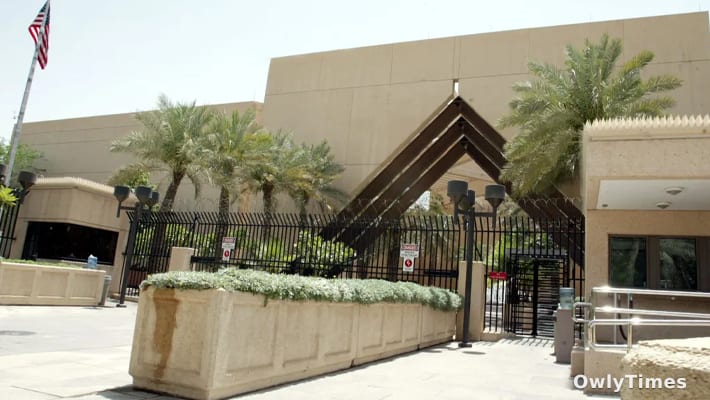
The drone attack on the U.S. embassy in Riyadh isn’t a random act of escalation; it’s a calibrated signal from Iran, designed to exploit a fractured geopolitical landscape and test the boundaries of U.S. resolve following the assassination of Ayatollah Ali Khamenei. While Saudi Arabia’s defense ministry downplayed the impact as “minor,” the strategic value lies not in the damage inflicted, but in the message sent: American assets in the region are vulnerable, even within ostensibly allied nations. This isn’t simply retaliation for Khamenei’s death, but a demonstration of power intended to reshape the negotiating position – or, as Ali Larijani, Secretary of Iran’s Supreme National Security Council, explicitly states, to avoid negotiation altogether. The timing, coinciding with a U.S. evacuation advisory spanning a dozen Middle Eastern countries, underscores the intent to raise the cost of continued American presence.
This piece references the gazettengr.com report.
The immediate trigger for this escalation is, of course, the joint U.S.-Israeli strike that eliminated Khamenei and reportedly 40 other regime officials. Donald Trump’s justification – preventing Iran from acquiring nuclear weapons – is a familiar refrain, but the operation’s execution reveals a deeper alignment between Washington and Jerusalem. This isn’t a novel development; the Abraham Accords signaled a growing strategic convergence. However, the boldness of directly targeting Iran’s supreme leader suggests a green light from Washington that goes beyond previous tacit understandings. The parallel to the 2020 assassination of Qassem Soleimani is striking, but with a crucial difference: Soleimani was a military commander, Khamenei was the head of state, dramatically raising the stakes.
The Saudi Double Game and Trump’s Leverage
Adding another layer of complexity is the Washington Post report alleging that Mohammed bin Salman, Saudi Arabia’s Crown Prince, secretly lobbied Trump for military action against Iran while publicly advocating for de-escalation. This isn’t surprising. Saudi Arabia and Iran have long been regional rivals, vying for dominance in the Middle East. The Crown Prince’s alleged duplicity highlights a consistent Saudi strategy: utilizing the U.S. as a security guarantor while simultaneously pursuing its own agenda, often at odds with American interests. The fact that this lobbying occurred during a period of publicly stated diplomatic preference is particularly telling. It suggests a calculation that a weakened Iran, even through direct military confrontation, ultimately serves Saudi Arabia’s long-term strategic goals. The relatively minor damage from the Riyadh drone strike could be interpreted as a tacit signal from Riyadh – allowing Iran to demonstrate force without directly threatening Saudi territory.
Larijani’s scathing critique of Trump, accusing him of prioritizing “Israel First” and sacrificing American soldiers for Israeli ambitions, isn’t merely rhetorical. It taps into a deep vein of resentment within Iran regarding perceived U.S. bias towards Israel. The claim that Trump fears American troop casualties is a pointed observation, given the escalating risk to U.S. personnel throughout the region. The State Department’s urgent call for Americans to depart countries like Israel, the UAE, and even Saudi Arabia itself, isn’t a standard precaution; it’s an admission that the security situation has deteriorated to a point where diplomatic protection is no longer sufficient. This mass evacuation, while intended to protect citizens, also signals a lack of confidence in the ability to contain the conflict.
Trump’s Negotiation Posture and Iran’s Rejection
Despite the escalating violence, Trump’s claim that remnants of Khamenei’s regime reached out for negotiations reveals a persistent, if perhaps unrealistic, belief in his negotiating prowess. This echoes his approach to North Korea, where he sought direct engagement with Kim Jong-un despite years of diplomatic stalemate. However, Larijani’s firm rejection of any negotiations with the U.S. demonstrates a fundamental shift in Iranian strategy. Tehran views the U.S. as an aggressor, and any dialogue would be perceived as legitimizing the assassination of its leader. The rhetoric employed – labeling Trump’s actions as “delusional fantasies” – is deliberately inflammatory, designed to preclude any possibility of compromise. This hardline stance is likely reinforced by the belief that the U.S., preoccupied with domestic political divisions and potential troop casualties, is less willing to escalate the conflict further.
The political chess move to watch next isn’t another military strike, but Mohammed bin Salman’s public response to the drone attack on the U.S. embassy in Riyadh. Will he maintain the façade of diplomatic concern, or will he subtly signal support for further U.S. action against Iran? The answer will reveal the true extent of Saudi Arabia’s alignment with Washington and the future trajectory of this increasingly volatile region.