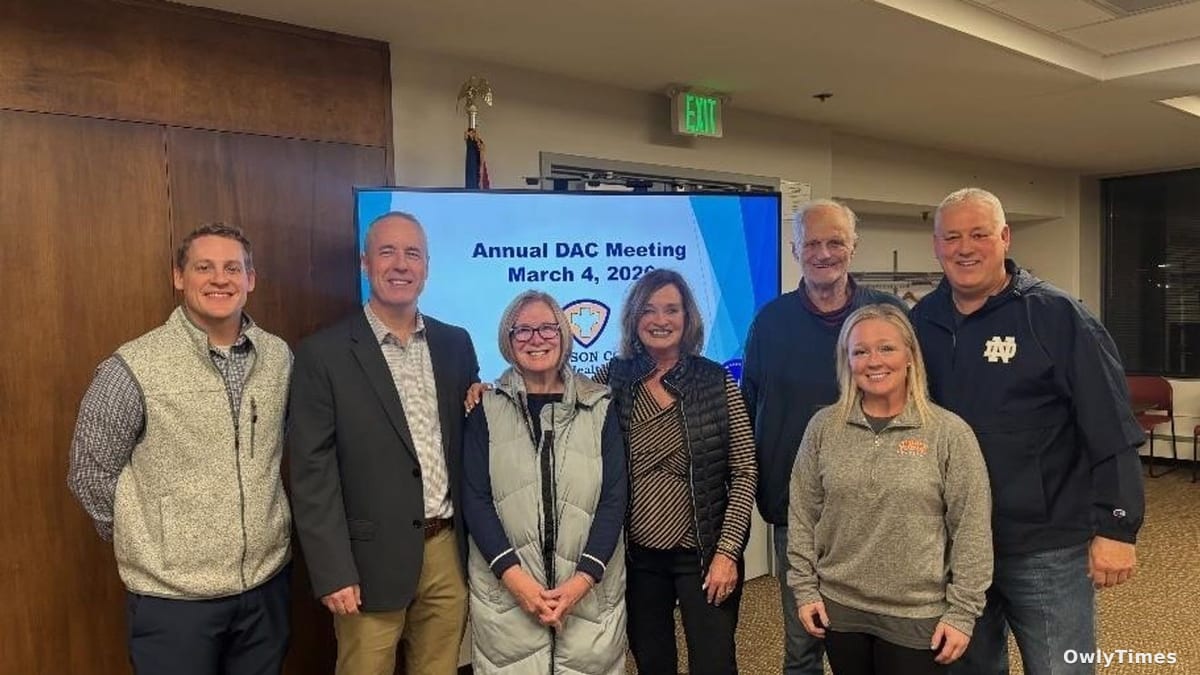

The quiet mechanics of local governance rarely make headlines, but the recent reappointment of Dr. Mark Kissinger as Board Physician for the Jefferson County Board of Health speaks to a critical, often overlooked, tension in public health: the balance between sustained expertise and democratic accountability. While seemingly a routine procedural matter – a five-year extension to a term running 2026-2031 – this decision, made by the District Advisory Council on Wednesday, reveals a system designed to ensure local health decisions aren’t solely in the hands of medical professionals, but are responsive to the broader political landscape of the county. It’s a structure that, while intended to foster collaboration, also introduces potential for influence beyond purely scientific considerations.
A Council of Many Voices Shapes Health Policy
The Jefferson County Board of Health isn’t an independent entity; its leadership is directly appointed by the District Advisory Council. This council’s composition is deliberately broad, encompassing the president of the Board of County Commissioners, the mayor of every city and village within Jefferson County, and the chairperson of each township’s Board of Trustees. This structure, mandated by Ohio Revised Code, isn’t accidental. It’s a deliberate attempt to embed public health decisions within the existing framework of local political representation. The council’s annual March meeting isn’t simply about filling a position; it’s a formal review of the Board of Health’s performance, a consideration of their reports, and a platform for recommendations on improving health and sanitation – and, crucially, potential legislation. This means elected officials, accountable to their constituents, have a direct line of influence over the medical expertise guiding public health initiatives.
Reporting from wtov9.com informs this analysis.
Beyond Reappointment: The Mandate for Annual Review
The significance of Dr. Kissinger’s reappointment isn’t necessarily that he was reappointed – he is currently serving as Board of Health President and has presumably demonstrated competence – but how that reappointment occurred. The Ohio Revised Code requirement for an annual meeting and report review is the key. It’s easy to assume these meetings are purely ceremonial, a rubber-stamp for existing leadership. However, the code explicitly tasks the District Advisory Council with “receiving and considering” reports and making “recommendations.” This implies a level of scrutiny and potential for directed change. For example, if Jefferson County is experiencing a spike in a particular infectious disease, the Advisory Council could, through its recommendations, push the Board of Health to prioritize specific preventative measures or resource allocation. Conversely, political pressures could lead to recommendations that downplay certain health risks or prioritize economic concerns over public health interventions.
What Headlines Miss About Local Control
Initial reports on this reappointment focus on the continuity of leadership, framing it as a positive sign of stability for the Jefferson County Board of Health. While stability is valuable, this narrative overlooks the inherent power dynamic at play. The District Advisory Council isn’t simply confirming a qualified physician; it’s exercising a degree of control over the direction of public health policy. It’s important to note that the council’s influence isn’t inherently negative. Local politicians are often acutely aware of the specific needs and concerns of their communities, and their input can ensure that public health initiatives are tailored to those realities. However, this system also creates a vulnerability to political interference, where decisions are driven by short-term electoral considerations rather than long-term public health goals.
Limitations to Consider: Transparency and Data Gaps
A crucial limitation to fully assessing the impact of this system is a lack of publicly available detail regarding the District Advisory Council’s deliberations. The announcement confirms the meeting took place and the reappointment was made, but it doesn’t reveal the substance of the discussion. Were there any dissenting voices? What specific recommendations were made to the Board of Health? Without this transparency, it’s difficult to gauge the extent to which the council is fulfilling its mandate for meaningful review. Furthermore, there’s no readily available data on how the recommendations of the District Advisory Council have historically impacted the Board of Health’s policies or budget allocations. Tracking this data would be essential to understanding the true influence of this unique governance structure. The next District Advisory Council meeting is scheduled for March 2027, barring any changes in the composition of the Board of Health, but residents should be asking: what specific data will be presented to the council, and what concrete changes will be requested of the Board of Health based on that data? The answer to that question will reveal whether this system of checks and balances is truly serving the health of Jefferson County.