
The roar of Marine One's rotors slicing through the humid New Jersey air 45 minutes before kickoff was barely audible over the chatter of 80,000 fans. But as the presidential helicopter touched down outside MetLife Stadium on Sunday, July 19, 2026, it was clear this was no ordinary sporting event. It was the climax of a month-long cultural invasion, a moment where the hyper-spectacle of Hollywood, the high-stakes theater of global politics, and the raw drama of world-class football collided on American soil.
Hollywood’s Elite and the First-Ever Halftime Show
The stadium, temporarily renamed the New York New Jersey Stadium for the tournament, became the epicenter of global entertainment. According to The Hollywood Reporter, movie icon Tom Cruise took the field before kickoff to deliver a sweeping, dramatic monologue on unity and greatness, even as he actively promoted his upcoming fall film, Digger. The stands looked less like a traditional soccer match and more like an Oscars afterparty, featuring everyone from Jay-Z and Beyoncé to Timothée Chalamet, Kylie Jenner, Serena Williams, and Matt Damon—the latter fresh off the massive opening of Christopher Nolan’s The Odyssey.
But the real cultural shift came at the intermission. As Variety reported, the tournament introduced its first-ever Super Bowl-style halftime show, curated by Coldplay’s Chris Martin. With the match between Spain and defending champions Argentina locked in a tense, scoreless tie, a global medley of BTS, Justin Bieber, Madonna, and Shakira took the stage to inject an Americanized jolt of adrenaline into the international crowd. Jason Sudeikis even revived his beloved Ted Lasso character to introduce Bieber, bridging the gap between American pop culture and the global game.
A Political Circus Behind Bulletproof Glass
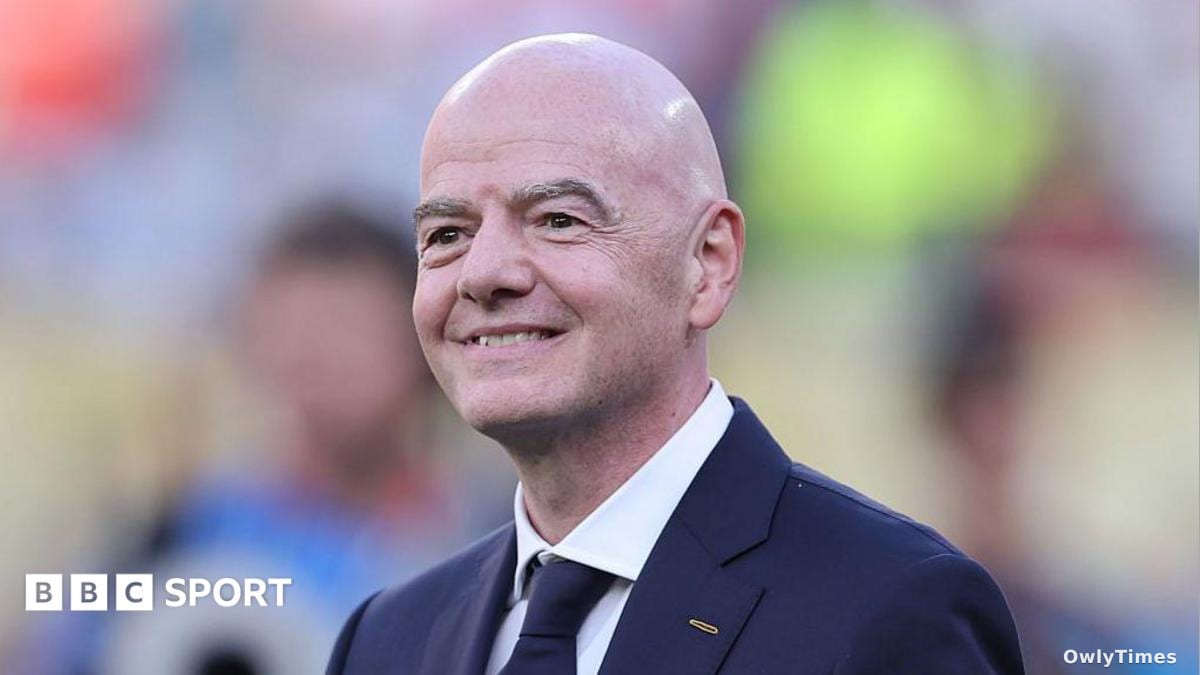
While the halftime show aimed for unity, the political atmosphere inside the luxury suites was far more complicated. Seated behind protective glass on the west side of the stadium, President Donald Trump watched his first and only live match of the tournament. He was flanked by First Lady Melania Trump and FIFA President Gianni Infantino, alongside a powerhouse delegation of international leaders including Spain’s King Felipe VI and Queen Letizia, Canada’s Prime Minister Mark Carney, and Mexico’s President Claudia Sheinbaum.
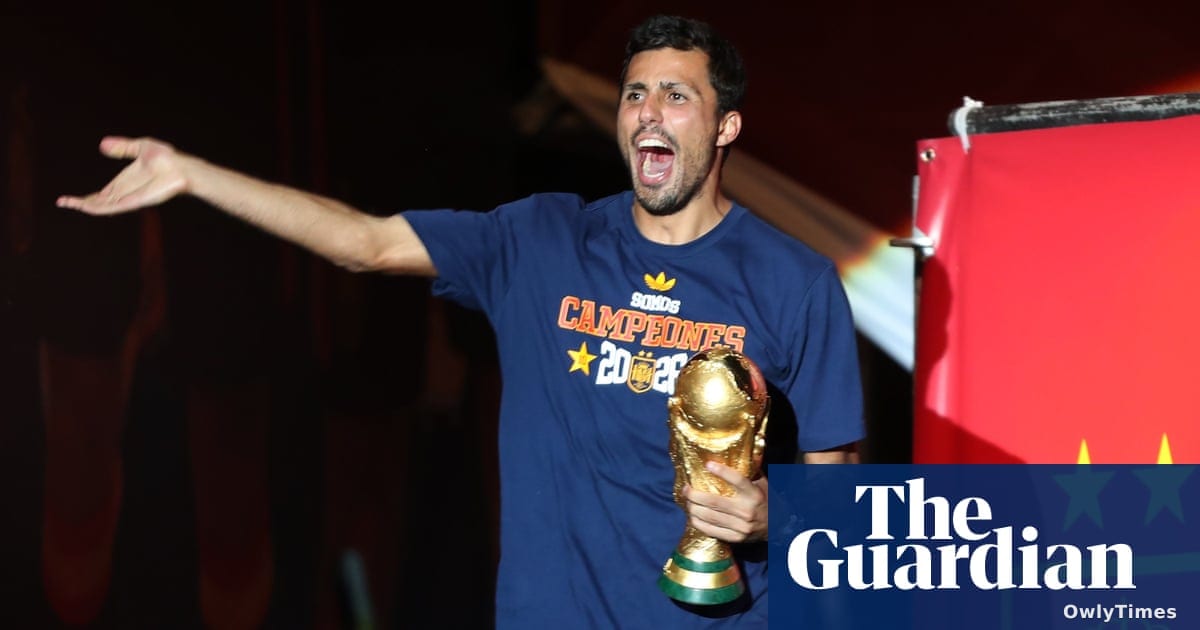
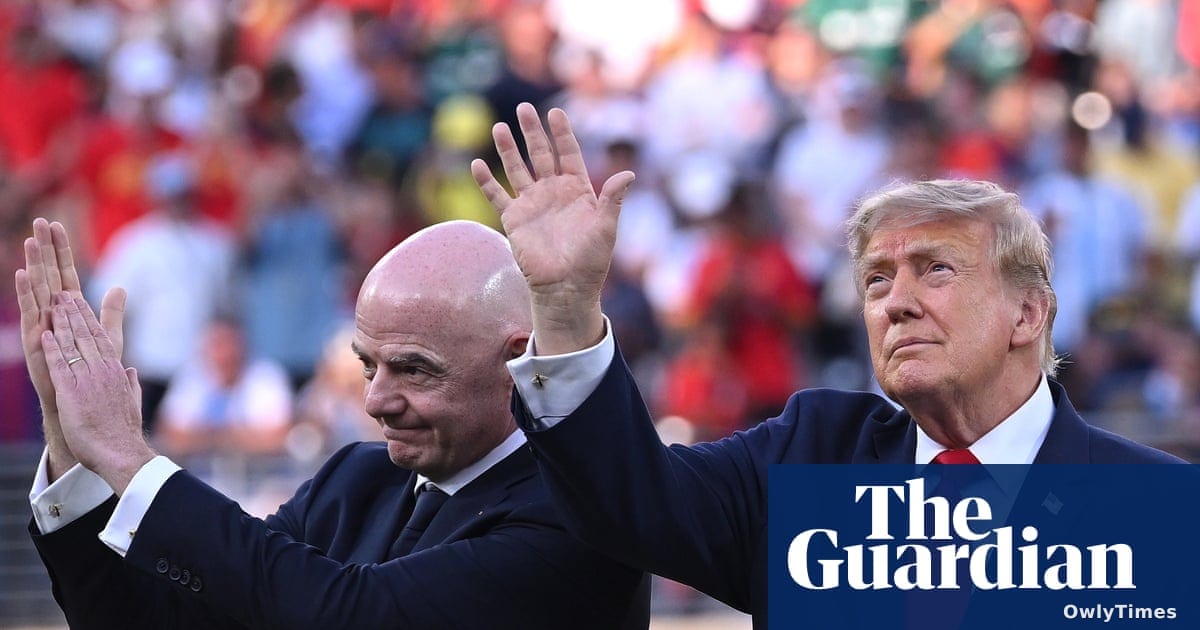
The public reaction to the American president was a study in contrasts. The Independent reported that when Trump’s face first flashed on the stadium’s giant scoreboard at 2:45 p.m., standing beside Infantino and patting the World Cup trophy for good luck, pool reporters noted no discernable reaction from the crowd. However, The Guardian observed that scattered boos broke out after the U.S. national anthem. The real dramatic climax occurred after Spain clinched victory; when Trump and Infantino walked onto the pitch for the official presentation ceremony, loud, unmistakable boos echoed through the arena as Trump presented runner-up medals to Lionel Messi and the championship trophy to Spanish star Rodri.
Beyond the immediate drama of the stadium, this political partnership had already cast a shadow over the tournament. Both The Guardian and The Independent detailed how Trump had personally lobbied Infantino to overturn a red-card suspension for American star Folarin Balogun before the round of 16. While FIFA ultimately reversed the ban, the resulting political distraction did little to help the U.S. team, which was subsequently eliminated 4-1 by Belgium.
Americanizing the World’s Game with Rings and Re-runs
Beyond the headlines of boos and celebrity sightings, this final represented a deeper, structural shift in how FIFA packages its crown jewel. In a bid to blend American sporting traditions with global football, FIFA announced that the champions would receive custom-designed championship rings, a staple of the NFL and NBA. As CBS Sports reported, the jewelry will be part of a strictly limited edition of 2,026 individually numbered pieces. While 30 rings will go directly to the winning players and coaches, the remaining 1,996 will be sold to fans worldwide, commodifying the victory in a uniquely American fashion.
This commercial integration is exactly what Trump hopes to capitalize on. During a Friday press conference at Trump Tower, Trump revealed he had already pitched Infantino on the idea of the U.S. hosting the tournament again in the near future. Pointing to the massive financial success and the estimated 10 million travelers who flooded the U.S., Canada, and Mexico, Trump proposed a "two countries" announcement strategy to help FIFA avoid the "shock" of hosting decisions.
Why the Spectacle of East Rutherford Matters
The 2026 final will be remembered not just for Spain's triumph, but as the moment soccer fully surrendered to the American entertainment-industrial complex. By blending Hollywood star power, a Super Bowl-style halftime show, and championship rings with the raw political theater of a polarizing president, FIFA has established a new blueprint for its flagship event. Unlike the 1994 World Cup, where then-President Bill Clinton skipped the final and sent Vice President Al Gore in his stead, Trump's active participation on the pitch solidified how sports and political theater have become entirely inseparable in the modern era.
Yet, the road ahead is already set. While Trump expressed an immediate desire to bring the tournament back, the hosting rights for the next tournaments are already locked in: Morocco, Portugal, and Spain will co-host the next iteration, followed by Saudi Arabia in 2034. The earliest the United States could realistically host again is 2038—long after the political and cultural figures who dominated the stage in New Jersey have stepped out of the spotlight. What remains is a permanently altered landscape where the world's game must now share its stage with the relentless gravity of American showbiz.