
The Calculus of Democratic Endurance: Pelosi Signals a Shifting Power Dynamic
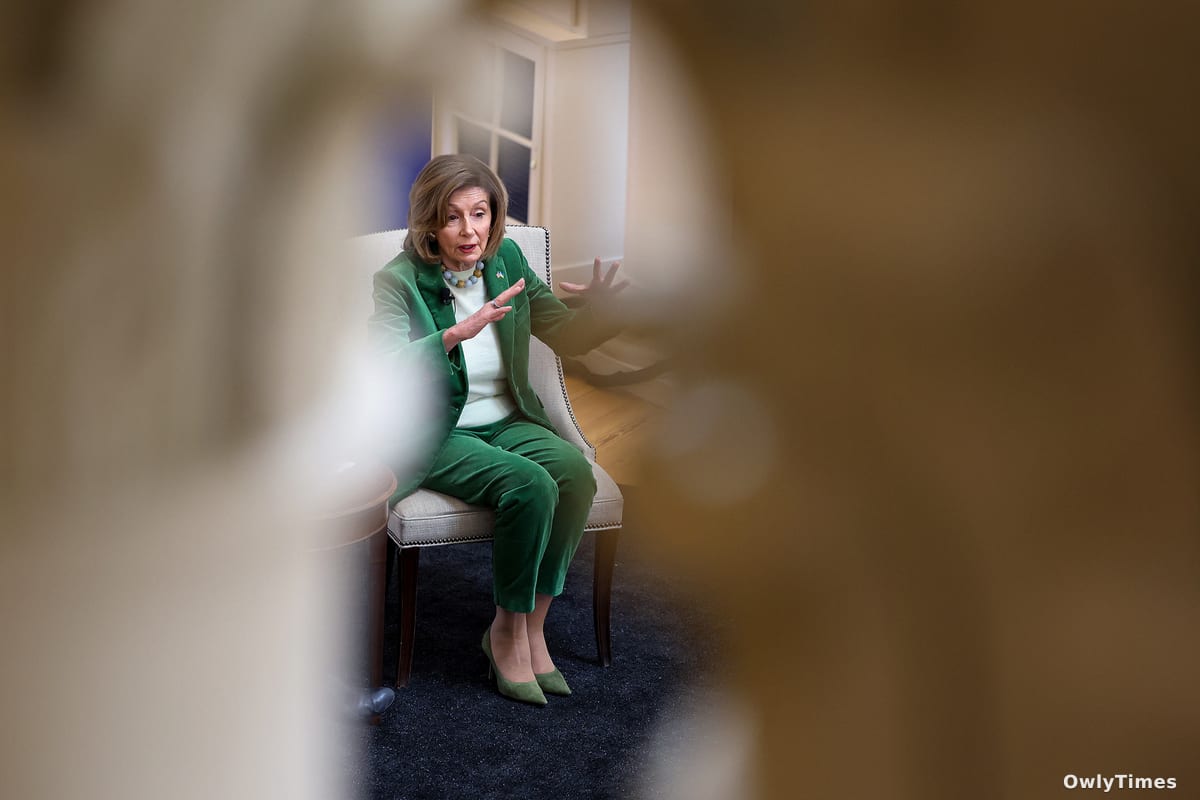
Nancy Pelosi’s recent appearances at the University of Virginia weren’t simply ceremonial acceptance of the 2026 Defender of Democracy Award, presented by Larry Sabato, founder of UVA’s Center for Politics. They were a calculated deployment of political capital, aimed at framing the current congressional landscape not as a partisan stalemate, but as a crisis of institutional courage – and, crucially, a problem susceptible to correction through public pressure. The strategic move isn’t about celebrating past achievements, but about subtly redefining the terms of engagement with a Republican Congress perceived as overly deferential to Donald Trump. Pelosi is betting that highlighting instances of Republican dissent, however small, will amplify a narrative of eroding loyalty to democratic norms and, ultimately, force a realignment.
Based on the original news.virginia.edu report.
The core of Pelosi’s argument, articulated at a forum sponsored by UVA’s Karsh Institute of Democracy, rests on a historical parallel. She invoked the ideological clashes between Thomas Jefferson and John Adams – foundational figures with fundamentally different visions for the nation – to normalize disagreement as inherent to a functioning democracy. However, the distinction she draws isn’t between differing ideologies, but between legitimate debate and what she characterizes as an abdication of congressional authority. This is a critical nuance. Pelosi isn’t arguing for consensus; she’s arguing for a return to a baseline level of institutional pushback, a willingness to check executive power even when facing unified opposition. The award itself, recognizing a “lifetime of service guided by principle and courage,” serves as a pointed contrast to the current climate.
Who benefits and who loses from this messaging? Democrats clearly benefit from positioning themselves as the defenders of democratic institutions, particularly as concerns about the erosion of norms continue to resonate with voters. Pelosi, with her 20 terms in the House since 1987 and two stints as Speaker (2007-2011 and 2019-2023), leverages her own history – as the first woman Speaker, breaking the “marble ceiling” as Sabato noted – to lend credibility to this narrative. Republicans, particularly those aligned with Trump, are positioned as the losers, implicitly accused of prioritizing party loyalty over constitutional duty. However, the more interesting dynamic lies within the Republican caucus itself. Pelosi specifically highlighted recent votes where dissenting Republicans emerged – 17 supporting Affordable Care Act subsidies, six opposing Trump’s tariffs with Canada, and five backing a jobs and apprenticeships bill – suggesting a fracturing within the party.
These votes, while numerically modest, are significant because they represent a deviation from the near-total alignment that characterized the early months of Trump’s presidency. Pelosi’s emphasis on “public opinion weighing in” isn’t simply wishful thinking. It’s a recognition that congressional behavior is rarely divorced from external pressures. The fact that these votes occurred after a period of unified Republican support suggests a potential shift in the calculus, driven by constituent concerns or a growing discomfort with the administration’s policies. The numbers are telling: after a period of almost complete acquiescence, even small cracks are being exploited. This is a classic Pelosi tactic – identifying and amplifying existing divisions within the opposition.
The historical precedent here isn’t simply the Jefferson-Adams rivalry, but the long tradition of congressional opposition to executive overreach. From the battles over the Bank of the United States with Andrew Jackson to the Watergate investigations during Richard Nixon’s presidency, Congress has repeatedly asserted its role as a check on presidential power. Pelosi is attempting to invoke that history, reminding both her colleagues and the public that institutional independence isn’t merely a matter of partisan advantage, but a fundamental principle of American governance. The question now is whether these nascent signs of Republican dissent will coalesce into a more sustained challenge to the Trump administration, or whether they will remain isolated incidents. The political chess move to watch next is the upcoming vote on infrastructure spending – will Republicans maintain their unified front, or will public pressure and internal divisions create an opening for a bipartisan compromise that demonstrates a renewed commitment to congressional authority?