
Is the promise of a localized weapons production line in a war zone a tactical masterstroke or just another high-stakes distraction from the hardware shortages currently crippling frontline defense? The real story here isn't just the headline-grabbing offer of a manufacturing license—it’s the collision between aggressive geopolitical posturing and the brutal reality of industrial physics.
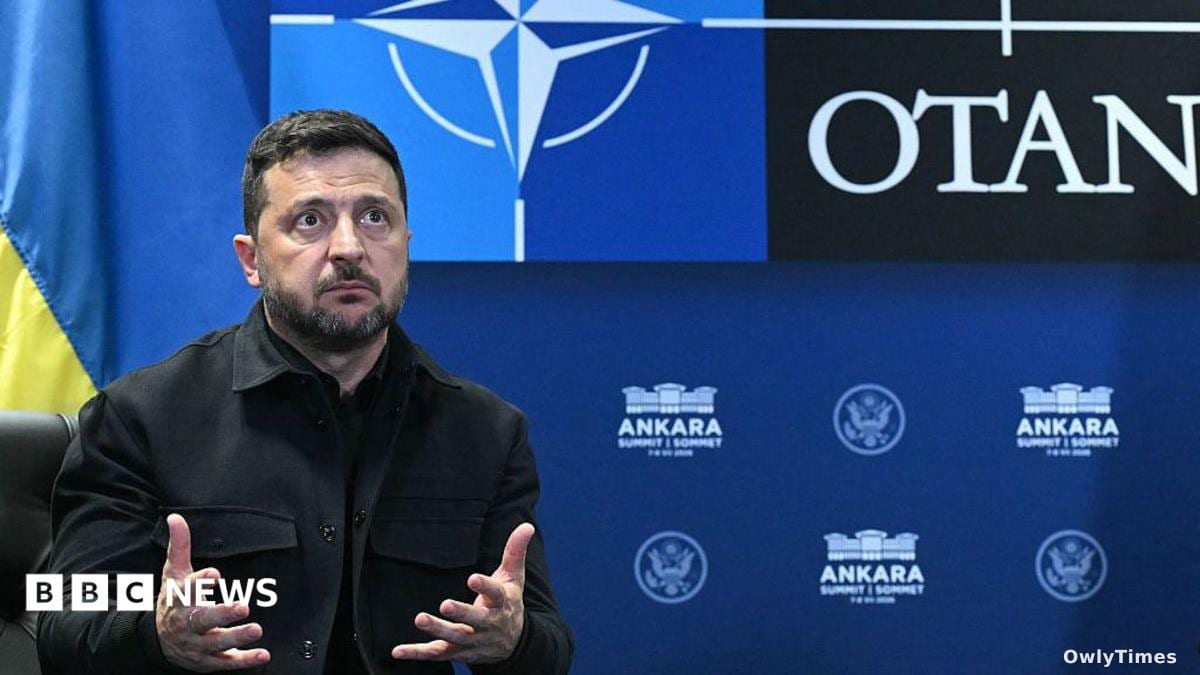
During the NATO summit in Ankara this Wednesday, President Donald Trump announced that the United States would grant Ukraine a license to produce its own Patriot missile interceptors. Standing alongside Ukrainian President Volodymyr Zelenskyy, Trump framed the move as a way to silence complaints about supply deficits, telling the Ukrainian leader, “This way you can’t complain that we’re not giving them enough and instead, make them yourself,” according to The Independent.
The announcement, also reported by the BBC and CBS News, suggests a dramatic shift in how the U.S. manages its most advanced defensive assets. However, the proposal appears to be moving faster than the supply chain can support. Trump admitted he had not yet informed the primary manufacturers, Lockheed Martin and RTX Corporation (formerly Raytheon), of the decision, though he insisted, “I’m sure they’ll be thrilled,” as noted by Euronews.
For the average citizen in Kyiv, the Patriot system is far more than a complex piece of engineering—it is the thin line between survival and the destruction of their energy grid. These systems are notoriously difficult to manufacture, with the BBC citing U.S. Department of Defence data that places global production at roughly 600 missiles per year. Euronews highlights a significant discrepancy in the urgency of these figures: while Zelenskyy estimates the current output at 60 to 65 missiles per month, Russian forces are reportedly launching upwards of 120 ballistic missiles in that same timeframe.
The logistical hurdles are massive. Military expert Ivan Stupak told the BBC that domestic production in Ukraine is likely a pipe dream, citing the lack of safe territory to house such sensitive infrastructure. Instead, analysts suspect that if the license is ever fully realized, the production would likely take place on European soil under strict supervision. The fragility of the current supply chain was underscored by the Center for Strategic and International Studies (CSIS), which noted that U.S. stockpiles have been significantly depleted following recent conflicts in the Middle East.
While the rhetoric in Ankara remained focused on the future of air defense, the ground reality remains grim. As reported by The Independent, a Russian ballistic missile attack struck the port city of Odesa on Wednesday, resulting in four deaths and six injuries. This underscores the stakes: without an immediate influx of interceptors, the "license" to build a weapon currently remains a theoretical solution to a very literal, daily threat.
The next critical juncture in this saga will be the reaction from the defense contractors themselves. With Trump claiming that "all of our companies will be able to do this in two to three months," the industry's response to this timeline will determine whether this is a viable strategic pivot or a political soundbite. Watch for the official filings from Lockheed Martin and RTX Corporation; if they don't confirm a roadmap for technology transfer, the Patriot license will likely join the long list of wartime promises that struggle to survive the transition from the podium to the production floor.