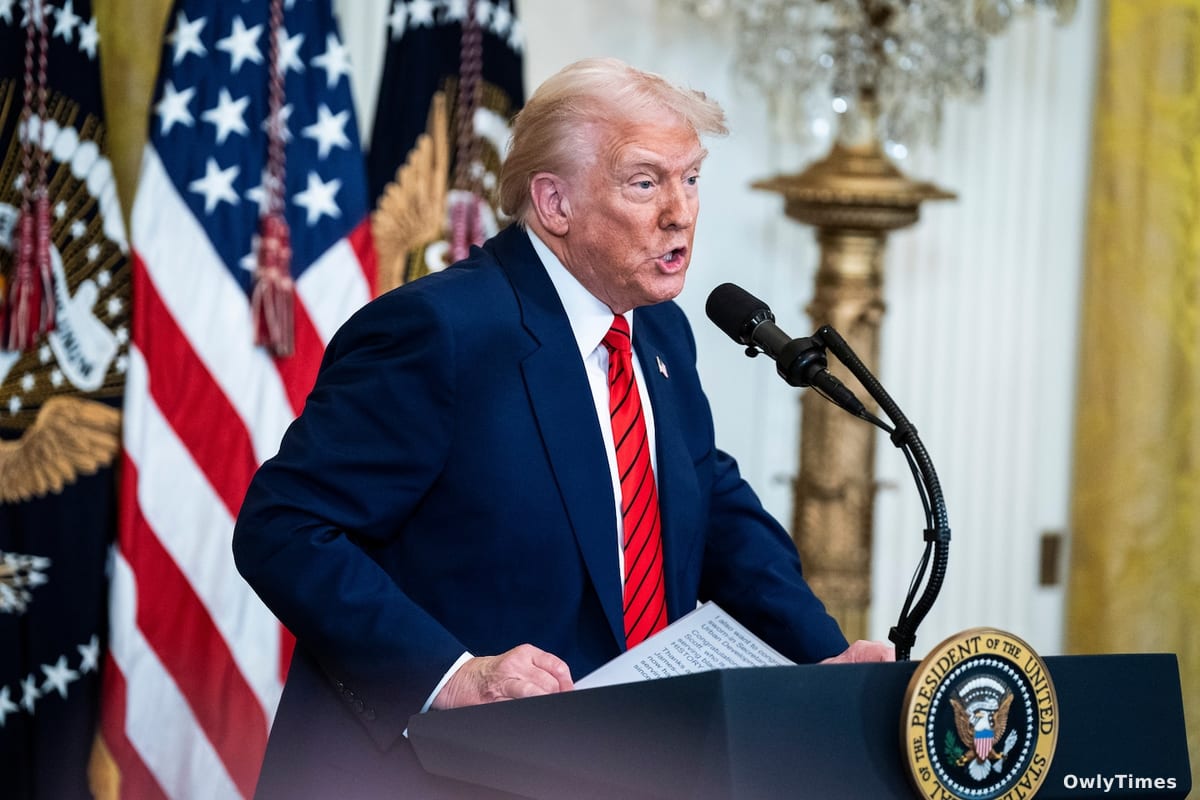

The calculated deployment of Black voices to shield President Trump from criticism regarding racial equity isn’t a departure from his political playbook, but a doubling down on a strategy refined over years: leveraging selective endorsements to neutralize narratives of racial animus and solidify support within a fracturing coalition. Wednesday’s Black History Month event at the White House, featuring testimonials praising Trump’s impact on minority well-being, wasn’t a celebration of progress so much as a strategic maneuver to counter mounting evidence suggesting the opposite – and to preemptively address vulnerabilities as the 2028 election cycle begins to take shape. The event, captured by Maxine Wallace of The Washington Post, reveals a core tension within the Trump presidency: the persistent gap between rhetoric and reality regarding racial justice.
The Currency of Endorsements in a Polarized Landscape
The choice to highlight Black supporters defending his record is particularly revealing given the documented trends during his previous and current terms. While the Trump administration frequently pointed to historically low Black unemployment rates prior to 2020 – a figure that reached 5.3% in 2019 – this metric alone obscures deeper economic disparities. The Black-white wealth gap, for example, remained stubbornly persistent, with Black households possessing roughly one-tenth the wealth of white households. More recently, data from the Bureau of Economic Analysis shows that while overall unemployment has fallen to 3.7% as of Q4 2025, the Black unemployment rate consistently lags behind, hovering around 6.2% – a figure that, while improved from earlier in his term, still represents a significant disparity. The event’s focus on individual testimonials, therefore, functions as a direct counter-narrative to these broader statistical realities. Former HUD Secretary Ben Carson and current HUD Secretary Scott Turner’s presence onstage wasn’t accidental; it signaled a deliberate attempt to lend institutional weight to the administration’s claims.
See the original The Washington Post story for the full account.
Echoes of Historical Patronage
This tactic of soliciting endorsements from minority figures to deflect accusations of racism isn’t new. It bears a striking resemblance to the strategies employed by Southern politicians during the Jim Crow era, who often showcased a handful of Black individuals who publicly supported segregation to create the illusion of consensus. While the context is vastly different, the underlying principle remains the same: using selective representation to undermine broader critiques of systemic injustice. The difference, of course, is that the current strategy operates within a media landscape saturated with data and competing narratives, making it more challenging – but not impossible – to control the message. The reliance on testimonials, rather than comprehensive policy achievements, suggests an awareness of this challenge and a calculated gamble that emotional appeals will resonate more effectively than statistical analysis with key voter demographics.
Who Benefits and Who Loses from This Performance?
The immediate beneficiaries of this carefully staged event are President Trump and his reelection campaign. By showcasing Black supporters, the administration aims to inoculate itself against accusations of racial insensitivity and broaden its appeal to a demographic that has historically favored the Democratic Party. The event also serves to reinforce loyalty among existing Trump supporters, particularly those who believe that the media unfairly portrays the president as racist. However, the long-term consequences are more complex. The reliance on curated endorsements risks alienating Black voters who are genuinely concerned about issues of racial justice and economic equity. Furthermore, it reinforces a pattern of dismissing systemic problems in favor of individual success stories – a narrative that many find deeply unsatisfying. The Democratic Party, predictably, seized on the event as further proof of Trump’s divisive rhetoric, framing it as a cynical attempt to exploit Black voters for political gain.
The Next Chess Move: Targeting Swing States
The political chess move to watch isn’t another White House event, but the allocation of campaign resources in key swing states with significant Black populations – specifically, Pennsylvania, Michigan, and Georgia. Will the Trump campaign invest heavily in targeted outreach to Black voters, focusing on economic issues and highlighting specific policy initiatives? Or will it continue to rely on broad appeals and curated endorsements, hoping to peel off a small percentage of the Black vote without alienating its base? The answer will reveal whether this Black History Month event was a genuine attempt at coalition-building or simply a performative gesture designed to shore up existing support. The campaign’s spending patterns in the coming months will be a far more telling indicator of its true intentions than any carefully crafted speech or photo opportunity.