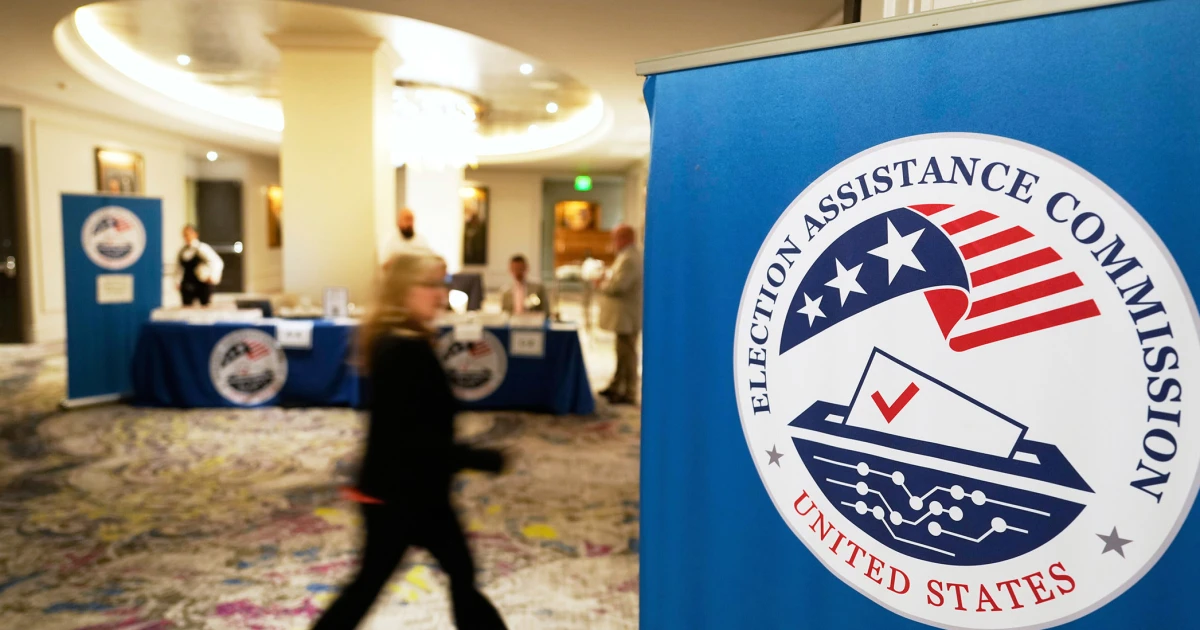

The strategic calculus behind the sudden removal of the entire U.S. Election Assistance Commission (EAC) leadership appears to be a calculated effort to consolidate executive control over the machinery of American democracy. By clearing the board of all three sitting commissioners—Thomas Hicks, Benjamin W. Hovland, and Christy McCormick—President Donald Trump has effectively neutralized an independent federal agency tasked with certifying voting systems and providing guidelines to local administrators just months before the midterm elections. This move mirrors the historical pattern of executive expansion seen during periods of intense political polarization, where the lines between independent oversight and political loyalty are systematically blurred.
The White House justification for this purge relies on a specific legal precedent: the Supreme Court’s late June ruling in the Slaughter case, which affirmed the president’s authority to remove members of independent federal agencies. According to CNBC, a White House official explicitly cited the 6-3 ruling as the legal bedrock for the terminations, stating the president "reserves the right to remove individuals that may not be totally aligned with the important task of securing America's elections." NPR notes that this decision provides the administration a newfound "freer hand" to dismantle institutions previously shielded by their status as bipartisan guardrails.
The mechanics of the removal highlight the swiftness of the operation. NBC News reports that Democratic commissioners Hicks and Hovland were terminated via email by White House aide Morgan DeWitt Snow at 4 p.m. ET on Thursday. While both NBC News and CNBC confirm that McCormick was asked to resign, the sources differ slightly on the delivery, with NBC News stating she received a phone call, while CNBC notes she was "allowed to resign." A fourth commissioner, Don Palmer, had previously departed in April to join the Heritage Foundation, leaving the agency already operating with a reduced roster.
Who benefits and who loses in this power shift? The administration gains the ability to install personnel aligned with its specific electoral agenda, which includes a 2025 executive order requiring proof-of-citizenship for voter registration—a policy NPR notes has been largely blocked by federal courts. Conversely, state and local election officials lose a vital clearinghouse for technical support and security certification. Matt Weil of the Bipartisan Policy Center described the move to NPR as "unprecedented," warning that the agency is now effectively leaderless. The loss of a quorum, while historically common for the EAC, is viewed by critics like Senate Minority Leader Chuck Schumer as a "brazen attempt to seize control" of election infrastructure, according to CNBC.
The political chess move to watch next is the Senate confirmation process for the replacements. Because EAC appointments require Senate approval, the agency faces an indefinite period of paralysis. With the midterm elections looming in less than four months, the absence of leadership at the commission will serve as a primary test of how much strain the U.S. election infrastructure can withstand before the administration must pivot toward either filling the vacancies or allowing the agency to remain in its currently "hamstrung" state.