
If we are to believe the recent rhetoric from the NATO summit in Ankara, the path to ending Ukraine’s chronic shortage of air defense interceptors is as simple as handing over a blueprint and a "good luck." But in the world of high-end military manufacturing, is a government license actually a magic wand, or is it just another piece of paper?
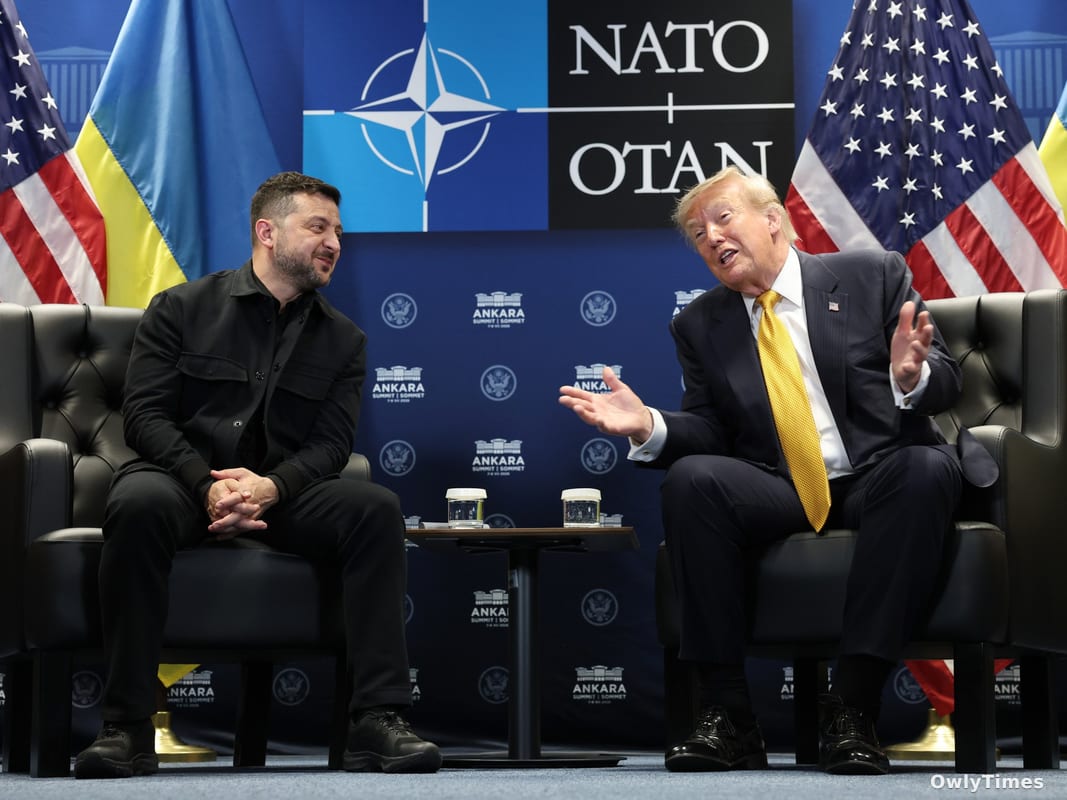
The real story here isn’t the political theater of the handshake between President Donald Trump and President Volodymyr Zelenskyy; it’s the massive, multi-year industrial chasm between a presidential decree and a functional missile assembly line.
According to CBS News, Trump announced Wednesday that his administration would grant Ukraine a production license to manufacture the Patriot missile interceptor. This follows months of persistent lobbying by Zelenskyy, who first publicly pitched the idea during an appearance on "Face the Nation" in May. The Patriot, a sophisticated air defense system manufactured by Lockheed Martin and RTX Corporation (formerly Raytheon), is currently the only effective shield Ukraine has against Russian ballistic missiles.
However, the "how" remains dangerously vague. While Trump told reporters, "We’ll show them how to do it," he simultaneously admitted that the corporations actually responsible for building the hardware—Lockheed Martin and RTX—had not yet been informed of the plan, as noted by CBS News. Euronews adds that Trump claimed U.S. industry is building "four plants" and suggested the process could be streamlined in a matter of months, a timeline that contradicts the stark technical reality on the ground.
The Illusion of Plug-and-Play Defense
If you think of a Patriot missile as a high-performance smartphone, moving production to Ukraine isn’t just about downloading an app; it’s about building the entire semiconductor factory, the lithium-mine supply chain, and the specialized workforce from scratch. Serhii Beskrestnov, an adviser to the Ukrainian defense minister, cautioned via Telegram that domestic production will take "many months," with subcontracted component cycles potentially stretching out to 24 months, according to Al Jazeera.
The stakes are mathematically grim. Euronews reports that while Lockheed Martin produces roughly 600 interceptors annually, Russia is churning out approximately 120 ballistic missiles every month. The global stockpile is also under unprecedented strain; the same report notes that regional conflicts, including those in the Gulf, have seen over 1,100 interceptors fired in recent months, depleting nearly a third of the global reserve.
The Bureaucratic Bottleneck
Zelenskyy’s team now faces the daunting task of turning a political "yes" into a technical reality. As reported by both Al Jazeera and Euronews, the Ukrainian president confirmed on Thursday that technical teams from various ministries must now negotiate the "remaining technical aspects" and process documentation. This is not merely a formality; Beskrestnov notes that true technology transfer requires foreign consultants, specialized training, and a complete integration of supplier contacts.
What Happens Next
For the average Ukrainian citizen, the gap between this announcement and a deployed interceptor is measured in lives. We are currently in a "wait and see" window where the success of this initiative will be determined not by another summit, but by the upcoming meetings between the U.S. executive branch and the technical teams tasked with executing this transfer. If those teams fail to secure the necessary supply chain logistics, this high-profile license will remain nothing more than a symbolic gesture in a war that requires hardware, not headlines.