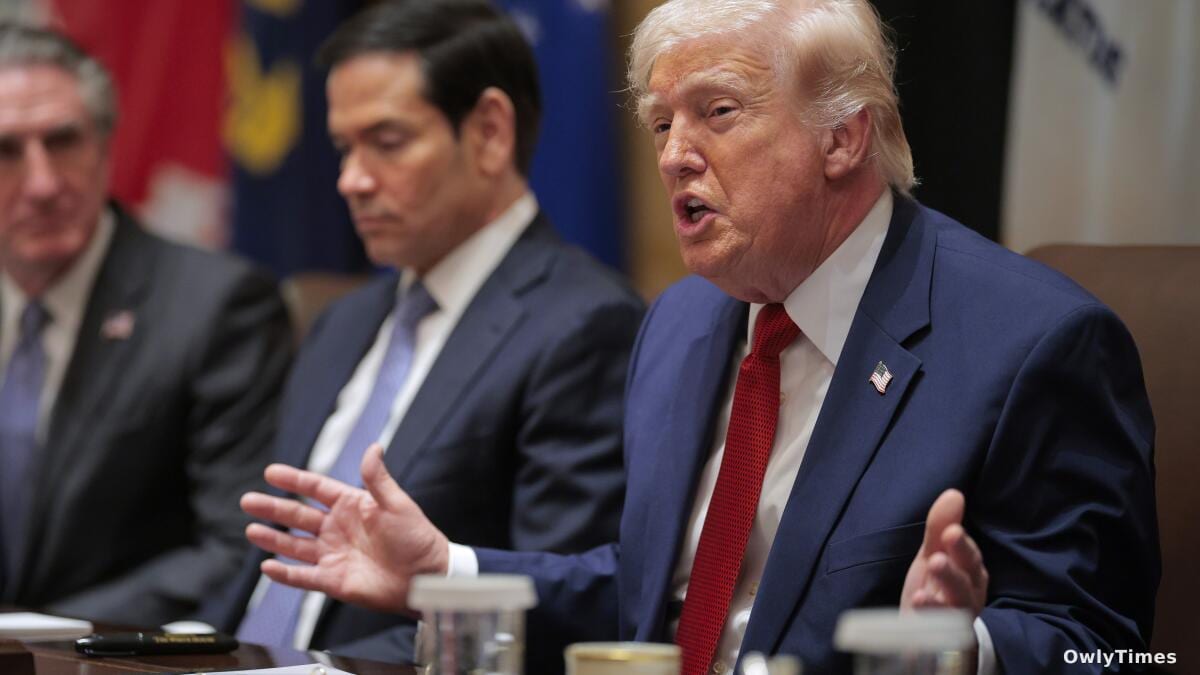

The calculated dissonance between the Trump administration’s public narrative of a swiftly concluding war with Iran and the escalating realities on the ground reveals a strategic gambit: maintaining maximal leverage through perceived strength, even as negotiations proceed. President Trump’s assertions of an “obliterated” Iran and “begging” leaders, delivered via social media and during a Cabinet meeting on Thursday, aren’t simply expressions of confidence; they are designed to box Iran into accepting terms dictated by Washington, and to preemptively manage domestic and international criticism should those terms prove unfavorable. This tactic, however, is increasingly straining credibility with key stakeholders, including members of his own party.
The core of the strategy rests on a classic power dynamic: project overwhelming force to compel concessions. Trump’s repeated delays of attacks on Iranian power plants, framed as gestures of goodwill during “very well” progressing talks, are less about de-escalation and more about demonstrating control of the escalation ladder. The ten-day extension until April 6 isn’t a sign of flexibility, but a continued demonstration of restraint granted by the U.S., reinforcing the message that Iran’s fate rests on American goodwill. This is further underscored by the insistence that Iran allowed ten oil tankers through the Strait of Hormuz as a “present,” framing a basic function of international trade as a concession wrung from a defeated adversary. Who benefits and who loses here is stark: the U.S. aims to secure a long-term agreement blocking Iran’s nuclear ambitions and regional influence, while Iran risks accepting crippling restrictions or facing continued military pressure.
See the original the Los Angeles Times story for the full account.
This approach echoes historical precedents, notably the Reagan administration’s strategy during the Cold War. While publicly advocating for “peace through strength,” the Reagan administration engaged in complex negotiations with the Soviet Union, simultaneously building up military capabilities to enhance its bargaining position. The key difference is the speed and directness of Trump’s communication, leveraging social media to bypass traditional diplomatic channels and directly shape public perception. However, unlike the relatively unified front presented during the Cold War, the current situation is marked by internal dissent and fractured alliances. The frustration voiced by Republican chairmen Mike Rogers and Roger Wicker after a classified briefing – their demand for a “clearer picture” and a “path out” of the war – signals a growing unease within the party regarding the lack of transparency and strategic clarity.
The widening gap between the administration’s rhetoric and the on-the-ground realities is also fueling international skepticism. While Israel, under Israel Katz, mirrors the U.S.’s confident messaging and continues aggressive actions like the assassination of Commodore Alireza Tangsiri, many allies remain hesitant to fully commit, citing the lack of a coherent long-term strategy. France’s efforts to convene military talks about reopening the Strait of Hormuz, involving nearly three dozen countries, highlight the international community’s desire for a resolution but also their reluctance to be drawn into a conflict without a clear exit strategy. The accusation by Jasem Mohamed al-Budaiwi of the Gulf Cooperation Council that Iran is charging fees for transit through the Strait of Hormuz underscores the economic disruption and instability the conflict is causing, further complicating diplomatic efforts.
The situation in Ukraine provides a crucial, and potentially destabilizing, parallel. Russia’s renewed offensive, emboldened by the diversion of U.S. resources to the Middle East and the easing of sanctions on Russian oil, demonstrates the ripple effects of the Iran war. This highlights a critical contradiction in Trump’s foreign policy: the pursuit of a singular deal with Iran risks creating strategic vulnerabilities elsewhere, potentially undermining broader U.S. interests. The deployment of additional U.S. troops, even as existing bases become “all but uninhabitable” due to Iranian attacks, further illustrates the escalating costs and logistical challenges of the conflict. Scott Bessent’s assertion that Americans are willing to accept short-term volatility for long-term safety is a gamble, relying on public patience that may be quickly exhausted as the death toll rises and the economic consequences mount.
The political chess move to watch next isn’t the outcome of the negotiations with Iran, but the response from within the U.S. Congress. Will the growing bipartisan frustration with the lack of transparency and strategic clarity translate into concrete action – such as attempts to limit funding for the war or to invoke the War Powers Resolution? The answer to that question will determine whether Trump can continue to dictate the terms of the conflict, or whether the constraints of American democracy will ultimately force a more accountable and sustainable approach.