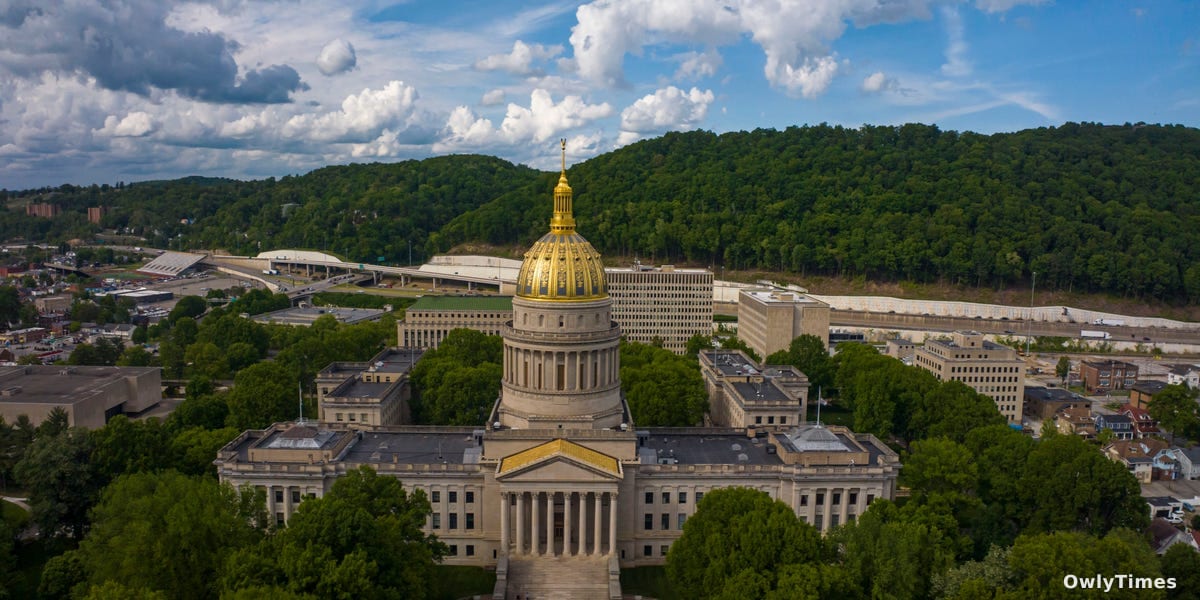

The West Virginia legislature’s recent move to shield the employers of political donors isn’t about protecting privacy – it’s a calculated defense of entrenched power, a familiar tactic in a state historically beholden to extraction industries. The new law, redacting employer information from political donations over $250, ostensibly aims to curb harassment of business owners. However, the strategic effect is to further obscure the financial ties between corporations and the politicians who regulate them, effectively allowing the state’s “owners” – as the author bluntly puts it – to continue blocking any attempt to “buy their souls back” through electoral accountability. This isn’t an isolated incident; it’s a continuation of a century-long pattern of insulating economic interests from public scrutiny.
The core of the maneuver lies in who benefits and who loses. Corporations, particularly those in industries like coal and natural gas that heavily influence West Virginia politics, gain a layer of insulation from public pressure. Previously, a clear link between corporate donations and favorable policy outcomes – like lucrative contracts – was readily visible. Now, that connection is deliberately blurred. The public, and any watchdog groups attempting to track influence, lose the ability to readily identify which companies are funding which campaigns. Senator Mike Azinger’s claim of protecting employers from “harassment” rings hollow when viewed against this backdrop; the real target isn’t individual safety, but transparency. The timing is also crucial. The law takes effect after the general election, suggesting a prioritization of protecting future fundraising efforts rather than addressing any immediate threat.
This tactic echoes a broader national trend, most notably highlighted by the Supreme Court’s Citizens United decision in 2010. As the piece points out, Montana previously had robust campaign finance laws designed to limit corporate influence, laws that were effectively nullified by Justice Anthony Kennedy’s majority opinion. Citizens United opened the floodgates for unlimited corporate spending in elections, and West Virginia’s new law represents a state-level attempt to exploit that precedent, further diminishing the public’s ability to track the source of political funding. The historical parallel to the 1921 Battle of Blair Mountain – a violent clash between coal miners and mine owners – underscores the enduring struggle for power in the state. Then, as now, the goal is to maintain an “oligarch’s playground” where economic interests dictate political outcomes.
The situation in Tennessee reveals a different, yet equally revealing, dynamic. Senator Mark Pody’s attempt to introduce a bill that would potentially apply the death penalty to those who terminate a pregnancy, and its subsequent collapse due to an amendment from Representative Jody Barrett, demonstrates the internal fractures within the anti-abortion movement. Barrett’s amendment, seemingly intended to push the boundaries of the state’s already restrictive abortion ban, ultimately proved too extreme even for some within the Republican party. This wasn’t a principled retreat, but a strategic calculation. Pody recognized the amendment lacked the votes to pass, and pulled the bill to avoid a public defeat. The episode highlights the limits of even the most zealous ideological agendas when confronted with political realities.
This piece references the esquire.com report.
Meanwhile, in Wisconsin, the case of the town of Verona and Flock Safety illustrates the growing tension between local control and the expansion of surveillance technology. Verona’s attempt to end its contract with Flock, a company providing license plate reader cameras, was undermined when the company refused to remove the cameras, instead actively pursuing a new contract. This blatant disregard for local authority reveals a power imbalance: Flock isn’t simply selling a product to Verona; it’s building a nationwide surveillance network, and local concerns are secondary to its broader business model. Mayor Luke Diaz’s observation that “they were never really selling to us in the first place. What they are doing is selling to much bigger agencies the ability to spy on a ton of people” is a stark warning about the erosion of privacy in the digital age. The increasing number of cities ending their contracts with Flock, driven by fears of federal government access to the data, signals a growing resistance to unchecked surveillance.
Finally, the incident in Oklahoma – a property listing accompanied by a threat of violence – serves as a grim reminder of the fragility of civil discourse and the potential for escalation in a polarized political climate. While seemingly isolated, it underscores the broader breakdown of trust and the normalization of intimidation tactics. The political chess move to watch next isn’t a legislative maneuver or a court decision, but the response to this escalating pattern of intimidation. Will law enforcement prioritize investigating threats against potential renters, or will this incident be dismissed as an isolated case? The answer will reveal whether the state is willing to protect not just property rights, but the basic right to engage in economic activity without fear of violence.