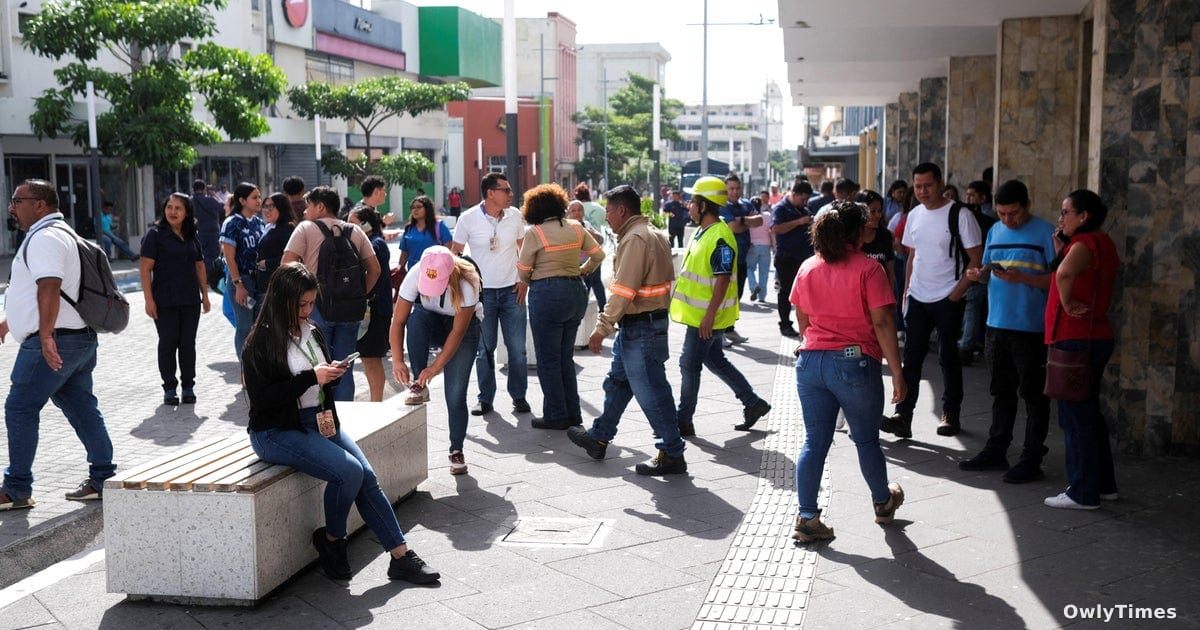

Can we truly build a world that is "earthquake-proof" when the very ground beneath our feet is programmed to move? On Friday, July 17, 2026, a powerful 7.3-magnitude earthquake struck the southern Mexican Pacific coast, serving as a visceral reminder that even our most sophisticated digital early-warning systems have blind spots.
The real story here isn’t just the raw seismic data — it’s the fact that in a hyper-connected age, our high-tech safety nets are still constrained by the brutal physics of the first few seconds of a disaster. The U.S. Geological Survey (USGS) reported the epicenter was located 30 miles (48 kilometers) southwest of Aquiles Serdan, near the coast of Chiapas, at a depth of 9 miles (15 kilometers). While the tremor was felt from Mexico City down to El Salvador, according to ABC News, the anticipated automated alarm failed to trigger in the Mexican capital.
The Physics of the False Silence
In the tech world, we often talk about "latency"—the time it takes for a signal to move from point A to point B. For residents in Mexico City, that latency was the difference between a controlled evacuation and a moment of sudden, swaying confusion. The government explained that the seismic alert system remained silent because the energy radiated during those critical opening seconds did not meet the necessary "activation thresholds," as reported by Euronews. It is a sobering technical reality: algorithms designed to protect us rely on initial readings that can sometimes be as deceptive as the calm before a storm.
Human Response vs. Digital Alerts
While the automated systems were calculating thresholds, humans were reacting to the sensory input of the world around them. In Tapachula, the largest city near the border, the experience was less about data and more about survival instinct. Alejandra Mendoza, an administrative employee at a local public hospital, told the Associated Press that the tremor began mildly before intensifying, forcing staff and patients to evacuate in an orderly fashion to a courtyard.
This disconnect between the machine’s judgment and the human experience highlights a fundamental tension in disaster management. While the BBC and other outlets confirmed that no immediate severe damage or casualties were reported, the psychological impact of the shaking was undeniable, particularly in Guatemala City, where residents flooded the streets during the rush hour.
Navigating the Tsunami Threat
Beyond the shaking, the secondary risk—a tsunami—triggered a flurry of varying warnings. The U.S. Tsunami Warning System initially warned of hazardous waves within 186 miles of the epicenter, though this was later downgraded. Euronews notes that the Pacific Tsunami Warning Center maintained an advisory for waves between 30 centimeters and one meter. Meanwhile, the Meteorological Service of Chiapas provided a slightly more specific projection, initially suggesting waves could reach up to 3.3 feet, according to CBS News.
Monitoring the Aftermath
Mexican President Claudia Sheinbaum has maintained that preliminary reports show no major damage, having consulted with the governors of Chiapas and Tabasco. However, the situation remains fluid. The Mexican Navy has advised the public to stay clear of beaches for at least six hours, and in the town of Suchiate, Mayor Elmer Vázquez Gallardo is overseeing ongoing coastal monitoring.
The next measurable signal to watch is the stability of the region’s infrastructure. With at least five aftershocks recorded between magnitude 5.1 and 6, the true test will be the structural integrity assessments currently being conducted by civil protection authorities. We are waiting for the final tally of those inspections to see if the "no damage" reports hold up against the reality of a 7.3-magnitude event.