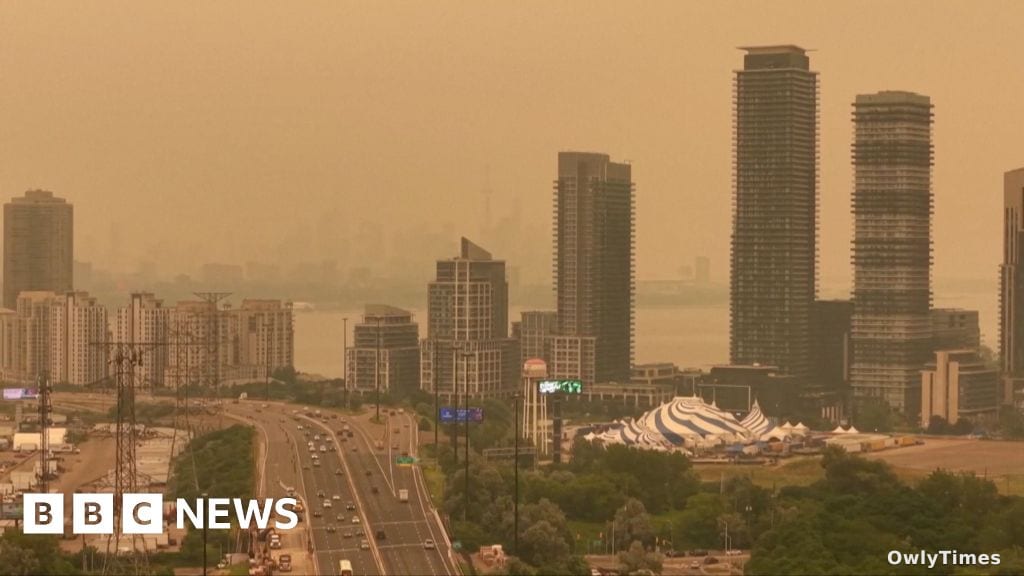

The view from the NOAA-21 satellite is as breathtaking as it is terrifying: a dense, swirling shroud of grey smoke stretching from the scorched forests of northwestern Ontario deep into the heart of the northeastern United States. As of July 17, 2026, the Canadian Interagency Forest Fire Center reports that more than 850 wildfires are currently devastating the landscape, leaving a trail of environmental and human disruption that has forced officials in New York to activate emergency air quality protocols.
A Crisis Written in Smoke
The scale of this disaster is difficult to grasp from the ground, where the air quality in New York was officially labeled "very unhealthy" on July 16, according to Space.com. The fires, which remain largely uncontrolled across Manitoba, Saskatchewan, and Ontario, serve as a grim reminder of how climate change is reshaping the natural world. While the immediate focus is on disaster relief and managing the plumes visible through the VIIRS instrument, the long-term reality is that such intense wildfire seasons are becoming a standard feature of our warming planet.
This environmental crisis is unfolding against a backdrop of broader global volatility. As the smoke drifts south, the economic ripple effects are being felt in energy markets, which are already on edge due to heightened geopolitical tensions. Fortune reports that the price of Brent crude oil reached $84.64 per barrel by 5:30 a.m. ET on July 16, a figure that remains highly sensitive to threats of supply chain disruption. While this price represents a $1.28 decrease from the previous morning, it sits roughly $15.38 higher than the same time last year, highlighting the precarious nature of global energy stability.
The Human Toll and Market Shifts
Beyond the macro-level concerns of air quality and oil benchmarks, individuals are navigating the immediate financial impacts of these stressors. In the retail sector, homeowners are looking for ways to adapt to the changing climate and rising costs. As temperatures climb, hardware retailers are pushing significant promotions to help residents stay cool; WIRED notes that consumers can currently find discounts of up to 30% on air conditioners and cooling technology, a necessary investment for many as extreme weather becomes more frequent.
The financial landscape for personal savings is also seeing aggressive shifts as firms compete for stability. According to CNBC, major brokerage firms like E*TRADE and Citi Personal Wealth Management are dangling significant incentives—some as high as $10,000—to attract new investment capital. These promotions, which carry deadlines stretching through October 2026, underscore a market where firms are eager to lock in customer loyalty despite the surrounding economic uncertainty.
Why This Moment Matters
The intersection of these events reveals a culture increasingly defined by contingency. Whether it is the U.S. government relying on the Strategic Petroleum Reserve to hedge against energy spikes, or families purchasing discounted home cooling systems to weather the next heatwave, the common thread is a transition toward constant mitigation. As wildfires continue to burn across North America and global markets react to every fluctuation in the price of crude, the industry is forced to reckon with a "new normal." We are moving past the point where these events can be treated as isolated shocks; they are now the primary drivers of our economic and domestic decisions, demanding a level of readiness that has fundamentally changed how we live, work, and invest.