
Is the "comeback" narrative in professional sports just a high-stakes version of software beta testing? We love the idea of a legacy player returning to the arena, but the reality is often a series of forced reboots where the hardware—in this case, human joints—simply fails to support the legacy software.
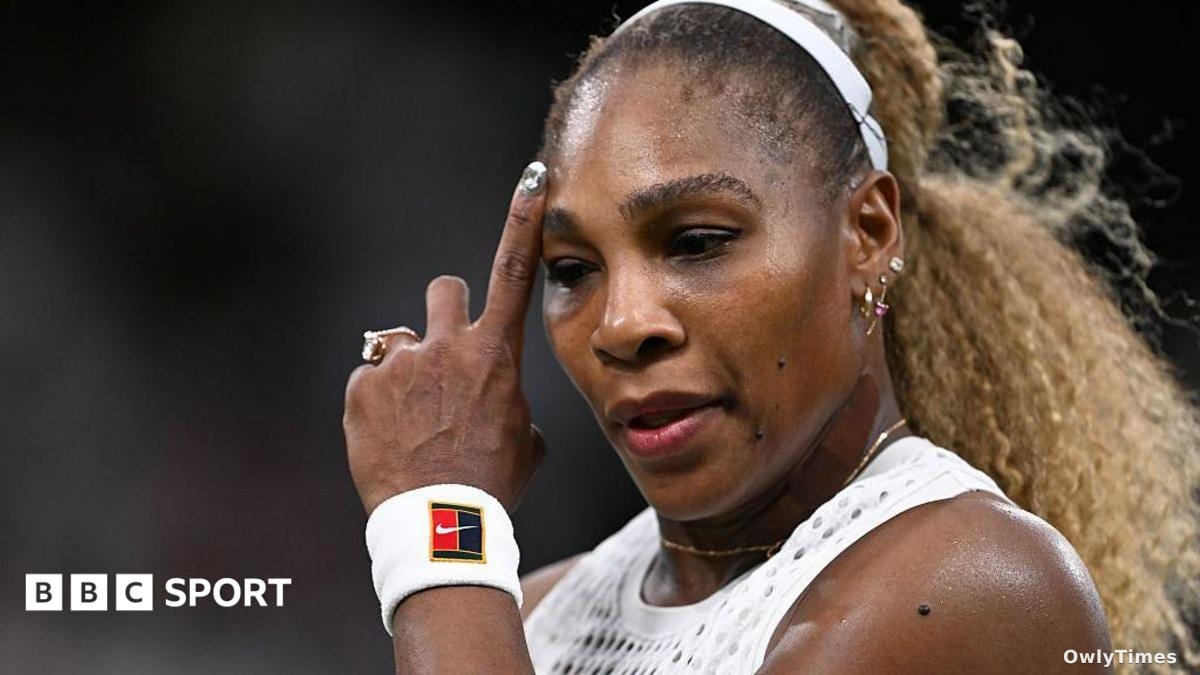
The real story here isn't just the disappointment of a missed match; it’s the friction between a legendary athlete’s insatiable drive and the cold, hard limitations of biological aging. This week, the tennis world watched that friction turn into a physical reality as Serena Williams was forced to withdraw from the Wimbledon doubles competition. According to the BBC, the decision came just 15 minutes before she was scheduled to practice at the All England Club.
The Anatomy of a System Failure
While fans hoped for a storybook reunion with her sister Venus Williams, the mechanics of the situation were precarious from the start. The Guardian reports that Serena sustained the injury during the first set of her opening-round singles loss to 20-year-old Maya Joint. The physical toll was severe; Serena later shared images on social media of four syringes filled with yellow fluid she claimed had been drained from her knee to manage the swelling.
There is some discrepancy in the reporting regarding the specifics of the injury’s location. NBC News identifies the injury as involving her right knee, while the BBC notes that Serena shared photos showing bandaging on her left knee. Regardless of the side, the functional outcome was a complete system shutdown for the doubles draw. The tournament organizers had gone to great lengths to accommodate the pair, leaving their match as a "not before 16:30 BST" slot on Friday—a deliberate delay to buy the sisters every possible minute to declare fitness, as noted by the BBC.
Legacy vs. Reality
For the everyday user, watching a titan of industry or sport struggle with a "return to form" is a mirror of our own technological lives: we expect our devices—and ourselves—to function at peak performance indefinitely, ignoring the fact that four years of inactivity, as The Guardian points out, creates significant "rust." Serena, who is 44, and Venus, who is 46, were attempting to recapture a partnership that last saw a Wimbledon title in 2016.
The industry buzz around this comeback highlights the massive gulf between brand nostalgia and physical capacity. NBC News notes that Serena had previously framed her 2022 departure as "evolving away" from the sport, a sentiment that feels increasingly prophetic given the current physical strain. While her competitive spirit remains as aggressive as her trademark serve, the "hardware" is clearly sending error messages that can’t be patched with willpower alone.
The Next Update
The immediate impact for the tournament is administrative; The Guardian confirms that Samantha Murray Sharan and Lanlana Tararudee have replaced the Williams sisters in the draw. As for the future, Serena’s own cryptic sign-off—"Stay tuned to a city near you"—suggests that this isn't a permanent exit, but a pivot. The next measurable trigger for her return to the spotlight is the North American hard court swing, which culminates at the US Open between August 30 and September 13. Expect her to continue testing her physical limits there, though whether the body can actually handle the high-intensity load of a full Grand Slam remains the ultimate, unanswerable question.