
The calculated ambiguity surrounding potential military action against Iran isn’t a failure of communication – it’s the core of the strategy. President Trump isn’t merely considering a strike; he’s leveraging the threat of force to reshape the geopolitical landscape, mirroring a playbook successfully deployed in Venezuela but on a vastly more complex stage. The lack of a detailed public rationale isn’t a misstep, but a deliberate withholding of information designed to maximize pressure on Tehran while simultaneously gauging domestic and international reaction without committing to a course of action. This approach, however, carries immense risk, and the stakes extend far beyond nuclear proliferation.
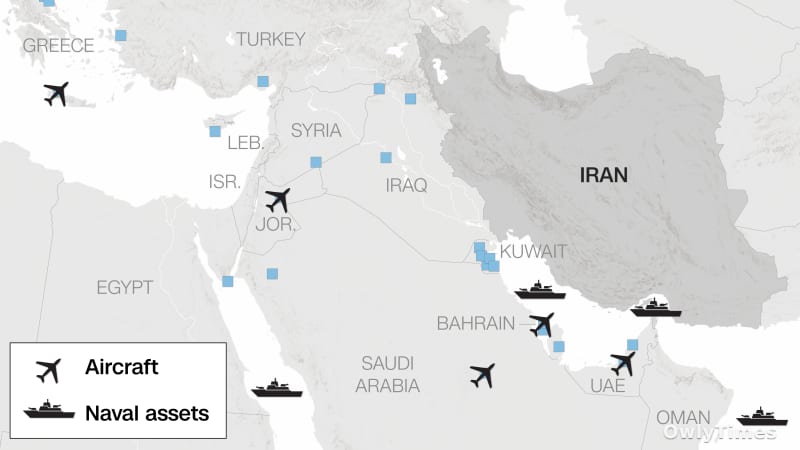
The immediate calculus is clear: the military has signaled readiness for a strike by the weekend, following a demonstrable buildup of aerial and naval assets. Yet, Trump appears to be actively soliciting opinions, privately debating the merits of intervention, and, crucially, testing the waters with allies. This internal deliberation, coupled with the opaque messaging from the White House, reveals a power dynamic where the President is attempting to maintain maximum flexibility while projecting strength. Press Secretary Karoline Leavitt’s evasive responses to direct questions about the justification for a strike – simply stating Trump “is always thinking about what’s in the best interests of the United States” – underscores this strategy. Who benefits and who loses from this opacity? The administration benefits by avoiding premature political backlash, while Iran benefits from a degree of uncertainty that allows it to calibrate its response. The American public, and potentially US troops, lose by being kept in the dark about the potential costs of conflict.
Source material: CNN.
This situation echoes the lead-up to the 2003 invasion of Iraq, though with a crucial difference. The Bush administration, despite the ultimately flawed intelligence, engaged in a sustained public relations campaign to build support for war, securing congressional authorization in the process. Trump, in contrast, is operating with minimal public justification and no attempt to secure legislative backing. This isn’t necessarily a sign of recklessness, but a reflection of a fundamentally different approach to power. Trump’s success in ousting Nicolás Maduro in Venezuela, with no US casualties, appears to have emboldened him, fostering a belief that decisive action can yield results without significant cost. However, the scale and complexity of Iran dwarf Venezuela, making a direct comparison misleading. The assassination of Qasem Soleimani demonstrated that even targeted strikes can have unpredictable consequences, failing to trigger the widespread regional conflagration some predicted, but also failing to fundamentally alter Iran’s behavior.
The core of the impasse lies in the irreconcilable demands. Trump insists Iran make a “deal,” but the terms of that deal remain undefined and likely unacceptable to the current regime. Tehran’s willingness to temporarily suspend enrichment in exchange for sanctions relief, as reported by The New York Times, is viewed by figures like Dennis Ross, a former US Middle East peace envoy, as a symbolic concession designed to buy time rather than a genuine attempt at de-escalation. Trump cannot afford to be seen as repeating the perceived failures of the Obama administration’s nuclear deal, and lifting sanctions risks bolstering a regime he seeks to contain. This creates a paradoxical situation where both sides are incentivized to maintain the status quo of escalating tension, even as the risk of miscalculation increases.
Beyond the immediate nuclear concerns, a deeper strategic calculation is at play. Trump’s preoccupation with his legacy – evidenced by his focus on vanity projects like a new White House ballroom – suggests a desire to resolve the decades-long standoff with Iran and secure a place in history. The regime’s internal vulnerabilities – the ailing Ayatollah Ali Khamenei, a collapsing economy, and recent protests – present a potential opportunity for regime change. However, the potential for a chaotic aftermath, a power vacuum filled by even more radical elements within the Islamic Revolutionary Guard Corps, is a significant risk. As Colin Clarke of the Soufan Center points out, the “day after” scenario remains largely unaddressed, echoing the failures of previous US interventions in Iraq, Afghanistan, and Libya.
The political chess move to watch next isn’t whether the military launches an attack this weekend, but whether Trump will use his State of the Union address on Tuesday to articulate a clear and compelling rationale for potential military action. Will he attempt to rally public support, or will he continue to operate in the realm of ambiguity? The answer will reveal whether this is a calculated bluff designed to extract concessions, or a genuine descent towards a conflict with potentially catastrophic consequences.