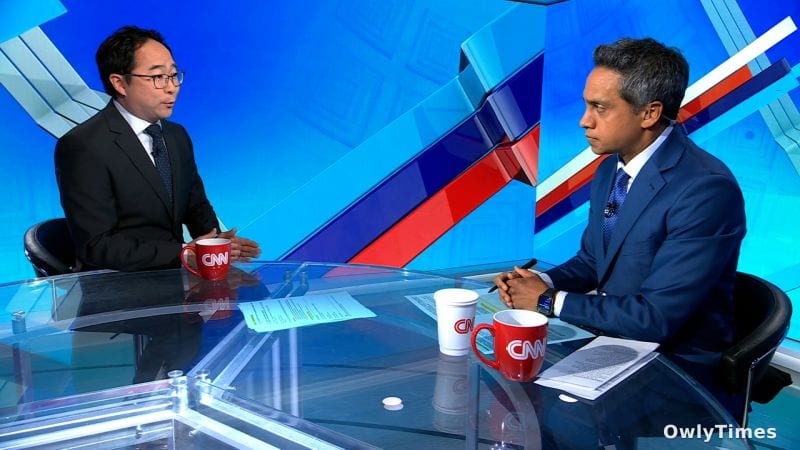

The Supreme Court’s Friday ruling striking down President Biden’s student loan forgiveness plan wasn’t simply a legal defeat for the administration; it unlocked a dormant political liability for the Republican party, one Senator Andy Kim of New Jersey is aggressively exploiting. Kim’s call to “give back” the $134 billion collected through President Trump’s tariffs isn’t a matter of simple debt restitution, but a calculated maneuver to expose a contradiction at the heart of the GOP’s economic messaging and force a vote that could fracture the party. The strategic calculus is clear: weaponize the economic nationalism Trump championed against Republicans now decrying government spending.
The immediate impact of the Supreme Court decision is, of course, financial. The $134 billion represents revenue collected from tariffs imposed primarily on goods from China, ostensibly to protect American industries. However, the tariffs functioned as a tax passed on to American consumers and businesses, inflating costs across the economy. While the Trump administration framed these tariffs as a negotiation tactic, the funds were deposited into the general treasury – a point Senator Kim emphasizes. His argument isn’t about the merits of the original tariffs, but about the principle of unearned revenue. The tariffs achieved their stated goal – or failed to – and the funds should be returned to those who paid them, he contends. Who benefits and who loses from this proposal is sharply defined: American consumers and businesses stand to gain, while the political capital of Republicans who defended the tariffs is directly at risk.
See the original CNN story for the full account.
This isn’t a novel tactic. Throughout American history, politicians have sought to reframe economic policies as matters of fairness and restitution. The Populist movement of the late 19th century, for example, focused on the perceived injustices of railroad monopolies and advocated for policies to redistribute wealth from corporations to farmers and laborers. Similarly, the Bonus Army protests of 1932, where World War I veterans demanded early payment of their promised bonuses during the Great Depression, tapped into a sense of economic desperation and government obligation. Kim’s proposal echoes this historical pattern, framing the tariff revenue as a debt owed to the American people. The scale, however, is unprecedented. $134 billion is not a rounding error; it’s a sum large enough to significantly impact household budgets and business investment.
The political tightrope Republicans now walk is precarious. Many staunchly defended the tariffs during the Trump presidency, portraying them as essential for national security and economic competitiveness. To oppose returning the funds now would be to admit the tariffs were, in effect, a tax grab – a narrative directly contradicting their previous rhetoric. Yet, supporting the return of the funds could be interpreted as a rebuke of President Trump and his trade policies, potentially alienating his base. The internal divisions within the GOP are already visible in the debate over the bipartisan border security deal, with hardline conservatives rejecting compromises favored by more moderate Republicans. This tariff issue adds another layer of complexity, potentially exacerbating existing fractures. Senator Rubio’s refusal to support the border deal, as highlighted by CNN’s Jake Tapper, demonstrates a willingness to prioritize ideological purity over pragmatic solutions – a tendency that could easily extend to the tariff debate.
The legislative path forward is uncertain. Senator Kim acknowledges Democrats are “working on legislation to figure out how the refunds would work,” but the details remain unclear. A direct refund to individual consumers would be administratively complex, while a reduction in corporate taxes could be seen as disproportionately benefiting large businesses. The most likely scenario is a targeted approach, focusing on industries directly impacted by the tariffs. Regardless of the specific mechanism, the vote itself is the key. Senator Kim isn’t necessarily expecting the legislation to pass; he’s aiming to force Republicans to take a public position on a politically damaging issue. The question now is whether any Republican will break ranks and support the return of the funds, or if the party will attempt to coalesce around a defense of the original tariffs – a position that will likely be met with skepticism from voters already feeling the pinch of inflation. The next political chess move to watch is whether Senate Minority Leader McConnell, following his recent comments on the Senate floor, will allow a vote on any proposed legislation regarding the tariff revenue, and what signals that decision sends about the GOP’s internal divisions.