
99.9% – that’s the statistically improbable rate of positive response reported within the Church of Jesus Christ of Latter-day Saints when members are asked to accept a calling, a volunteer ecclesiastical assignment. While often framed as spiritual devotion, the near-universal acceptance rate, highlighted by Elder Patrick Kearon’s recent address during the April 2026 general conference, reveals a complex interplay of social pressure, theological doctrine, and a surprisingly robust internal economy of volunteer labor. Follow the money, or rather, the time – an estimated 10-20 hours per week per adult member dedicated to unpaid service – and a picture emerges of a highly efficient, faith-based organizational structure.
The Economics of Spiritual Capital
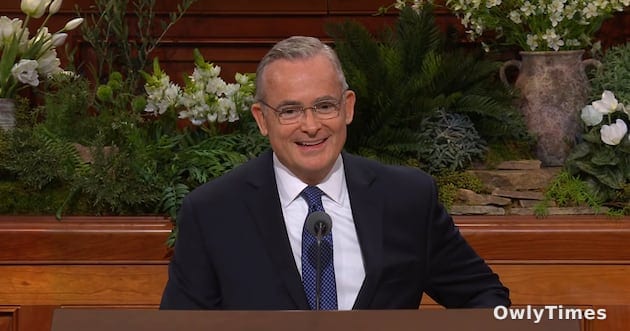
Elder Kearon, ordained to the Quorum of the Twelve Apostles in December 2023 following the passing of President M. Russell Ballard, centered his talk on the personal growth derived from accepting callings, recounting his own experience as a new convert in London being asked to serve as an assistant ward clerk. This anecdote isn’t simply a heartwarming story; it’s a microcosm of the Church’s operational model. The “raised hands and smiling faces” described by Kearon represent more than just enthusiastic consent. They signify a commitment to a system where individual contributions, however small, are integral to the functioning of a global organization. Compared to the average American volunteer rate of 25% (Bureau of Labor Statistics, 2024), the Church’s internal participation dwarfs secular engagement. This isn’t accidental. The doctrine of “sustaining” leaders and fellow members – emphasized by Kearon with the quote, “We sustain each other with our prayers, our love, our patience, and our faith” – actively cultivates a culture of obligation and reciprocal support.
See the original thechurchnews.com story for the full account.
Beyond Benevolence: The Functional Value of Callings
The emphasis on service as a path to becoming “more like Jesus Christ” is a core theological tenet, but it also serves a critical functional purpose. The Church operates with a remarkably lean administrative staff, relying heavily on volunteer labor to manage everything from Sunday services and youth programs to disaster relief and global missionary efforts. This model allows the Church to allocate a significantly higher percentage of its financial resources (estimated at $1.2 billion in annual operating expenses, 2025 figures) towards humanitarian aid, temple construction, and educational initiatives, compared to denominations with larger paid staffs. Elder Kearon’s assertion that “Callings from the Lord are tailor-made for our growth” subtly reinforces this efficiency. By matching individuals with assignments designed to stretch their abilities, the Church simultaneously develops its workforce and minimizes the need for external expertise.
The Implicit Contract: Growth and Reciprocity
The narrative surrounding callings isn’t solely about selfless service. Elder Kearon repeatedly stressed the reciprocal benefits: “I have learned over and over again that—whatever our offering—in the Lord’s economy we always come out ahead.” This framing establishes an implicit contract. Members invest their time and energy, and in return, they receive spiritual growth, increased faith, and a sense of belonging. This dynamic is particularly potent for new converts, like Kearon himself, who find immediate integration and purpose within the community. The comparison to the story of the 12-year-old Jesus in the temple, “about His Father’s business,” further reinforces the idea that active participation is not merely encouraged, but expected, as a demonstration of devotion. This expectation, while fostering a strong sense of community, also creates a subtle pressure to conform and contribute, explaining the exceptionally high acceptance rate.
What This Means for Your Wallet
The Church’s reliance on volunteer labor isn’t just a matter of internal organization; it has tangible implications for members’ financial lives. By minimizing administrative costs, the Church can direct more resources towards programs that directly benefit its members – scholarships, welfare assistance, and family support services. However, the time commitment required for callings represents a significant opportunity cost. Members are effectively donating hundreds of hours annually, time that could be spent on income-generating activities or personal pursuits. The question for members, and potential members, isn’t simply whether to accept a calling, but whether the spiritual and communal benefits outweigh the economic value of that time. Watch for a potential shift in this dynamic as younger generations, increasingly valuing work-life balance and entrepreneurial pursuits, begin to navigate the demands of Church service. Will the 99.9% acceptance rate hold, or will a new calculus emerge?