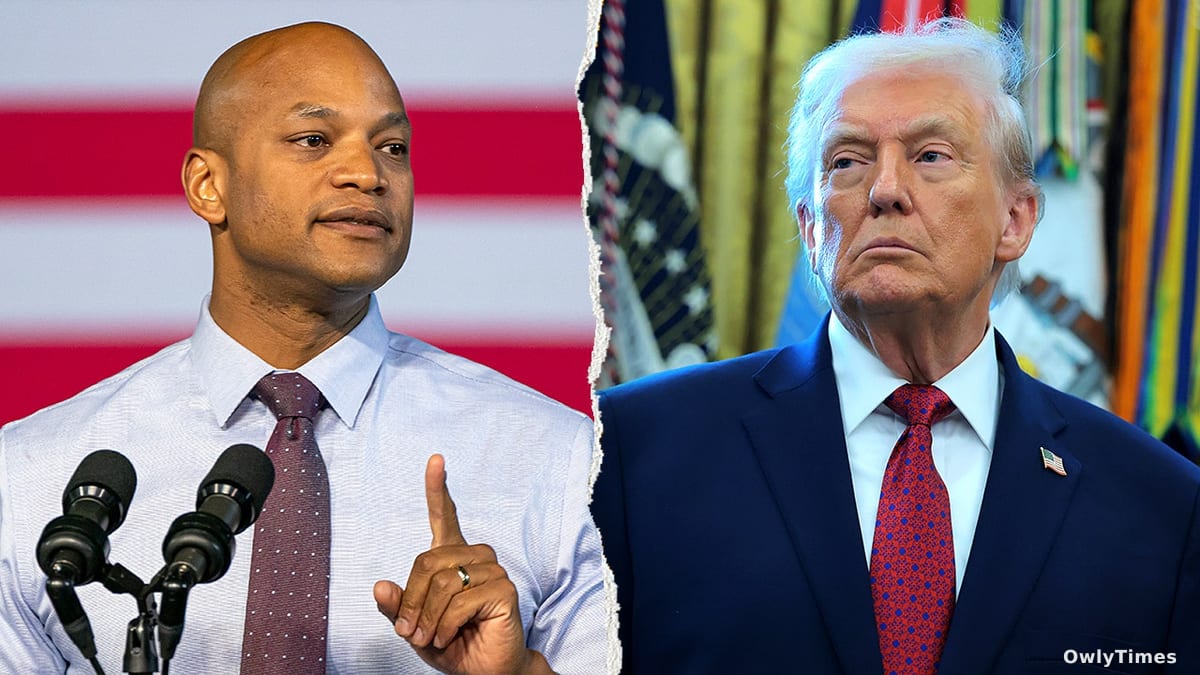

The calculated restraint of Wes Moore, Governor of Maryland, in the face of escalating attacks from Donald Trump isn’t a matter of personal preference, but a strategic positioning. While other Democratic governors actively engage Trump in rhetorical battles, Moore’s initial response to the former President’s criticisms – regarding both a catastrophic sewage spill in the Potomac River and a contentious redistricting effort – has been measured, even deferential. This isn’t a sign of weakness, but a deliberate attempt to decouple himself from the increasingly polarized national narrative and maintain operational flexibility, particularly as a figure frequently mentioned in 2028 presidential speculation. The current dynamic isn’t about winning a public spat with Trump; it’s about controlling the terms of engagement and minimizing political liabilities.
The immediate catalyst for the friction is the millions of gallons of raw sewage that poured into the Potomac River following a pipeline collapse on January 19th. The resulting contamination reached levels over 2,700 times the safe limit, according to the Potomac Riverkeeper Network and researchers at the University of Maryland. Trump swiftly blamed Moore and local leaders for “gross mismanagement,” a charge Moore calls “absurd” given the pipeline resides on federal land and initial support for repairs came from Maryland resources. This echoes a familiar tactic employed by Trump: externalizing blame and framing crises as failures of leadership, regardless of factual context. The parallel to the handling of Hurricane Maria in Puerto Rico – where the Trump administration initially downplayed federal responsibility – is striking. In both cases, the emphasis is on assigning fault rather than coordinating a response.
Drawn from Fox News.
Who benefits and who loses in this exchange is multi-layered. Trump gains by reinforcing his base’s narrative of Democratic incompetence and positioning himself as a decisive leader ready to “fix” problems created by others. He also subtly diverts attention from potential scrutiny of federal infrastructure maintenance. Moore loses immediate public relations ground, forced to defend his administration against a highly visible attack. However, he simultaneously gains the opportunity to portray himself as a pragmatic problem-solver focused on tangible results – dispatching Maryland resources to address a federal failure – rather than engaging in partisan squabbles. The long-term calculation appears to be that appearing above the fray will serve him better than direct confrontation, especially given his potential national ambitions.
The redistricting battle further complicates the situation. Moore is championing a redrawing of Maryland’s congressional map, a move widely seen as an attempt to unseat Andy Harris, the state’s sole Republican congressman. This effort has stalled in the state Senate, opposed by Senate President Bill Ferguson, despite passing the House. The intervention of House Minority Leader Hakeem Jeffries in Annapolis, attempting to sway Ferguson, underscores the national Democratic Party’s investment in this fight. Trump’s framing of the redistricting as “partisan gerrymandering” is accurate, but strategically convenient. He’s mirroring the criticisms leveled against Republican-led redistricting efforts in other states, effectively turning the tables and highlighting a perceived hypocrisy. The irony is palpable: Trump actively encouraged map revisions in states like Texas and Florida, and now condemns a similar effort in Maryland.
Moore’s insistence that he simply wants a vote on the redistricting measure, regardless of the outcome, is a carefully constructed position. It allows him to maintain his image as a champion of democracy while simultaneously avoiding direct responsibility for the potentially controversial outcome. However, this stance also risks alienating moderate Democrats and reinforcing the narrative of partisan overreach. The situation highlights a fundamental tension within the Democratic Party: the desire to aggressively pursue political advantage through redistricting versus the risk of appearing to undermine democratic norms. The fact that Moore is navigating this tension while simultaneously deflecting attacks from Trump demonstrates a level of political dexterity that sets him apart from other rising stars in the party.
The political chess move to watch next isn’t whether Moore will directly engage with Trump – he’s already signaled his disinterest. It’s whether Bill Ferguson will yield to pressure from Jeffries and the national party and allow a vote on the redistricting map. Ferguson’s decision will not only determine the fate of Maryland’s congressional delegation but will also reveal the extent to which state-level Democrats are willing to prioritize national party objectives over local political considerations. The outcome will be a crucial indicator of the power dynamics within the Democratic Party and a bellwether for similar redistricting battles to come.