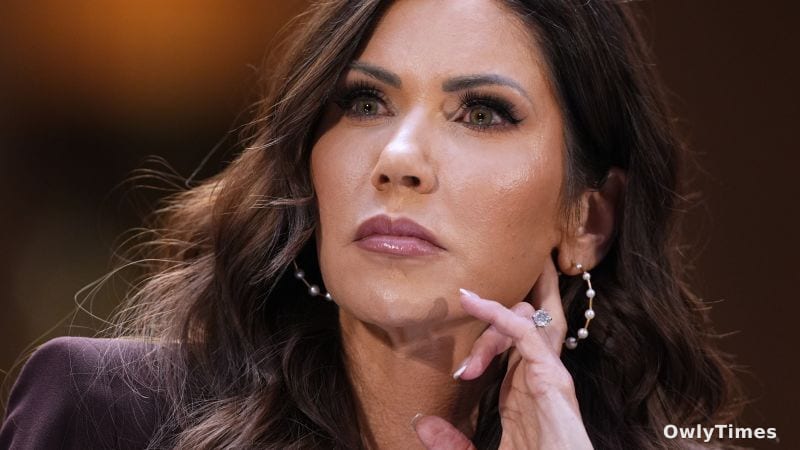

Is the spectacle of Washington D.C. – the hearings, the firings, the sudden appointments – actually about policy, or is it just a particularly elaborate reality show? The swift and unceremonious ousting of Kristi Noem as Secretary of Homeland Security wasn’t a referendum on border security, disaster relief, or even alleged ethical breaches. The real story here isn’t about Noem’s failings – it’s about Donald Trump’s control, and the razor-thin line between loyalty and insubordination in his orbit.
After a year of escalating controversies, Noem’s fate was sealed in a matter of days, triggered by a seemingly procedural Senate Judiciary Committee hearing. John Kennedy, the Louisiana Republican, signaled his intent to aggressively question Noem about the $220 million advertising campaign featuring her prominently – a campaign that felt less like public service announcement and more like a vanity project funded by taxpayer dollars. “Both Border Patrol and Immigration and Customs Enforcement are needed to do that, are they not?” Kennedy asked, a deceptively gentle setup for a barrage of questions about wasteful spending and broken promises. He relentlessly pressed Noem on whether Trump had approved the campaign, finally eliciting a hesitant “Mmhmm, yes.”
That affirmation, it turned out, was the breaking point. Trump, according to Kennedy, was “pissed.” He’d told NBC News he hadn’t even known about the ad campaign, and the discrepancy between Noem’s answer and his own reality was enough. In the same conversation, Trump casually floated a replacement: Oklahoma Senator Markwayne Mullin. This wasn’t a meticulous search for the most qualified candidate; it was a demonstration of power. Trump didn’t need a detailed policy briefing on Mullin’s DHS experience – he needed someone who wouldn’t contradict him.
This piece references the CNN report.
The speed of the replacement speaks volumes. Before Mullin could even discuss the opportunity with his wife, Trump announced the change on social media. Noem, meanwhile, was learning of her dismissal as she arrived in Nashville to address a conference of police officers, a cruel irony given her hardline stance on law and order. She delivered her pre-planned speech, vaguely alluding to a new role focusing on drug trafficking, while news alerts of her firing flashed on the phones of staffers in the room. The dissonance was jarring, a testament to Noem’s attempt to project an image of control while her world crumbled.
But to focus solely on the drama surrounding Noem’s exit misses the larger point. The litany of accusations against her – the questionable handling of events in Minneapolis following the deaths of Renee Good and Alex Pretti, allegations of an affair with Corey Lewandowski, exorbitant travel expenses, and reports of White nationalist messaging within her agency – were all contributing factors, yes. However, they weren’t the cause of her downfall. It was her perceived defiance of Trump, her attempt to create a narrative that didn’t align with his, that sealed her fate. A White House official told CNN the decision was based on “the culmination of her many unfortunate leadership failures…but sadly overshadowed and distracted from the Administration’s extremely popular immigration agenda.”
The fallout extends beyond Noem. Lewandowski is expected to depart as well, a clear signal that loyalty is paramount. Mullin, a staunch supporter of Trump’s immigration policies, will inherit an agency under immense pressure to meet ambitious, and often unrealistic, daily arrest quotas. The internal tensions within DHS, particularly between Noem and White House border czar Tom Homan, are likely to ease, with Homan’s more targeted approach to enforcement expected to gain prominence. Inside FEMA, the mood is reportedly one of “relief,” after Noem’s drastic cuts and restructuring left the agency depleted and ill-prepared for future disasters.
The appointment of Mullin isn’t a policy pivot; it’s a consolidation of power. He’s aligned with Trump on key issues, including a hardline stance on immigration and a willingness to overlook past controversies. Even his nuanced position on the January 6th attack – acknowledging it as a “riot” while simultaneously advocating for “moving on” – demonstrates a pragmatic approach to navigating Trump’s complex political landscape. Thom Tillis, a Republican Senator, even highlighted Mullin’s dog-loving tendencies, a seemingly trivial detail that underscores the importance of personal loyalty in this administration.
The real question isn’t whether Mullin will succeed as Secretary of Homeland Security. It’s whether anyone can succeed within a system that prioritizes obedience over competence, and image over substance. Watch closely for the first instance where Mullin publicly disagrees with Trump on a significant policy matter. That moment, not a policy announcement or a border statistic, will reveal the true extent of his autonomy – and the limits of power in the age of Trump.