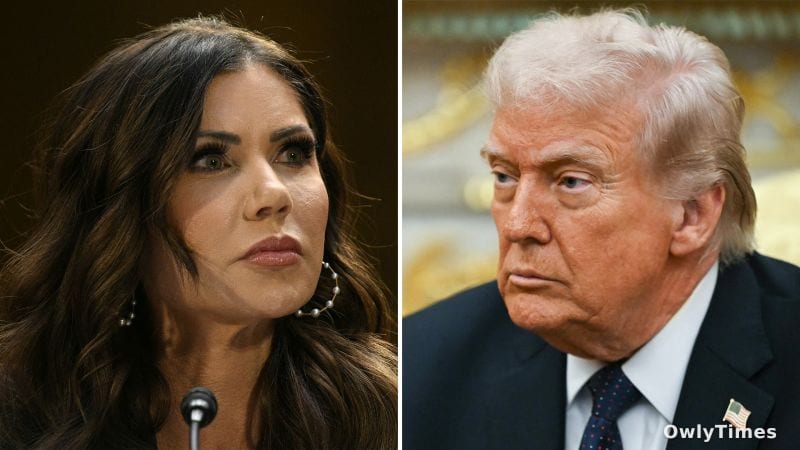

The abrupt dismissal of Kristi Noem as Secretary of Homeland Security isn’t a personnel shakeup; it’s a recalibration of power within the Trump administration, prioritizing demonstrable loyalty and media performance over bureaucratic control. The move to replace Noem with Oklahoma Senator Markwayne Mullin isn’t about fixing a broken DHS – though problems undeniably exist – it’s about installing a figure demonstrably willing to publicly defend the President, even when facing contradictory evidence, and who understands the value of televised combat. This isn’t a search for competence; it’s a demand for a visible, vocal advocate.
Who benefits and who loses is immediately clear. Trump consolidates control, signaling to his cabinet that public fealty trumps internal dissent. Mullin gains a high-profile position, potentially setting him up for future ambitions, while simultaneously rewarding a loyalist. The losers are those within DHS who hoped for a leader focused on internal reform and a more measured approach to policy. More broadly, the move signals a further erosion of norms around accountability and transparency, prioritizing political optics above substantive governance. The timing, following contentious congressional hearings and scrutiny over agency spending, suggests a preemptive strike against further damaging revelations.
The dismissal echoes historical precedents of presidents prioritizing loyalty over expertise, particularly during periods of heightened political polarization. Consider Richard Nixon’s staffing choices during Watergate, where individuals willing to carry out questionable directives were favored over those raising ethical concerns. Or, more recently, the frequent personnel changes under the previous administration, often driven by perceived disloyalty. In each case, the underlying calculus is the same: a besieged leader seeks to surround themselves with those who will defend them, regardless of the cost to institutional integrity. The “Shield of the Americas” initiative, to which Noem is being relegated, feels less like a genuine policy assignment and more like a gilded cage – a visible but ultimately powerless position.
This piece references the CNN report.
Noem’s downfall wasn’t a single event, but a series of escalating tensions. The initial friction stemmed from her decision to unilaterally pause TSA precheck during a funding lapse, a move that blindsided the White House and was swiftly reversed. This demonstrated a willingness to act independently, a trait Trump appears to have interpreted as insubordination. However, the breaking point appears to have been her handling of the fallout from the shootings of Renee Good and Alex Pretti in Minneapolis, and her subsequent testimony before the Senate Judiciary Committee. Her assertion that Trump was aware of her agency’s self-promotional advertising campaign was directly contradicted by the President himself in a Reuters interview, a public rebuke that signaled her impending removal. The $250 million advertising campaign, with its prominent featuring of Noem, raised eyebrows even among Republican senators like Thom Tillis and John Kennedy, who questioned the allocation of taxpayer funds and the transparency of the bidding process.
The selection of Mullin is equally revealing. A former Mixed Martial Arts fighter known for his combative style, he’s been a reliable television defender of Trump, frequently dispatched by the White House to counter negative narratives. Aides have openly acknowledged that Trump “loves watching Mullin on TV,” a telling detail that underscores the importance of media performance in this administration. This isn’t about finding someone to secure the border; it’s about finding someone to look like they’re securing the border on cable news. Mullin’s past work securing deals for the administration, particularly on tax legislation, demonstrates his ability to navigate Capitol Hill, but his primary value appears to be his willingness to engage in public skirmishes on behalf of the President.
The immediate impact will be a period of uncertainty within DHS. The agency has already experienced significant turnover during Trump’s first term, and Noem’s departure, along with her close aide Corey Lewandowski, will likely exacerbate existing anxieties. The question now is whether Mullin will attempt to implement substantive changes or simply serve as a public relations shield for the administration. The departure of Lewandowski, who was accused of micro-managing and creating a toxic work environment, is a welcome development for many within the department, but his replacement remains to be seen.
The political chess move to watch next is Trump’s response to any potential primary challenge to Senator Mike Rounds in South Dakota. While he has endorsed Rounds, the possibility of Noem entering the race, and the potential for a public feud, presents a significant risk. Will Trump maintain his support for Rounds, or will he prioritize settling scores with Noem, even if it means jeopardizing a Republican Senate seat? The answer will reveal a great deal about the true priorities of this administration – and the limits of loyalty in the age of Trump.