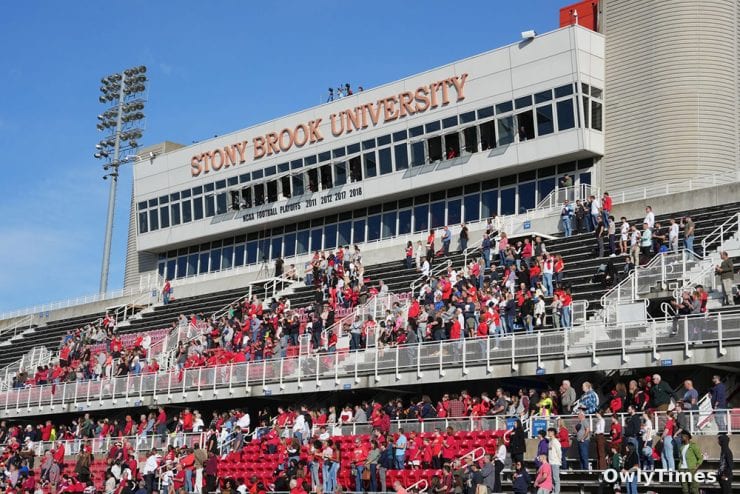

The late afternoon sun cast long shadows across LaValle Stadium last week, the empty stands a stark contrast to the roar of a Seawolves game night. But the real action wasn’t happening on the field; it was unfolding in a meeting room where a small group of Stony Brook University journalism students were celebrating a victory that felt bigger than any athletic win. They’d just received official word: Stony Brook was approved for a student chapter of the Associated Press Sports Editors (APSE), a lifeline into a notoriously competitive industry. This isn’t just about adding another club to campus—it’s a response to a fundamental shift in how young journalists are breaking into the sports world, and a recognition that traditional pathways are increasingly blocked.
The approval, announced earlier this month, places Stony Brook among a select group of universities nationwide recognized by APSE, an organization dedicated to promoting excellence in sports journalism. Stephanie Kelton, interim dean of the School of Communication and Journalism, called it “a proud moment,” but the sentiment runs deeper than institutional pride. Consider the landscape: local newsrooms are shrinking, sports coverage is increasingly dominated by national outlets, and the freelance market, while offering flexibility, rarely provides the stability needed to launch a career. According to the Bureau of Labor Statistics, employment for reporters and correspondents has declined by nearly 60% since 1990. In that context, access to mentorship and networking isn’t a perk—it’s a necessity.
The initiative itself was sparked by John Quinn ‘77, a Stony Brook alumnus who climbed the ranks of sports journalism, holding leadership roles at publications like Newsday and The Philadelphia Inquirer. Quinn, during a campus visit, recognized a gap in resources for aspiring sports journalists. He envisioned a chapter that would offer students the connections he wished he’d had earlier in his career. “This is a relationship business,” Quinn explained, emphasizing the importance of early networking. His idea gained traction with Rick Ricioppo, assistant professor of practice, who saw the potential to bridge the gap between classroom learning and real-world experience.
Reporting from news.stonybrook.edu informs this analysis.
Kevin Broderick, a senior journalism major and the chapter’s president, then took the reins, navigating the application process and rallying student interest. The chapter launched with 12 members, many already honing their skills at WUSB radio and The Sideline, Stony Brook’s student-run athletics website. This isn’t a group starting from scratch; it’s a collective of students already deeply invested in sports media, eager to amplify their reach. What’s particularly striking is the existing infrastructure – a vibrant campus sports media scene – that APSE will now bolster. It’s a case of recognizing and strengthening what’s already working, rather than imposing a top-down solution.
The benefits are tangible. APSE membership unlocks access to regional meetings, a national convention, and, crucially, direct mentorship from working journalists. Ricioppo notes that his students consistently express anxiety about “finding that first job,” a sentiment echoed across journalism programs nationwide. The APSE chapter offers a potential solution: not a guaranteed job, but a foot in the door, a connection to an editor who might offer guidance or point them towards an opening. As Quinn puts it, it’s about “exposure to the people who are making decisions in newsrooms.” This is especially critical given the increasing reliance on digital portfolios and social media presence – APSE provides a platform for students to refine their work and receive professional feedback.
But the launch of this chapter also raises a question: will these opportunities be equitably distributed? The sports journalism industry, like many media sectors, struggles with diversity. Will APSE actively work to connect students from underrepresented backgrounds with mentors and opportunities? The organization’s commitment to inclusivity will be a key indicator of its long-term impact. Beyond that, the success of the Stony Brook chapter will depend on sustained engagement from both students and industry professionals. Will editors and journalists dedicate their time to mentoring the next generation? The answer to that question will determine whether this APSE chapter becomes a true catalyst for change, or simply another well-intentioned initiative that falls short of its potential.