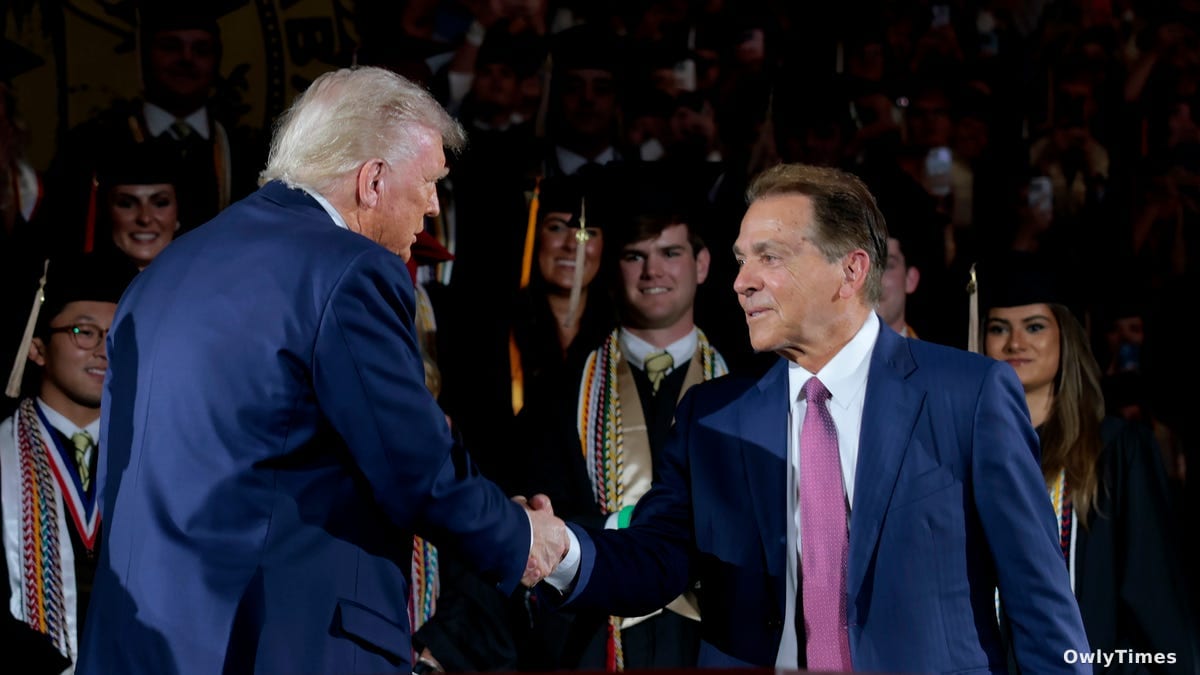

The air in Washington D.C. is thick with ambition, and right now, a particularly audacious one: fixing college sports. Not tweaking, not refining, but a full-scale overhaul spearheaded by President Trump and a committee studded with football royalty like Nick Saban, Urban Meyer, and Tim Tebow. But watching the initial skirmishes, the pre-meeting posturing, feels less like a rescue mission and more like watching wolves argue over how to best divide a wounded deer. The core problem isn’t just about money, though that’s a significant piece. It’s about a fundamental shift in the very soul of college athletics, and the uncomfortable truth that the people holding the levers of power seem incapable of agreeing on even the simplest solutions.
The situation is, as Matt Hayes of USA TODAY Sports points out, intensely tribal. The Big Ten and SEC, the two conferences currently dictating the terms of the game, can’t even agree on a format for the College Football Playoff, despite the billions at stake. This dysfunction casts a long shadow over the entire endeavor. Why would anyone expect them to suddenly embrace a sweeping solution proposed from outside their power structure? The idea that a commission, no matter how star-studded, can magically bridge these divides feels increasingly naive. It’s a classic Washington scenario: everyone has an angle, and genuine compromise is often the first casualty.
Original reporting: USA Today.
The current crisis isn’t simply about revenue sharing or revisiting the Sports Broadcasting Act of 1961, as some suggest. It’s about the erosion of the college experience itself. We’ve entered an era of unfettered free agency for athletes, particularly in revenue-generating sports like football and basketball. Schools are now openly bidding for players, effectively turning roster building into an annual auction. The traditional concept of a four-year commitment, of academic growth alongside athletic development, is rapidly becoming a relic of the past. Cal-Berkeley, a university renowned for its academic rigor, accepted 32 transfers in a single recruiting class – a stark illustration of how far institutions are willing to bend to secure athletic talent. Contrast that with Stanford, accepting just six transfers from equally prestigious institutions, and the message is clear: winning now often trumps the ideals of higher education.
This isn’t to blame the players. As Hayes rightly notes, they’re simply responding to a system that historically exploited them, demanding a share of the immense wealth they generate. For 150 years, athletes received a degree and athletic training in exchange for billions in revenue. Now, they’re rightfully seeking compensation. But the consequences are profound. Failure, once a powerful motivator for growth and improvement, is increasingly mitigated by the promise of a better offer elsewhere. The very notion of building a team culture, of fostering loyalty and commitment, is undermined by the constant churn of the transfer portal. The debate over the Sports Broadcasting Act, championed by Cody Campbell, chairman of the Texas Tech Board of Regents, and President Trump’s point man, centers on the potential for increased revenue – a tempting prospect, particularly for those worried about the future of non-revenue sports. However, the Big Ten and SEC have already publicly criticized Campbell’s campaign, releasing a “white paper” that essentially argues collective bargaining won’t necessarily yield greater financial returns.
The tension is palpable. Tony Petitti and Greg Sankey, the commissioners of the Big Ten and SEC respectively, claim a collective television deal is a “pipe dream.” Campbell, having invested millions of his own money into researching the potential benefits of the SBA, sees it as a lifeline for struggling athletic programs. This fundamental disagreement highlights the core issue: the conferences with the most power are reluctant to relinquish control, even if it means potentially benefiting the entire landscape of college athletics. They’re comfortable with the current system, where they reap the lion’s share of the rewards. The question isn’t whether more money can be generated, but who gets to control it.
Beyond the headlines of revenue sharing and legislative fixes, the real story is the loss of something intangible – the very essence of what college sports once represented. The focus has shifted from developing well-rounded individuals to assembling a collection of highly-paid mercenaries. Will this commission, bogged down in political maneuvering and self-interest, even attempt to address this deeper cultural shift? Or will they simply focus on the financial aspects, leaving the soul of college athletics to wither on the vine? That’s the question everyone should be watching for as this drama unfolds in Washington.