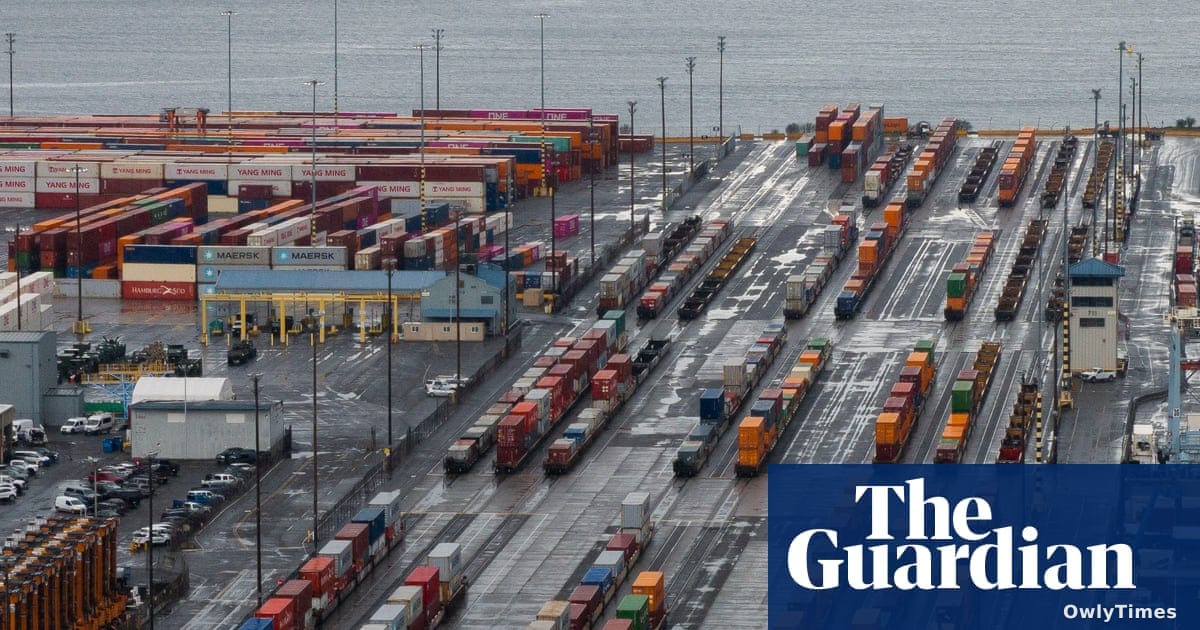

$2 trillion in annual trade between the United States, Mexico, and Canada now faces a period of heightened regulatory uncertainty after the Trump administration allowed the July 1 deadline to pass without renewing the United States-Mexico-Canada Agreement (USMCA) for a new 16-year term. While the pact remains in force, the decision to forgo a formal renewal effectively moves the agreement onto a "short leash," shifting the legal framework from a six-year review cycle to an annual assessment, according to The Guardian.
Following the Money: Deficits and Discontent
The administration’s move is rooted in a desire to curb persistent trade imbalances that officials argue have not been addressed by the current structure of the agreement. According to data provided by the office of the U.S. Trade Representative and cited by CBS News, the U.S. trade deficit with Mexico reached nearly $197 billion in 2025, while the gap with Canada exceeded $46 billion. A senior administration official briefing reporters noted that the White House refused to "rubber stamp" the renewal, concluding that the deal has failed to control these deficits as originally intended.
This pivot marks a dramatic shift in tone from the president who, during his first term in 2020, championed the USMCA as the "fairest, most balanced, and beneficial trade agreement we have ever signed into law," as reported by CNBC. The administration’s current stance suggests that the benefits once associated with the deal, which replaced the 1994 North American Free Trade Agreement (NAFTA), are now outweighed by perceived shortcomings in labor compliance and trade parity.
The Road to Renegotiation
The immediate future of the agreement will be defined by a series of bilateral discussions. CBS News reports that U.S. officials are scheduled to meet with Mexican representatives the week of July 20 to address specific sticking points, including rules of origin and intellectual property. While the administration confirmed it will continue discussions with Canadian partners, CNBC clarifies that formal talks with Canada have not yet commenced, creating a divergent timeline for the two northern and southern neighbors.
Despite the rhetoric, officials from all three nations have signaled a willingness to keep dialogue open. Mexico’s economy minister, Marcelo Ebrard, stated at a press conference that he sees no difference between the three nations that cannot be resolved through negotiation, according to Reuters. U.S. Trade Representative Jamieson Greer echoed this sentiment in a statement, confirming that the U.S. would continue to engage with both countries to address the agreement's shortcomings while maintaining the pact's current force in the interim.
Investor Takeaway: Navigating the Annual Review
For investors and businesses, the shift from a 16-year commitment to an annual review cycle introduces a structural risk to long-term capital allocation. Economists at Capital Economics told CBS News that while a complete withdrawal could slow growth, a transition to a standard tariff regime—estimated at an average rate of 10%—might prevent a deep recession. However, the lack of long-term certainty acts as a brake on cross-border investment. Your wallet will likely feel the impact through increased price volatility in supply chains linked to the automotive sector, which remains bound by the USMCA’s rule that 75% of a vehicle must be produced in North America to qualify for duty-free status. Watch the July 20 negotiations closely; any signal of a deadlock there will be the primary indicator that supply chain costs may soon rise.