
Why do we insist on trusting aging hardware—whether it’s a glitchy smartphone or an 86-year-old’s reflexes—to perform tasks that require split-second precision? We treat our personal mobility like a legacy operating system, assuming that because it worked for decades, it will continue to function flawlessly without a mandatory security patch. The real story here isn’t just a fender bender in wine country; it’s the inevitable, uncomfortable friction that occurs when human aging curves collide with the unforgiving physics of a two-ton vehicle.
The Mechanics of a Disabling Collision
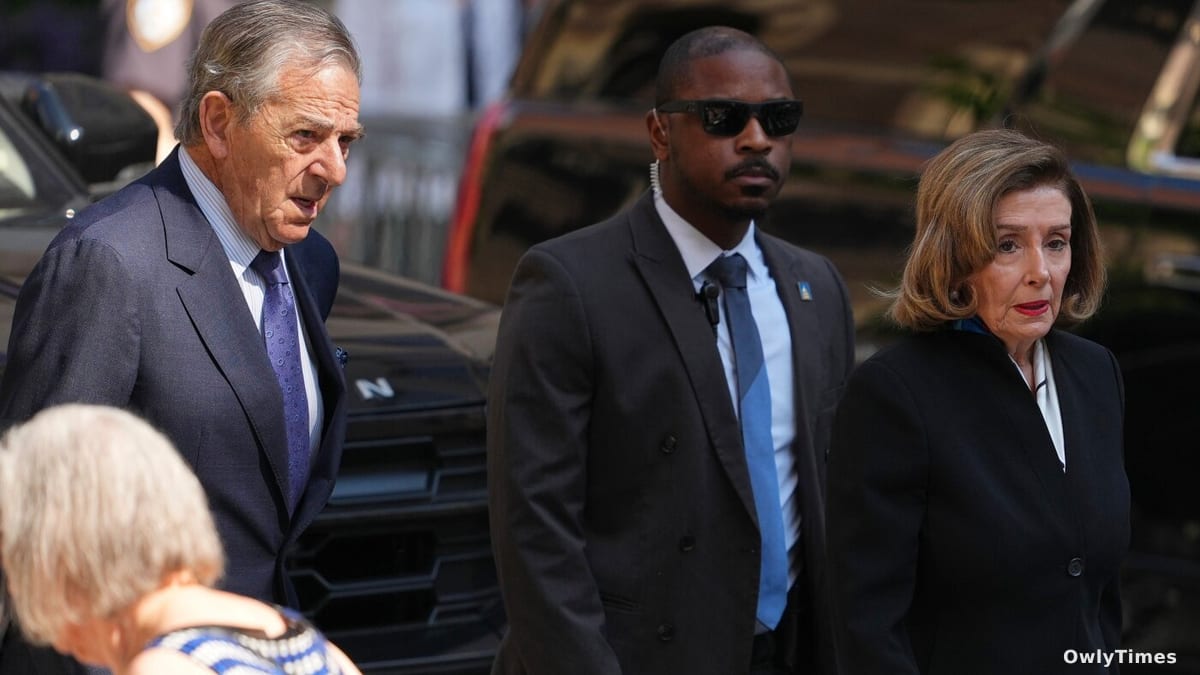
On Friday, Paul Pelosi, the 86-year-old husband of former House Speaker Nancy Pelosi, was involved in a collision in Yountville, California. According to NPR, the incident occurred when his brown convertible struck a legally parked car. A witness reported to authorities that after the initial impact, Pelosi briefly stopped before continuing to drive, a sequence of events confirmed by NBC News.
The aftermath highlights the disconnect between intent and reality. While Pelosi told officers he knew he had hit something but was unaware of the nature or timing of the damage, the vehicle’s condition told a different story. The Independent notes that deputies eventually located the brown convertible partially blocking Yountville Cross Road, less than two miles from the site of the crash. By that point, the vehicle was disabled and could no longer be driven, suffering "significant damage" to the right front, according to the Napa County Sheriff’s Office.
Clearing the Alcohol Hype
In the tech world, we love to look for the "drunk driver"—the obvious, singular point of failure that explains a system crash. In this instance, however, that variable is absent. All three reporting outlets agree that alcohol was not a factor in this specific incident. NBC News specifies that a preliminary alcohol test yielded a negative result, a detail supported by NPR.
This is a stark departure from the public narrative surrounding Pelosi’s 2022 legal troubles. In that year, Pelosi pleaded guilty to driving under the influence in Napa County, a case that resulted in a five-day jail sentence, three years of probation, and the mandatory installation of an ignition interlock device. While the 2022 case involved a clear, preventable chemical impairment, this current situation points to a more complex, systemic issue: the physical degradation of driver capability.
The Regulatory Loophole for Human Operators
When a software system fails repeatedly, developers implement a "force quit" or a mandatory review. The Napa County Sheriff’s Office is essentially performing this function now, though with the glacial speed of government bureaucracy. Both NPR and The Independent confirm that the office has submitted a California Department of Motor Vehicles re-evaluation form to determine if Pelosi should retain his driving privileges.
This process is a standard protocol for elderly drivers, yet it remains one of the most contentious "features" of our transportation infrastructure. We are essentially waiting for the system to break down completely before we intervene. The Napa County Sheriff’s Office has referred the case to the Napa County District Attorney’s Office for review and potential misdemeanor charges for fleeing the scene.
What happens next will be decided by the District Attorney’s office, which now holds the power to determine if Pelosi faces formal prosecution for the hit-and-run allegations. Regardless of the legal outcome, the real signal to watch is the DMV's re-evaluation. If the state concludes that a driver is no longer fit for the road, it will be a quiet, administrative end to a public-facing saga—a reminder that in the long run, hardware obsolescence eventually wins, no matter who is behind the wheel.