
The $75-per-barrel price of Brent crude serves as the primary gauge for global market stability following a weekend of escalating hostilities in the Middle East that saw 140 Iranian military targets struck by U.S. forces. This figure, reported by both The Guardian and the BBC, marks a significant cooling from wartime highs exceeding $120, suggesting that investors currently view the conflict as a contained, albeit volatile, adaptation to regional uncertainty.
The Financial Framework of the Conflict
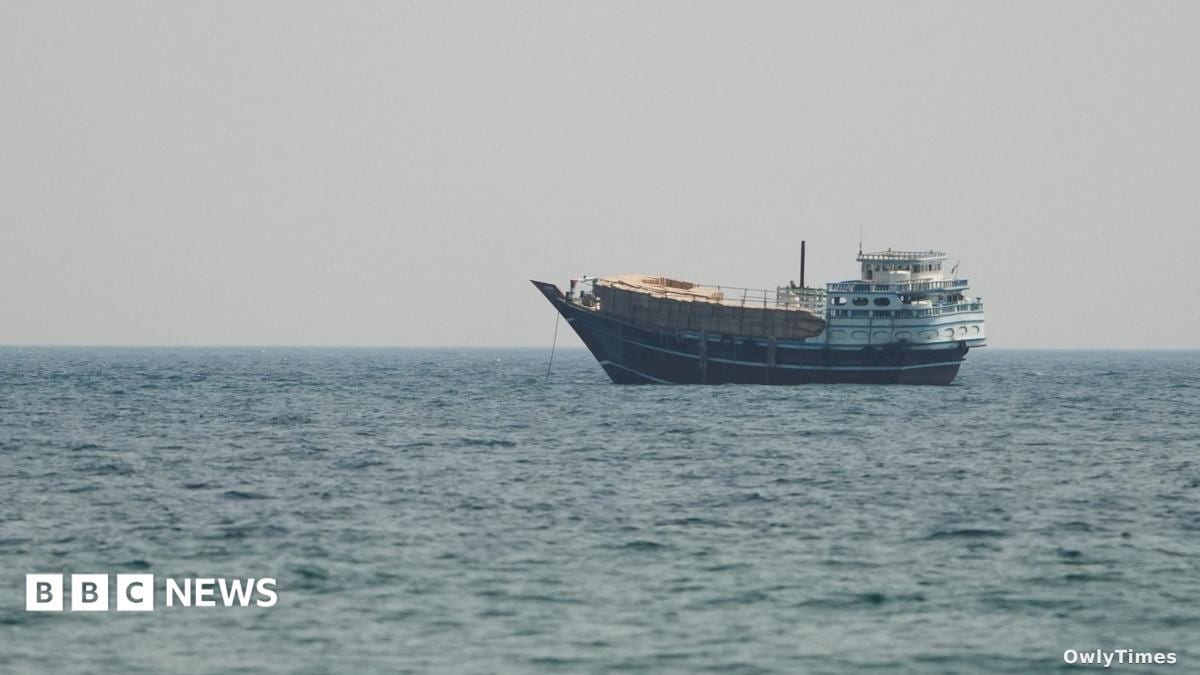
Follow the money: the current hostilities are a direct result of a breakdown in the June 17 memorandum of understanding (MoU), which sought to stabilize the Strait of Hormuz. CNBC reports that the agreement failed to define specific transit routes, leaving a power vacuum that Iran attempted to fill by demanding ships use a northern path through its territorial waters. The U.S. continues to enforce passage along a southern route, leading to the disabling of the Cyprus-flagged vessel MV GFS Galaxy. While The Guardian notes that 10 Indian nationals were rescued from the ship, The Independent and other outlets confirm one crew member remains missing.
Divergent Claims on Regional Control
The tactical situation on the ground remains mired in conflicting narratives. The Islamic Revolutionary Guard Corps (IRGC) declared the waterway closed "until further notice," a claim explicitly rejected by U.S. President Donald Trump. Speaking to NBC's Meet the Press, Trump stated, "It’s open. We bombed the hell out of them last night," as cited by The Guardian and CNBC. Centcom corroborates this, asserting that despite the IRGC's "blatant" attacks, traffic continues to move, albeit at what the Joint Maritime Information Center characterizes as "reduced levels."
Escalation Across the Gulf
The intensity of the response has expanded well beyond the Strait. Euronews reports that Iran launched simultaneous missile and drone strikes against Qatar, the UAE, Bahrain, Kuwait, Jordan, and Oman. In Qatar, emergency alerts were triggered at 05:36 and 07:13 local time, with officials confirming that three civilians, including one child, were injured by falling debris during interception operations. While Iran claimed to have destroyed command centers at the Al-Udeid base in Qatar and the Prince Hassan airbase in Jordan, neither the U.S. nor the host nations have confirmed these specific damages.
Investor Takeaway: What This Means for Your Wallet
The persistent volatility in the Strait of Hormuz represents a "grey area" for the global economy. As noted by CNBC, U.S. Energy Secretary Chris Wright previously stated the intent to strip Iran of its ability to leverage the strait for energy disruption. However, the current reality involves a high-stakes standoff where the primary trigger for further market movement is the potential for a formal breakdown of all mediation efforts. For investors, the signal to watch is the ongoing diplomatic effort involving France and the U.K., who are currently reviewing Omani proposals for a potential fee-based navigation system—a development that would require UN-backed legitimacy to restore long-term commercial confidence in the region.