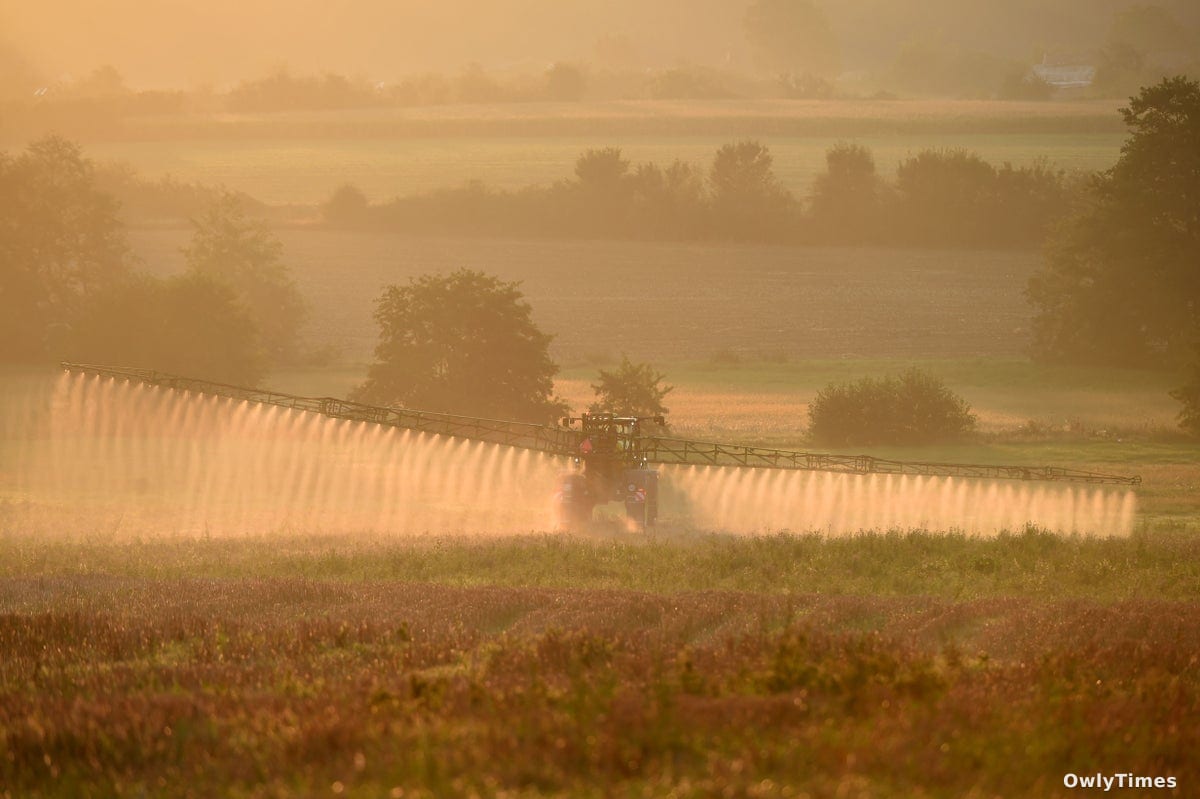

The push and pull over glyphosate, the active ingredient in Roundup, isn’t a new debate – but the recent actions of the Trump administration have sharpened its focus, revealing a surprising fracture within the “Make America Healthy Again” (MAHA) movement itself. While President Donald Trump issued an executive order on Monday aimed at boosting glyphosate production, the response wasn’t uniform among his health-focused supporters. This isn’t simply a clash between environmentalists and agricultural interests; it’s a dispute over how to interpret a complex body of scientific evidence, and what level of risk is acceptable when balancing food production with public health. The situation highlights a critical challenge in science communication: how to reconcile conflicting studies and navigate the influence of industry funding on research outcomes.
Glyphosate functions as an “amino acid inhibitor,” disrupting the fundamental building blocks of plant proteins, effectively killing weeds. Its widespread adoption, particularly in conjunction with genetically modified crops engineered to resist its effects, has revolutionized agriculture. However, the question of whether this revolution comes at a cost to human health remains fiercely contested. The herbicide inevitably enters our bodies through food – particularly grains and legumes – inhalation, and even contact with contaminated surfaces. This exposure is the core of the concern, and the source of the nearly 200,000 claims filed against Bayer, which acquired Monsanto in 2018, alleging harms from glyphosate exposure. The company recently agreed to a $7.25 billion settlement in a class-action lawsuit linking glyphosate to non-Hodgkin lymphoma, though a Monsanto spokesperson maintains this doesn’t constitute an admission of wrongdoing.
This piece references the scientificamerican.com report.
The conflicting assessments from leading health organizations underscore the difficulty in definitively assessing glyphosate’s risk. In 2015, the World Health Organization’s International Agency for Research on Cancer (IARC) classified glyphosate as “probably carcinogenic to humans,” a designation based on some evidence of a potential cancer risk. This finding immediately ignited controversy, as other bodies, including the Food and Agriculture Organization of the United Nations and the U.S. Environmental Protection Agency (EPA), concluded glyphosate was likely not carcinogenic. This isn’t a case of simple disagreement; it reflects differing interpretations of the available data. A 2018 National Cancer Institute study found “no association” between glyphosate exposure and non-Hodgkin lymphoma in farmworkers, but a 2019 meta-analysis, focusing on highly exposed groups, found a “compelling link” to the same cancer. Lianne Sheppard, a professor at the University of Washington who studies chemical exposures, notes the meta-analysis’s strength stemmed from its focus on those with the highest levels of exposure.
The apparent contradictions are, in part, due to the subjective nature of evaluating scientific studies. Brenda Eskenazi, a professor emerita of public health at the University of California, Berkeley, explains that different experts assign varying weight to different studies, leading to divergent conclusions. Furthermore, potential conflicts of interest loom large. Last year, the journal Regulatory Toxicology and Pharmacology retracted a 2000 study funded by Monsanto after citing “ethical concerns,” demonstrating how industry backing can influence research outcomes. Notably, Sheppard, who served on an EPA review panel in 2016, believes the scientific evidence regarding glyphosate’s potential health effects has “strengthened” since then, extending beyond cancer to include other health endpoints. This raises questions about the EPA’s ongoing assessment and the influence of political considerations on scientific review.
One of the fundamental challenges in studying glyphosate is its short half-life in the body – estimated at just 5.5 to 10 hours. This makes it difficult to correlate exposure levels measured at a single point in time with long-term health effects. While animal and cell studies have suggested links between glyphosate exposure and issues like cancer, endocrine disruption, and oxidative stress, conducting robust human studies is logistically complex and expensive. Researchers could analyze urine samples collected over extended periods, or utilize geographical data to estimate long-term exposure, but both methods are imprecise. The current state of research leaves significant gaps in our understanding, particularly regarding vulnerable populations like pregnant women and fetuses, and the potential impact of glyphosate on fertility and reproduction.
The recent actions by the Trump administration, and the surprising support from Robert F. Kennedy, Jr. – a long-time critic of glyphosate – alongside the concerns voiced by Casey Means, Trump’s pick for surgeon general, highlight the need for continued, independent research. The question isn’t simply whether glyphosate causes cancer, but what the full spectrum of its health effects are, and how to mitigate potential risks. As Eskenazi emphasizes, even a small effect could have a significant public health impact given the widespread exposure. The next crucial step is to prioritize studies focusing on vulnerable populations and reproductive health, and to ensure transparency in research funding and methodology. Will we see a shift towards more sustainable agricultural practices, or will the pursuit of increased crop yields continue to outweigh concerns about potential long-term health consequences? That’s a question consumers, policymakers, and scientists alike will be watching closely.