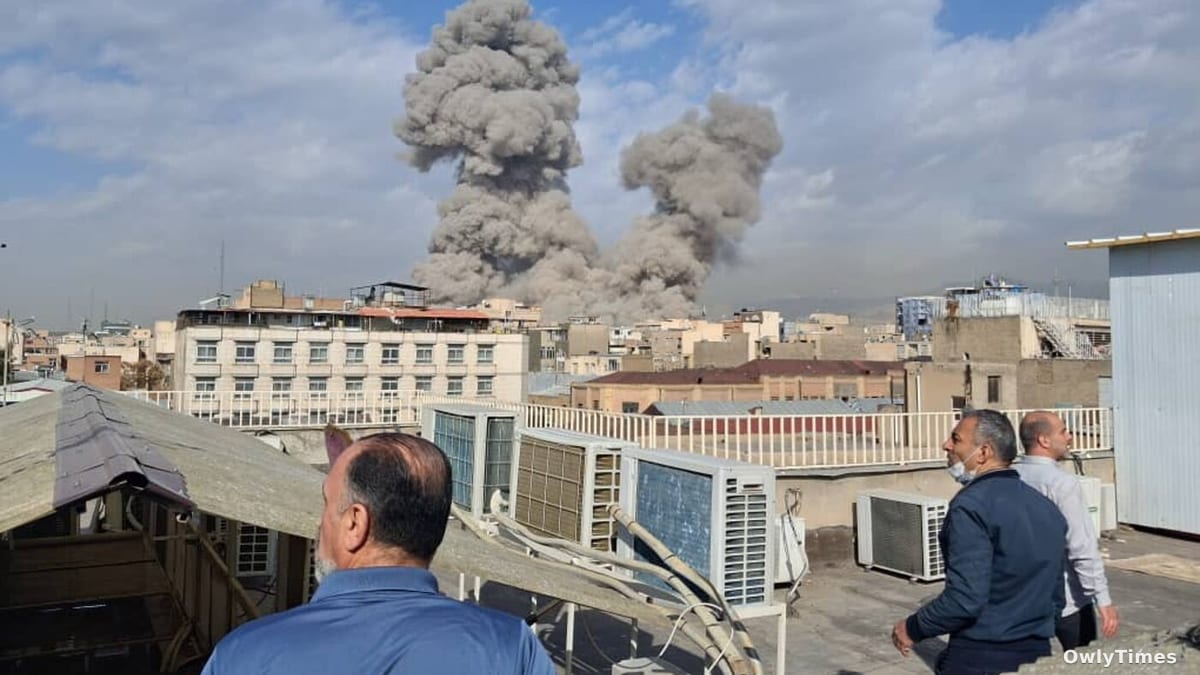

The calculated risk now unfolding in the Middle East isn’t about Iran’s nuclear program – it’s about reshaping the regional order by exploiting a perceived vulnerability. The joint U.S.-Israeli strikes against Iran, culminating in the reported death of Supreme Leader Ayatollah Ali Khamenei, weren’t a spontaneous reaction to stalled negotiations; they were a long-game play predicated on the belief that a decisive blow against the Iranian leadership could trigger internal instability and fundamentally alter the balance of power. This isn’t simply escalation, it’s a regime-change operation cloaked in the language of national security.
The Strategic Calculus of Decapitation
The timing is critical. The failure of the third round of indirect negotiations, facilitated by Steve Witkoff and Jared Kushner, provided the political cover for action. While publicly framed as a response to Iran’s nuclear ambitions and alleged threats to American interests, the strikes – particularly the targeting of Khamenei and top security officials like the defense minister and commander of the Revolutionary Guard Corps – signal a broader objective: dismantling the existing Iranian power structure. President Trump’s subsequent call for Iranians to “take over your government” isn’t a spontaneous expression of support for democracy, but a deliberate attempt to capitalize on potential chaos. This echoes the rhetoric surrounding the 1953 Iranian coup d'état orchestrated by the CIA and MI6, which overthrew the democratically elected Prime Minister Mohammad Mosaddegh and reinstated the Shah, a move similarly justified by fears of Soviet influence.
Original reporting: NPR.
Who Benefits and Who Loses in the Immediate Aftermath?
Israel stands to gain the most in the short term. A weakened Iran diminishes its primary regional adversary, potentially easing security concerns and solidifying its position as the dominant military power in the region. The U.S., under President Trump, benefits from the appearance of strength and resolve, fulfilling a key campaign promise and potentially bolstering domestic support. However, the immediate losers are numerous. The Iranian people face the prospect of instability, retaliation, and potentially a protracted conflict. Regional allies of Iran, such as Syria and Hezbollah, are now vulnerable. And, critically, the credibility of international institutions like the United Nations – condemned the strikes as a “grave threat to international peace and security” by Secretary-General António Guterres – is further eroded. The UAE, Qatar, Bahrain, Kuwait, and Jordan, all hosting U.S. troops, are now directly in the line of fire, as evidenced by the Iranian ballistic missile strikes. The death of an Asian migrant worker in the UAE from missile debris underscores the indiscriminate nature of this escalating conflict.
The Shadow of Civilian Casualties and the Erosion of Moral Authority
The reports of civilian casualties, particularly the alleged strike on a girls’ school resulting in the deaths of at least 53 students, are not anomalies; they are inherent risks of this type of operation. While Capt. Tim Hawkins of U.S. Central Command insists on the protection of civilians and claims the U.S. “will never target civilians,” the reality on the ground paints a different picture. The sheer scale of the strikes, targeting key infrastructure and leadership, inevitably leads to collateral damage. This discrepancy between stated intentions and actual outcomes undermines the moral authority of the U.S. and Israel, providing ammunition for Iranian propaganda and potentially fueling further radicalization. The narrative of “Operation Epic Fury,” as the Pentagon is calling it, risks becoming a self-fulfilling prophecy of escalating violence and widespread suffering.
Beyond the Immediate: The Risk of Regional Conflagration
The Iranian response is already underway, with ballistic missile strikes targeting multiple countries in the region. This retaliatory action, while largely intercepted, demonstrates Iran’s willingness and capability to project power beyond its borders. The targeting of countries hosting U.S. troops significantly raises the stakes, creating a dangerous feedback loop of escalation. The situation bears a chilling resemblance to the lead-up to the 2003 invasion of Iraq, where a perceived threat from Saddam Hussein’s regime was used to justify a military intervention that destabilized the entire region. The key difference here is the direct involvement of multiple actors – the U.S., Israel, and Iran – each with their own strategic objectives and red lines.
The Next Chess Move: Iran’s Asymmetric Response
The immediate question isn’t whether Iran will retaliate further – it already is – but how. A direct military confrontation with the U.S. and Israel would be disastrous for Iran. Instead, the most likely scenario is an escalation of asymmetric warfare: support for proxy groups in the region, cyberattacks against critical infrastructure, and disruption of oil supplies. The focus will shift to maximizing pain for the U.S. and Israel without triggering a full-scale war. The critical move to watch is Iran’s response to the loss of Khamenei. Will they announce a successor quickly to project stability, or will the power vacuum lead to internal infighting and further fragmentation? The answer to that question will determine whether this crisis spirals into a regional conflagration or settles into a prolonged period of simmering conflict.