
Are we really about to repeat the 1970s? Not in bell bottoms and disco, but in a desperate scramble for energy security that prioritizes short-term fixes over long-term sustainability? The headlines scream about gas prices, inflation, and geopolitical instability, but the real story here isn't a new crisis – it's the enduring appeal of the easiest, dirtiest solution: coal. We’ve been down this road before, and the outcome wasn’t pretty.
Just like President Jimmy Carter in 1977, facing $14 a barrel crude and a public chilled to the bone (literally, with his thermostat recommendations), the current administration is staring down an energy crunch. Carter’s televised “fireside chat,” largely remembered for its unpopular energy conservation requests, masked a far more significant commitment: a full-throated push for domestic coal production, championed by his first energy secretary, James Schlesinger, as America’s “black hope.” Today, with gasoline prices exceeding inflation-adjusted levels from that era and fears of stagflation resurfacing, Donald Trump is echoing that strategy, doubling down on fossil fuel development.
The situation feels eerily familiar. While the US economy is less energy-dependent than in the 70s, the disruption caused by conflict in Iran – and the potential for further instability – is forcing a brutal calculation. The logic, as articulated by British Prime Minister Keir Starmer, is simple: “If we took control of our energy and had homegrown renewables, we could stabilise your bills.” But that logic is colliding with a harsh reality. Renewables aren’t a quick fix, and they aren’t immune to geopolitical pressures. Wind turbines and batteries rely heavily on critical minerals sourced overwhelmingly from China, a nation increasingly willing to weaponize its supply chain dominance.
See the original The Guardian story for the full account.
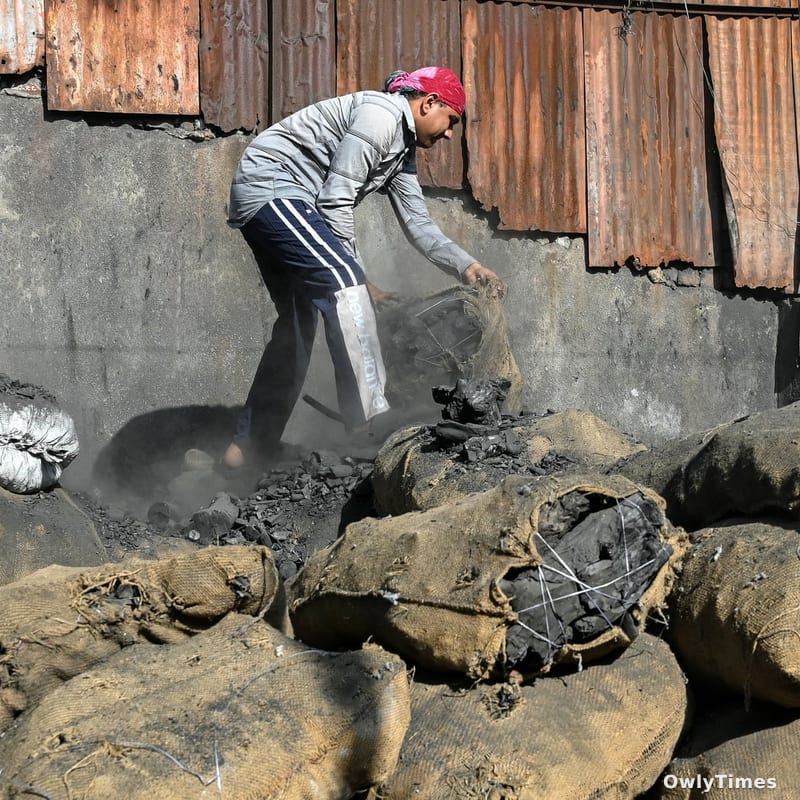
This isn’t about dismissing renewables. The potential for energy independence through solar and wind is real. But the current crisis is exacerbating existing hurdles – namely, rising inflation and interest rates – making capital-intensive renewable projects significantly more expensive. The conflict in Iran has effectively slammed the brakes on investment in new renewable capacity, while simultaneously making coal look…convenient. Global coal consumption has already surged by 1.3 billion tons since 2020, reaching 8.8 billion tons, driven by demand in India and China, and accelerated by events like Russia’s invasion of Ukraine which forced Europe to abandon Russian gas.
The irony is thick enough to cut with a knife. Decades of climate summits – Rio in 1992, Kyoto in 1997, Paris in 2015 – have yielded incremental progress, yet coal’s share of the global energy supply increased from 23% in 2000 to 28% in 2023. The switch from coal to cleaner natural gas, a key component of recent decarbonization efforts, is now threatened by the 20% of the global natural gas supply bottlenecked by the Strait of Hormuz. Countries across Asia – Japan, India, Bangladesh, South Korea, Thailand, and Taiwan – are already reverting to coal, and even Europe, the continent most committed to climate action, is delaying coal plant closures, with Italy postponing shutdowns for 13 years and Germany considering reactivating idled facilities.
President Carter’s own experience serves as a stark warning. His genuine enthusiasm for renewables – symbolized by the solar panels he installed on the White House roof (later removed by Ronald Reagan) – couldn’t overcome the immediate pressures of an energy crisis. He aimed for 20% renewable energy by 2000; the nation achieved just over 4%, while coal accounted for 23%. While coal currently represents only 9% of US energy demand, compared to renewables’ slightly higher share, a more unstable world doesn’t help the decarbonization effort – it actively undermines it.
The narrative isn’t that we can’t decarbonize. It’s that geopolitical shocks consistently prioritize immediate energy security over long-term climate goals. The question isn’t whether renewables are a viable solution, but whether they can compete with the seductive simplicity of coal when the world feels like it’s burning. Watch closely over the next six months: if the situation in the Middle East escalates further, expect a renewed surge in coal demand, and a significant setback for global climate ambitions. The real test won’t be at the next climate summit, but in the power plants being fired up – or kept running – in Asia and Europe this winter.